

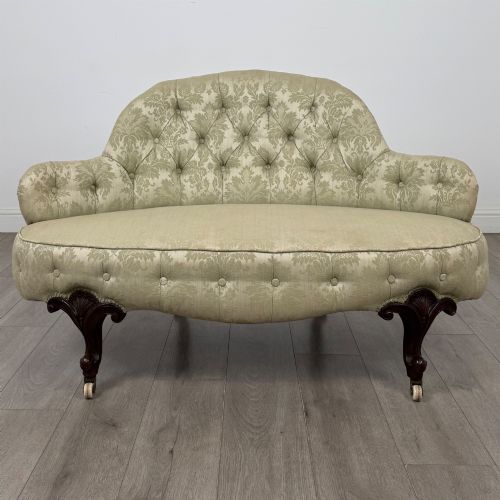


Antique Small Settee
An antique small settee brings compact seating into tighter rooms, offering the comfort of a larger sofa without dominating the floor space.

Antique Small Settee
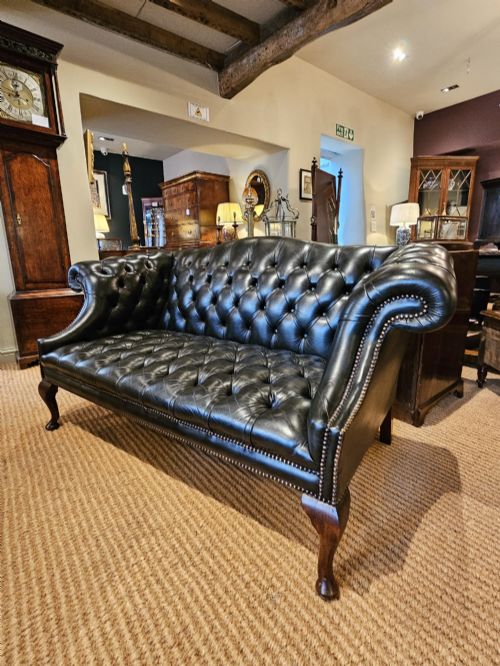
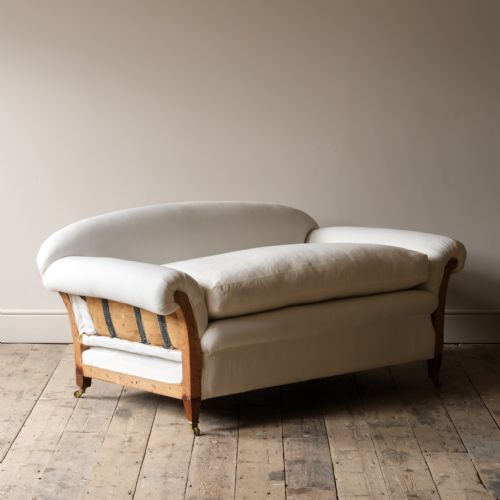
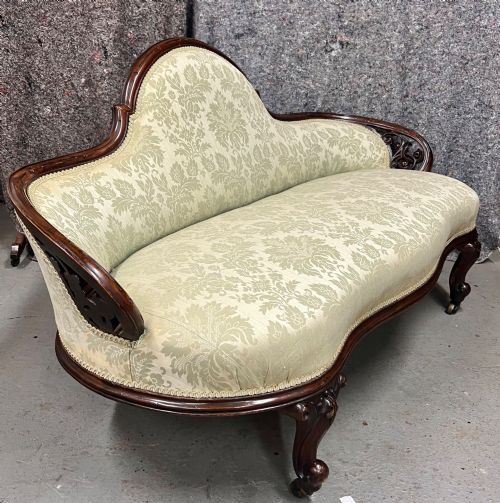
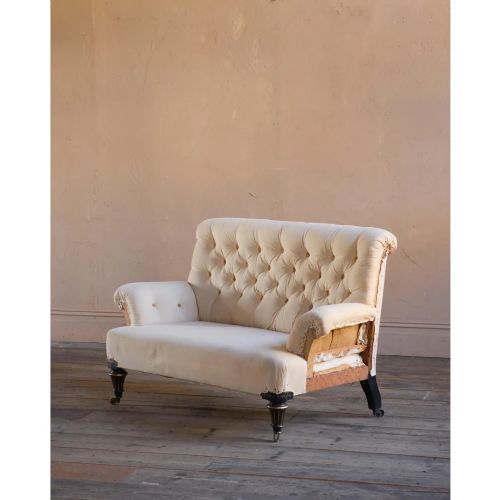
An antique small settee provides compact upholstered seating designed for boudoirs, window recesses, and smaller reception rooms. When searching for an antique small settee, buyers encounter various historical forms ranging from Victorian button-backed frames to Edwardian inlaid designs. These scaled-down seats accommodate two people comfortably while fitting into spaces where standard sofas prove too large.
The pieces appearing here span the nineteenth and early twentieth centuries, drawing on stylistic influences such as Louis XV, French Chateau, and English Country House. Mahogany, walnut, rosewood, and giltwood form the primary structural woods, while fabric upholstery includes velvet, silk, and leather. Buyers regularly find both English vernacular designs and continental painted or carved frames.
What varies in quality
The refinement of the timber carving and the crispness of any inlay dictate the visual standard of the frame. Superior examples display deeply sculpted wooden details, balanced proportions, and carefully matched wood grains rather than mechanical uniformity. Hand-applied gilding and well-executed marquetry distinguish finer pieces from plainer workshop production.
Upholstery finish and structural integrity govern the tactile merit of the seating. Pieces retaining traditional hand-tied springs and precise buttoning maintain their intended profile, while the choice of original or period-appropriate textiles influences historical consistency.
The listings show nineteenth and early twentieth-century dates, with Victorian and Edwardian examples forming the majority of the timber and upholstered pieces.
Jackson and Graham·Howard and Sons
The Antique Small Settee Glossary
- Canape
- An open-framed French settee with exposed wooden carving and upholstered back and seat. These pieces often feature cabriole legs and giltwood finishes.
- Love seat
- A small two-seater sofa intended for intimate conversation. The term overlaps with compact settees from the Victorian and Edwardian eras.
- Marquetry
- Decorative patterns formed by fitting contrasting veneers into a wooden surface. This technique appears on the mahogany and satinwood frames listed here.
- Giltwood
- Wood that has been coated with gold leaf or gold paint. It defines the decorative surface of French-style and Swedish Empire settees.
- Button back
- An upholstery style where depressions are formed in the padding by stitches pulled tight and secured with fabric-covered buttons. This method creates a tufted surface common on Victorian pieces.
Antique Small Settee: Frequently Asked Questions
Where do small settees fit best?
These compact seats suit bedroom ends, narrow hallways, and smaller drawing rooms where standard three-seater sofas overwhelm the proportions of the interior. Their reduced length allows them to sit comfortably beneath windows or beside fireplaces.
Positioning an antique settee away from direct heat sources and strong sunlight protects the wooden frames and fragile textiles from drying out and fading over time.
How do I identify a Victorian settee?
Victorian examples frequently display deep buttoning, dark hardwoods like walnut or mahogany, and rounded or serpentine seating profiles. The upholstery often includes heavy velvet or silk fabrics finished with tassel trims.
Makers of this period combined robust structural timbers with ornate carving, distinguishing them from the lighter satinwood and inlaid designs of the Edwardian era.
Were these seats used in bedrooms?
Many compact settees and boudoir seats were specifically commissioned for dressing rooms and private chambers during the nineteenth century. These bedroom pieces often featured delicate painted frames, silk upholstery, or canework.
Their lighter scale made them easily movable within private quarters for resting or putting on shoes.
What is a French style settee?
Pieces built in the French taste draw on Louis XV and Louis XVI designs, featuring exposed giltwood or painted frames, cabriole legs, and carved floral motifs. These frames prioritize curved lines and ornamental crest rails.
English cabinetmakers also produced pieces influenced by these continental forms throughout the nineteenth century.