



Small Upholstered Sofa
A small upholstered sofa brings compact comfort to a room, offering intimate seating through periods from the Victorian era onwards.

Small Upholstered Sofa
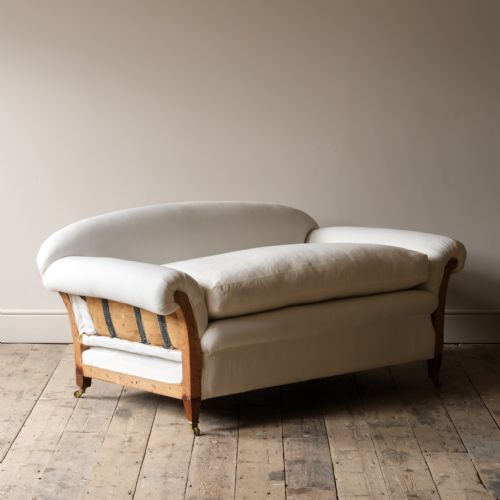
A small upholstered sofa serves as a compact seating option, appearing across Victorian, Edwardian, and nineteenth-century periods. These pieces take various forms including settees, loveseats, and canapes, designed for smaller spaces while maintaining full upholstery.
How they were made
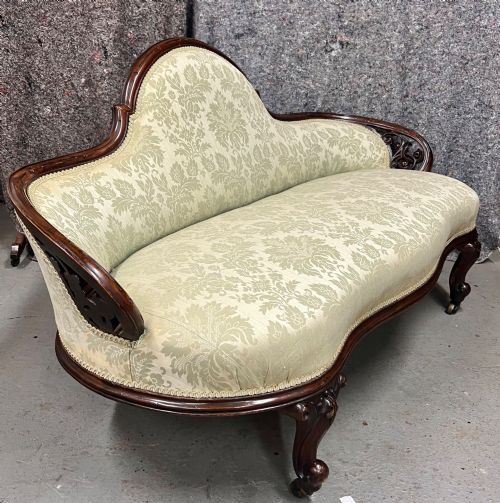
Frames rely on woods such as mahogany, walnut, rosewood, satinwood, birch, and timber, sometimes finished with giltwood or paint. Brass details appear on specific frames, while construction incorporates carved elements and inlaid woodwork.
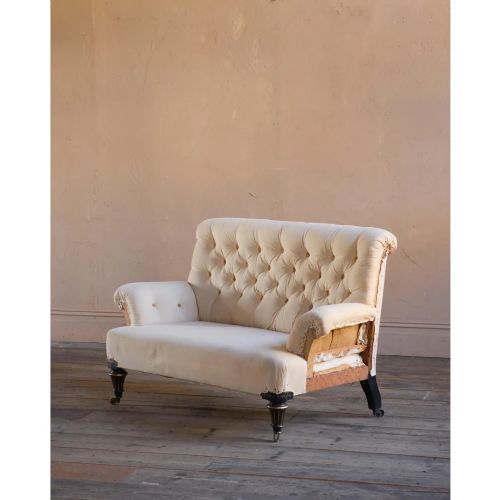
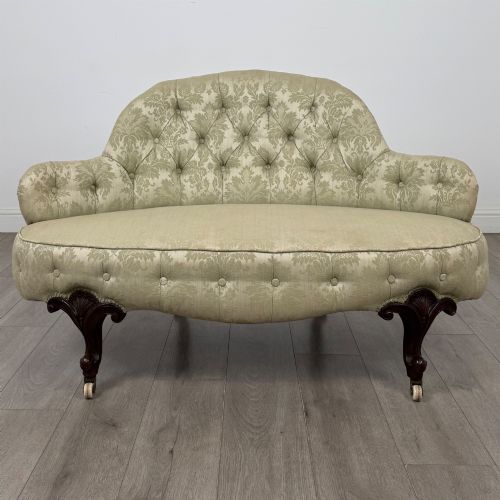
Upholstery relies on fabric, velvet, and silk, often complemented by buttoning and tassel trim. Makers shaped these materials into compact two-seat settees and love seats using traditional joinery and upholstery techniques.
Several pieces are specifically noted as end of bed seating, proving that bedroom lounging has a long and comfortable history.
What varies in quality
The refinement of the timber frame and the precision of the carving set examples apart. Finer pieces display crisp lines on mahogany, walnut, or giltwood structures, alongside deliberate proportion in the armrests and legs.
The execution of the upholstery defines the character of the piece. Superior examples show careful tension in the fabric, silk, or velvet, with evenly spaced buttoning and considered trim that complement the underlying wood.
A Jackson and Graham·Howard and Sons
The Small Upholstered Sofa Glossary
- Canape
- An open-framed settee originating in France, typically featuring exposed woodwork and upholstered seating.
- Love seat
- A small two-seat sofa designed for intimate seating, often sharing proportions with a compact settee.
- Giltwood
- Timber treated with gold leaf or gilt finish, commonly found on French and Empire style frames.
- Button back
- An upholstery technique where buttons are pulled deep into the padding to create a tufted pattern.
- Settee
- A traditional term for a small upholstered bench with a back and arms, accommodating more than one person.
Small Upholstered Sofa: Frequently Asked Questions
Where should I place a small upholstered sofa?
These compact seats fit easily into bedrooms, studies, and smaller reception rooms where a full-size sofa overwhelms the floor plan. They also work effectively at the foot of a bed or within an alcove.
The low profile and modest width allow the piece to sit comfortably against shorter walls or function as a conversational seat in a corner arrangement.
How do I identify a Victorian piece?
Victorian examples often feature dark woods like mahogany or walnut, frequently paired with deep buttoning and generous padding. The silhouettes tend to be substantial even when the overall footprint remains compact.
Look for characteristic details such as turned wooden legs, curved backrests, and textured fabrics like velvet that define the period aesthetic.
What is the difference between a settee and a sofa?
Historically, a settee denotes a lighter wooden or upholstered bench seat, while a sofa implies a more heavily padded structure for lounging. In practice, makers used the terms interchangeably across the nineteenth and twentieth centuries.
Listings often group these terms together based on function and capacity rather than strict structural definitions.
How do French styles differ from English ones?
French designs like Louis XV and Louis XVI showcase exposed painted or giltwood frames, cabriole or fluted legs, and curved structural lines. They lean towards decorative elegance and lighter visual weights.
English country house versions prioritize deep seating and comfort, utilising mahogany or walnut frames wrapped in durable fabrics with less overt ornamentation.