
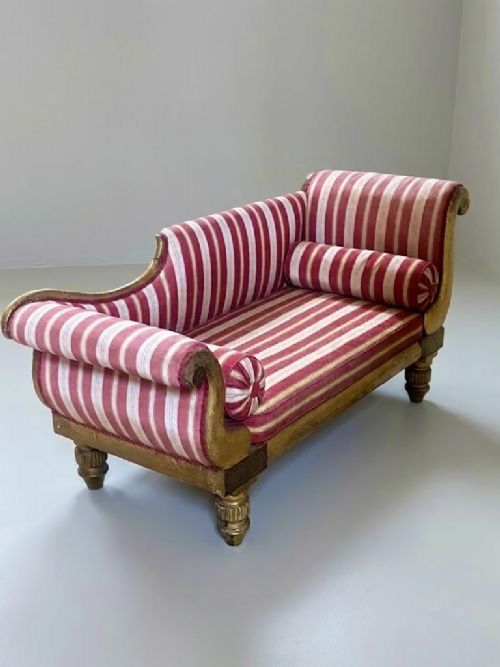
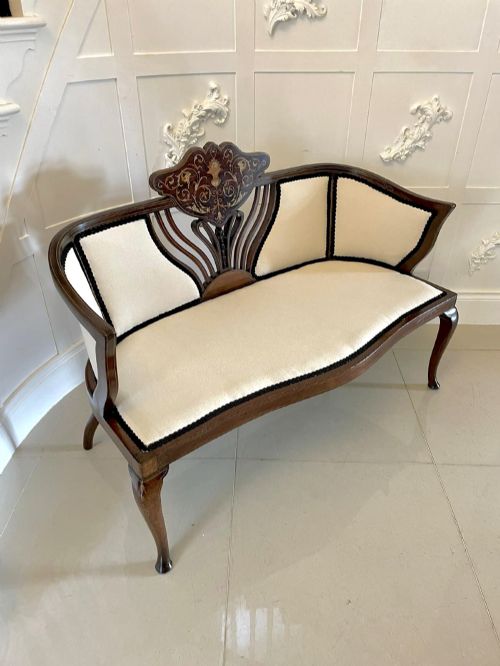
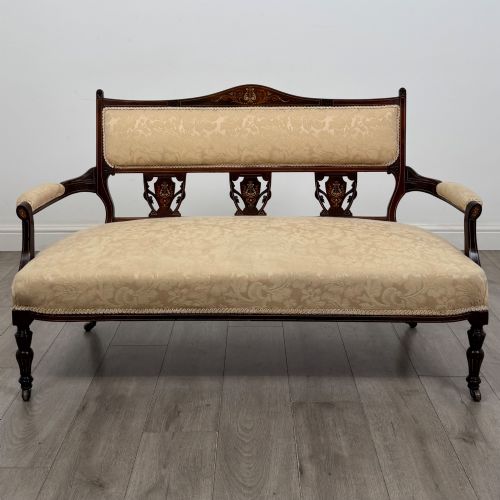

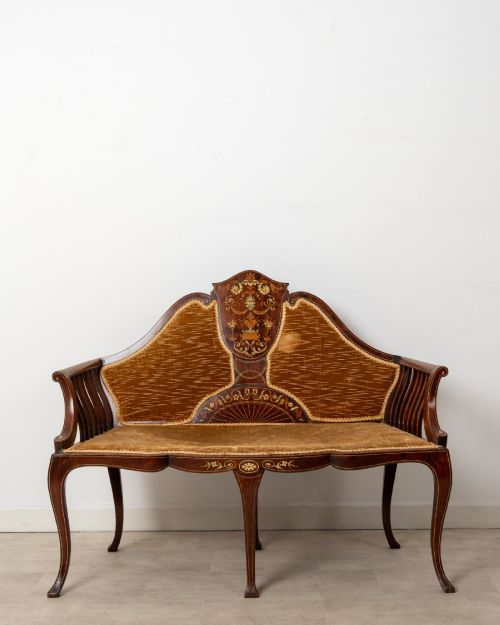
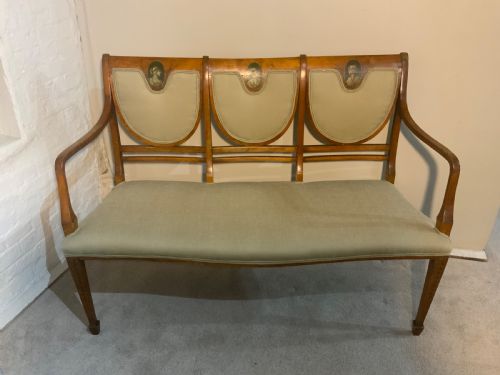
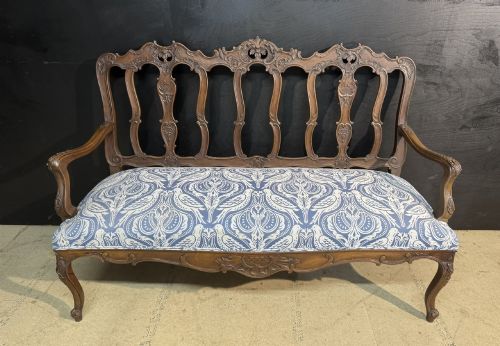
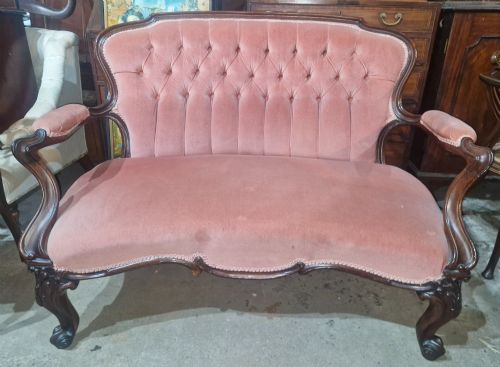
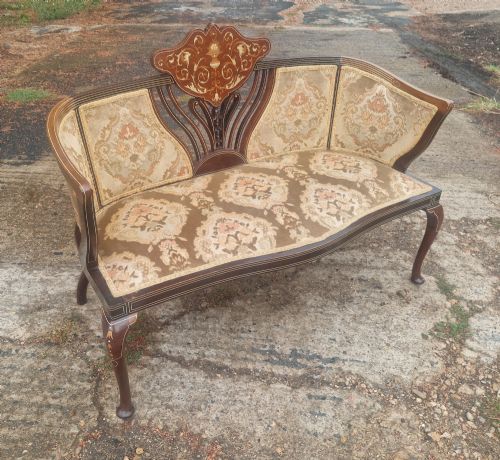
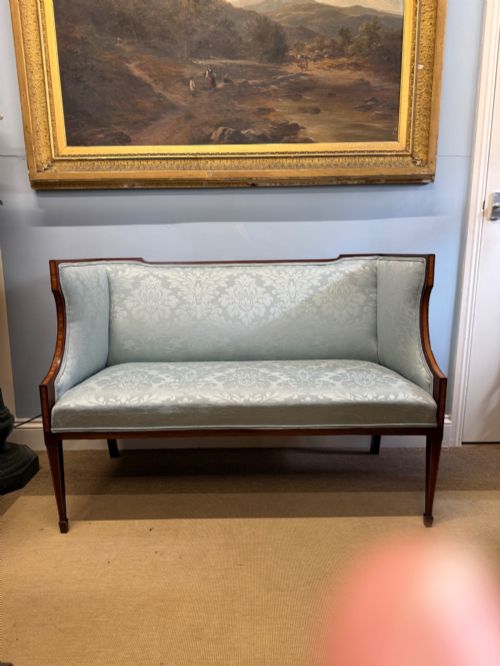
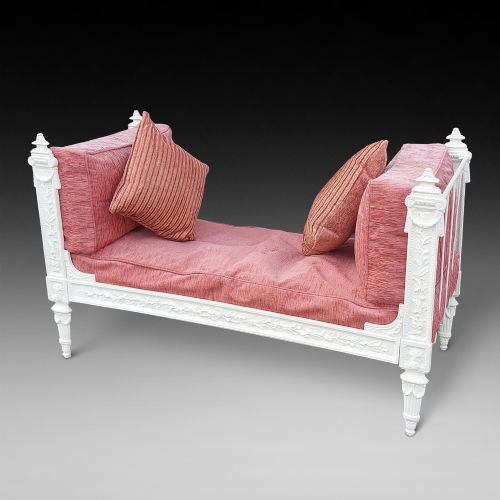
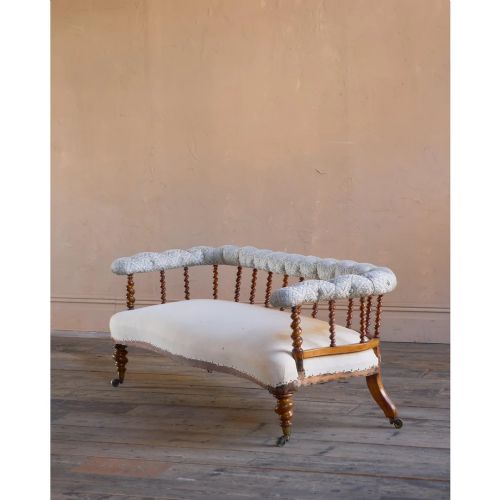
Upholstered Bench Sofa
An upholstered bench sofa combines firm bench proportions with soft seating, offering practical elegance for hallways, bedrooms and drawing rooms.

Upholstered Bench Sofa
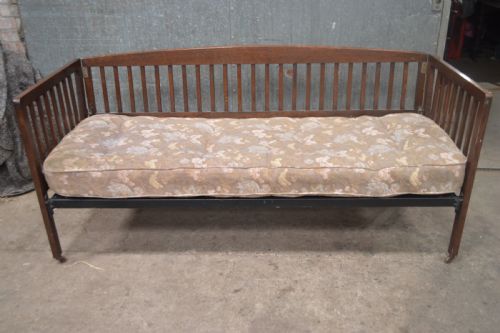
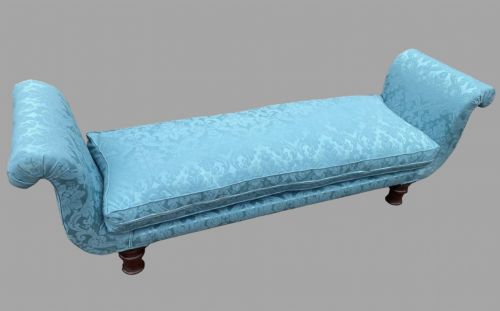
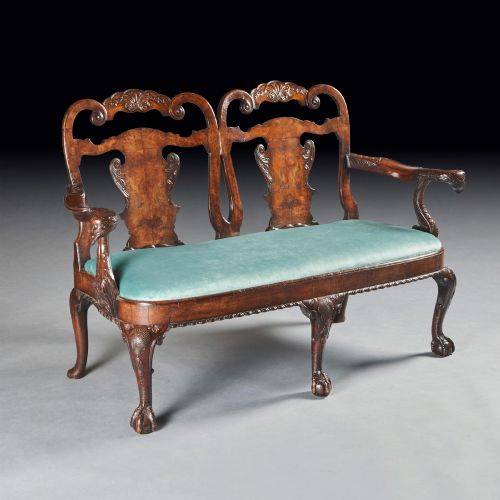
When you search for an upholstered bench sofa, you encounter a diverse selection of seating forms spanning the eighteenth, nineteenth and twentieth centuries. These pieces encompass settees, daybeds, window seats and banquettes shaped by Georgian, Victorian, Edwardian and French design influences.
The version you are most likely to meet on this page is a nineteenth-century Victorian or Edwardian mahogany, walnut or rosewood piece, often featuring inlaid details or carved woodwork. Alongside these English seating forms appear French daybeds and giltwood canapés that bring a distinct continental silhouette to the collection.
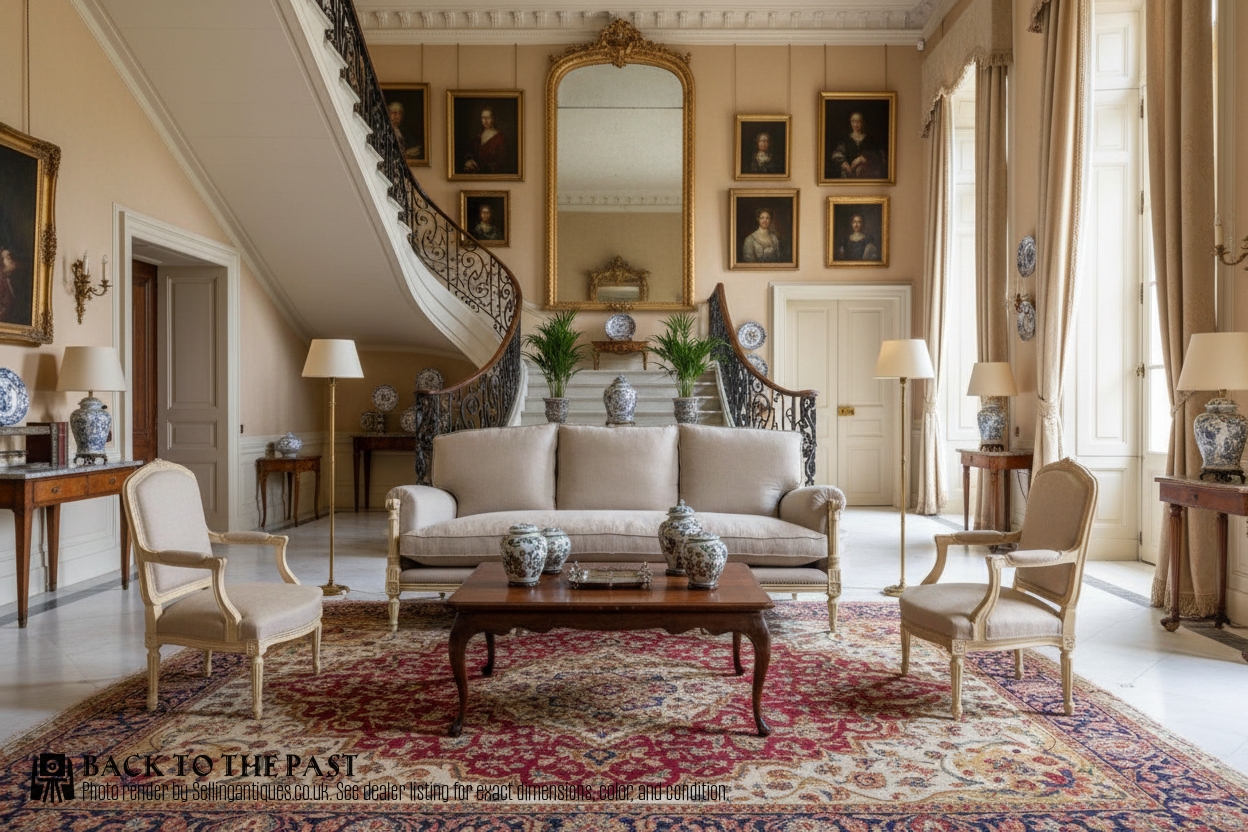
Materials and construction
The framework of these seats relies on dense hardwoods such as mahogany, walnut, rosewood, satinwood and oak, selected for their structural strength and capacity for fine carving or inlay. Giltwood, painted finishes and ebonised treatments appear frequently across French and revival pieces, occasionally accented with brass or ormolu mounts.
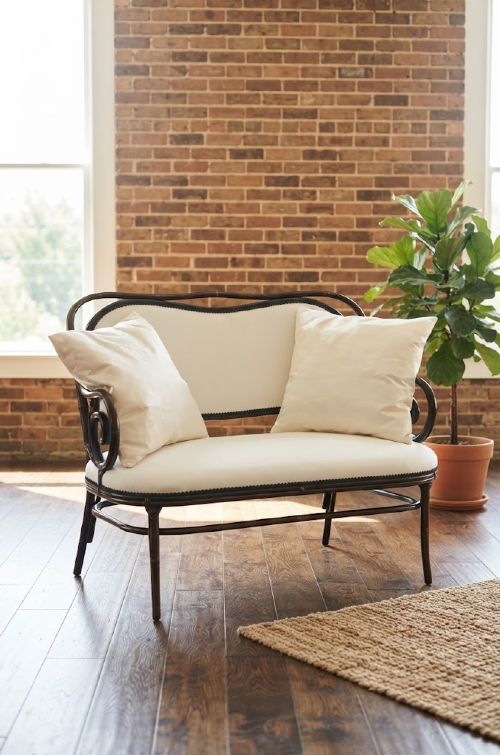
Upholstery methods support the timber frames, utilising traditional fabric coverings alongside striped silk, velvet and wool textiles. Bentwood and cast iron structures also surface in specific late nineteenth and early twentieth-century examples, demonstrating varied approaches to framework construction.
The collection spans eighteenth-century Georgian forms, nineteenth-century Victorian designs and twentieth-century Edwardian pieces.
Distinctions in craftsmanship
Quality reveals itself in the crispness of the timber carving, the precision of wood inlay work and the structural integrity of the frame joints. Superior examples display balanced proportions and carefully selected grain patterns that elevate the piece beyond standard utility.
The refinement of the decorative elements, whether classical ormolu mounts or delicate giltwood detailing, separates ordinary seating from exceptional craftsmanship. Harmony between the timber frame and the textile upholstery completes a high-calibre piece.
C. Hindley & Sons·Giles Grendey·Thonet
The Upholstered Bench Sofa Glossary
- Canapé
- An upholstered sofa or settee designed in a French style, typically featuring an exposed wooden frame and decorative carving.
- Daybed
- A long seating unit designed for reclining, combining elements of a chair and a bed.
- Settee
- A medium-sized upholstered seat with a back and arms, built to accommodate two or more people.
- Window seat
- A long, narrow bench seat traditionally placed in the recess of a window.
- Giltwood
- Timber that has been coated with a thin layer of gold leaf or gilt paint for a decorative finish.
Upholstered Bench Sofa: Frequently Asked Questions
Where should I place an upholstered bench sofa?
These versatile pieces suit placement at the foot of a bed, along a hallway wall or beside a window where narrow proportions matter. They fit well in entrance spaces or drawing rooms needing secondary seating.
Their shallow depth allows them to sit comfortably in corridors and smaller rooms without obstructing pathways, while providing a formal seating option.
How do I identify a Victorian piece?
Victorian examples frequently utilise dark hardwoods like mahogany and rosewood, often paired with heavy carving, buttoned upholstery or turned legs. The overall construction prioritises robust comfort and dense timber.
Looking closer at the framing reveals the distinct joinery methods and rich patination characteristic of the mid to late nineteenth century.
How do French styles differ from English designs?
French seating often displays lighter frames, painted or giltwood surfaces, and sweeping curves associated with Louis XV and Louis XVI revivals. These pieces rely on ornamental motifs like cabriole legs and elaborate crest rails.
English equivalents from Georgian or Victorian periods tend to emphasise straight lines, rich mahogany or walnut grains, and architectural proportions with minimal surface gilding.