




French Painted Settee
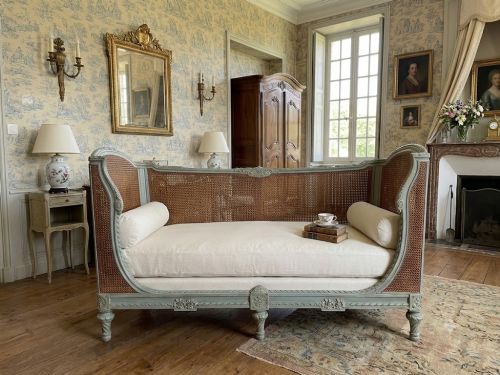
A french painted settee brings lightness to a room, offering upholstered or caned seating styled from Louis periods down to the twentieth century.
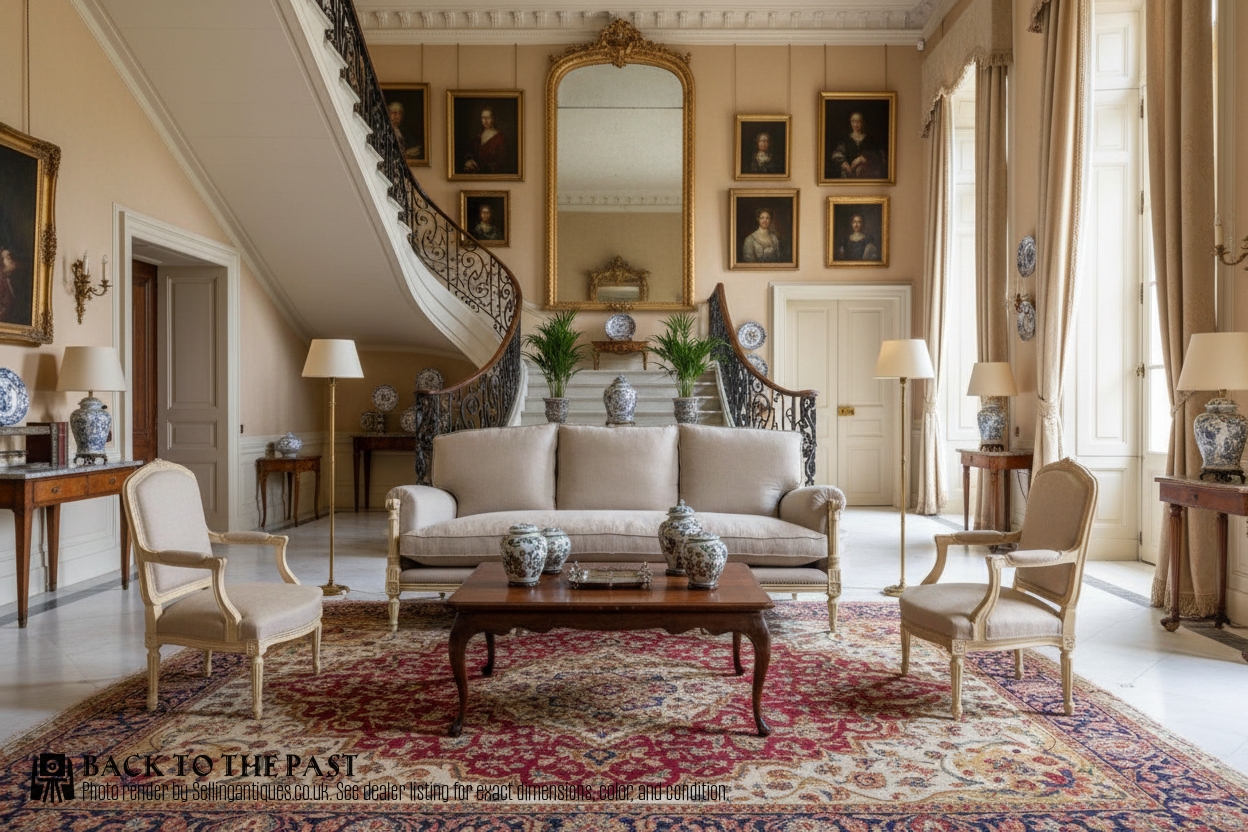
French Painted Settee
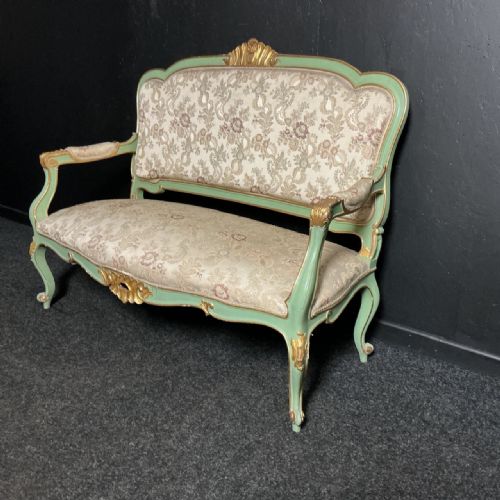
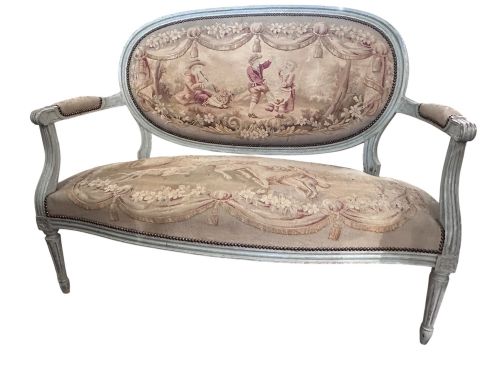
A french painted settee encompasses double and triple seaters, daybeds, and canapés rooted in eighteenth-century royal design revived across the nineteenth and twentieth centuries. These pieces appear in Louis XV and Louis XVI styles, featuring carved wooden frames coated in paint or gilt finishes.
Buyers frequently encounter nineteenth-century interpretations alongside examples from nineteen-ten and nineteen-hundred. The forms range from small cane-backed couches and bergère sofas to expansive triple back settees and occasional daybeds.
Originating predominantly from French workshops, these items also reflect broader European adaptations such as Swedish Gustavian design. They function as principal drawing room seats or decorative window furniture.
Distinctions in Quality
Quality rests primarily on the depth and crispness of the hand-carved woodwork across the frame and crest rail. Superior examples display intricate floral motifs and fluid lines rather than soft or mechanical shaping.
The integrity of the painted surface and the retention of original gilding dictate the visual success of the piece. Finer items show authentic layering of paint over time, while lesser examples may feature crude later resurfacing.
The standard of secondary materials, such as tight hand-woven cane panels or period-appropriate textile upholstery, separates standard decorative seating from finer examples.
Listings feature settees spanning the eighteenth century through to nineteen-sixty, utilising beech frames, cane panels, and textile upholstery.
The French Painted Settee Glossary
- Canapé
- An upholstered sofa or settee, typically featuring a decorative wooden frame in the French taste. This form often mirrors the stylistic traits of contemporary armchairs.
- Bergère
- An enclosed upholstered armchair or sofa with solid upholstered sides integrated into the armrests. It provides a deeper and more enclosed seat than open-frame designs.
- Louis XVI Style
- A neoclassical aesthetic defined by straight lines, symmetrical geometry, and fluted legs. It contrasts sharply with the curved exuberance of the preceding Louis XV period.
- Cabriole Leg
- A furniture leg that curves outward at the knee and tapers inward toward the foot, ending in a pad or scroll. This shape draws inspiration from animal limbs and typifies Louis XV design.
- Canework
- Woven rattan or cane applied to chair backs and seat frames to create a light, flexible surface. It gained widespread popularity in French seating during the eighteenth and nineteenth centuries.
French Painted Settee: Frequently Asked Questions
How do I identify a Louis XV settee?
Look for asymmetrical floral carvings and sweeping cabriole legs that curve outward at the knee. These pieces favour flowing, organic lines over straight geometry.
The frame usually lacks the strict symmetry found in later neoclassical revivals, presenting a more relaxed eighteenth-century silhouette.
What is the difference between a canapé and a settee?
A canapé is simply the French term for an upholstered sofa or settee, often built with an exposed decorative wooden frame. In practice, the two terms describe the same seating form.
French examples tend to follow specific royal period styles like Louis XVI or Louis XV.
Are these settees comfortable for daily use?
Comfort depends entirely on the internal padding and the depth of the seat, which varies greatly between nineteenth-century antiques and lighter twentieth-century frames. Caned versions offer a firm seat that benefits from loose cushions.
Deeply upholstered bergère sofas provide a more enclosed, supportive lounge experience.
How do I care for painted and gilt wood?
Dust the carved wooden frames gently with a dry, soft cloth to prevent the accumulation of dirt in the recesses of the carvings. Avoid modern chemical polishes, which can strip historic paint and delicate gilt layers.
Keep the settee away from direct sunlight and severe temperature fluctuations to protect the aged finish.