

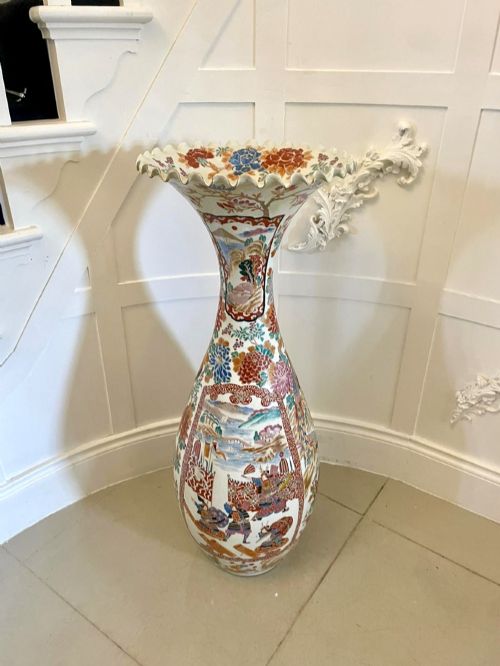
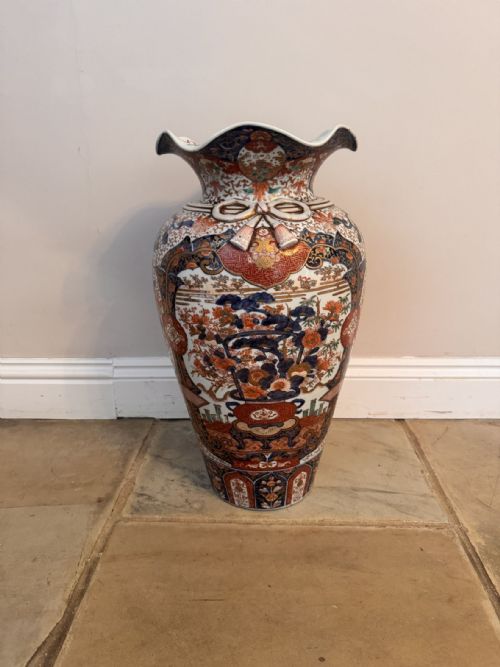


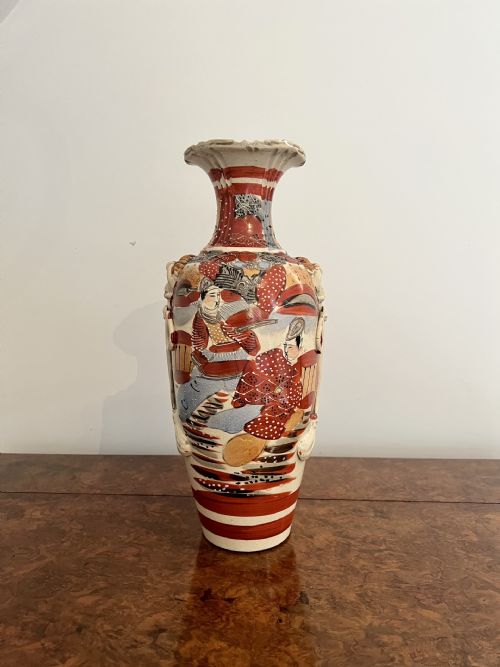


Red Porcelain Floor Vases
Red porcelain floor vases are large, commanding vessels carrying rich palettes, bringing scale and historical depth to a room.
Red Porcelain Floor Vases
Red porcelain floor vases encompass large vessels created during the nineteenth century, including pieces from the Meiji period. Buyers searching this phrase will predominantly encounter Japanese export wares designed for substantial interior spaces.
Origins represented in the current selection trace back to traditional Japanese aesthetics, specifically through Imari, Satsuma, and Kutani styles. These pieces demonstrate the significant scale and decorative ambition typical of late nineteenth-century export production.
Materials and construction
These vessels utilise porcelain and earthenware as foundational bodies, shaped into large forms capable of standing directly on the floor. Makers applied intricate glazes and detailed enamel work across the surfaces to build complex decorative schemes.
The application of gold leaf and gilt details enhances the visual depth of the porcelain. This combination of glaze, enamel, and metallic leaf defines the characteristic finish of the period.
Red Porcelain Floor Vases Retail Price Guide 2026
Typical asking prices for red porcelain floor vases among the pieces listed under this phrase on Sellingantiques today, from the lower quarter to the upper quarter. They describe what is for sale here now, not the wider market.
The selection spans the nineteenth century, featuring materials such as porcelain, earthenware, enamel, and gold leaf applied across Japanese Imari, Satsuma, and Kutani styles.
Distinguishing quality
Quality in these large vessels rests upon the precision of the enamel work and the richness of the glaze. Superior examples display disciplined brushwork and harmonious integration of the gold leaf without heavy-handed application.
Scale and proportion also dictate the standing of a piece, particularly in matched pairs where symmetry and balance across both vessels determine the overall visual impact.
The Red Porcelain Floor Vases Glossary
- Imari palette
- A traditional decorative scheme utilising iron red, cobalt blue, and gold on a white porcelain ground. This palette creates a high-contrast visual effect typical of Japanese export wares.
- Kutani
- A style of Japanese pottery and porcelain known for bold colours and intricate pictorial designs. Pieces from this tradition often incorporate extensive gilding over enamel.
- Satsuma
- A type of earthenware with a ivory-craquelure glaze decorated with polychrome enamels and gold. It represents a distinct aesthetic within Japanese decorative arts.
- Meiji Period
- The era of Japanese history spanning from 1868 to 1912, characterised by extensive export of decorative arts to Western markets. Works from this time demonstrate remarkable technical scale.
- Spill vase
- A tall, slender vessel originally designed to hold wooden spills used for lighting fires or candles. In larger formats, they function primarily as decorative floor standing pieces.
Red Porcelain Floor Vases: Frequently Asked Questions
Where should I place a floor vase?
These large vessels suit wide hallways, entrance foyers, or substantial reception rooms where their scale can be properly appreciated. Positioning them directly on the floor allows the height and presence of the piece to anchor the surrounding space.
Ensure they sit clear of heavy foot traffic to protect the body and the decorated surface from accidental impacts.
How do I identify a Meiji period piece?
Meiji period porcelain is identified through stylistic markers associated with late nineteenth-century Japanese export production, such as intricate enamel work and the use of the Imari palette. The scale of these items often reflects the ambitions of makers producing specifically for international markets during that era.
Dating relies on stylistic evidence, form, and the characteristic treatment of glazes recorded across the period.
Can these vases hold water?
While manufactured as ceramic vessels, nineteenth-century export floor vases are primarily decorative display pieces rather than functional planters. Utilising them for fresh flowers with water can introduce moisture risks to older earthenware or porcelain bodies and internal glaze surfaces.
Dry decorative arrangements remain the safest method for displaying botanicals within these large vessels.
What is the difference between Imari and Kutani?
Imari style relies heavily on a distinct palette combining iron red and cobalt blue, frequently accented with gold leaf. The decorative focus centres on structured panels and brocade patterns. Kutani style employs a broader spectrum of vibrant enamels and intricate pictorial scenes, often featuring extensive gilding across the entire surface of the porcelain or earthenware body.