


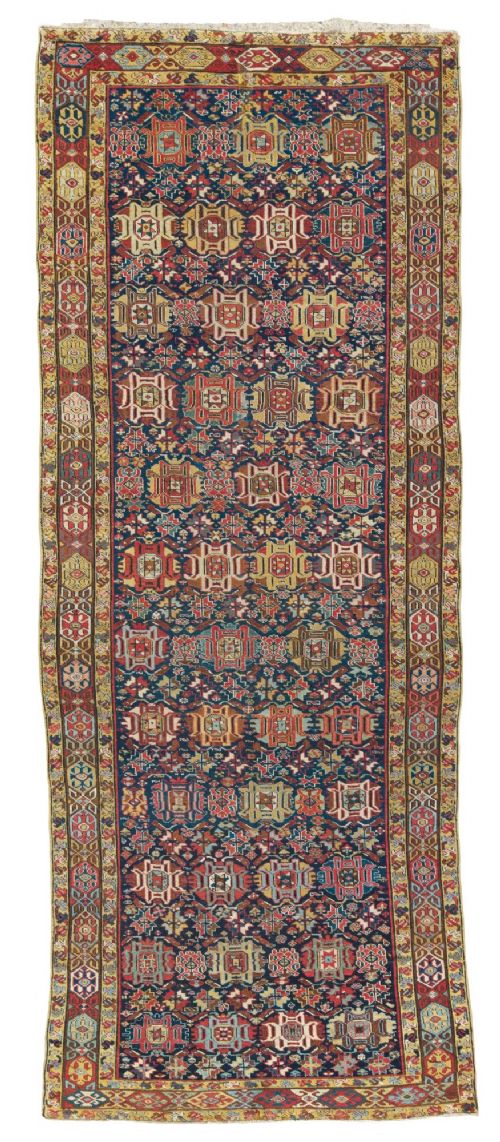
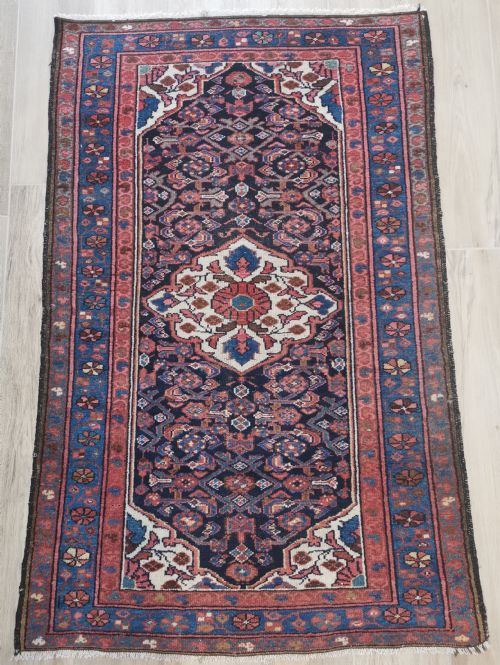
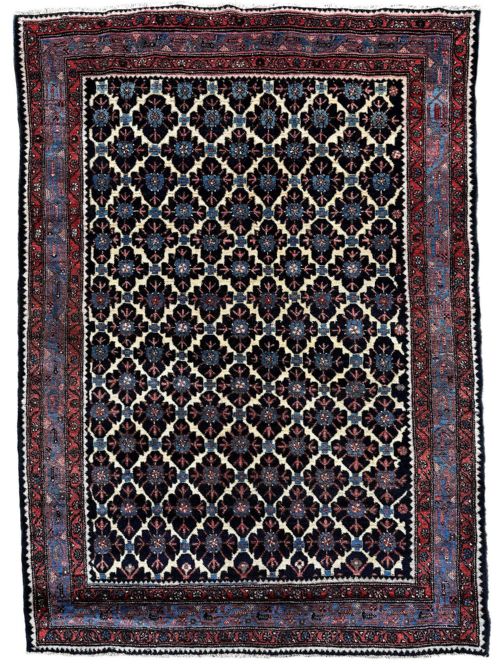
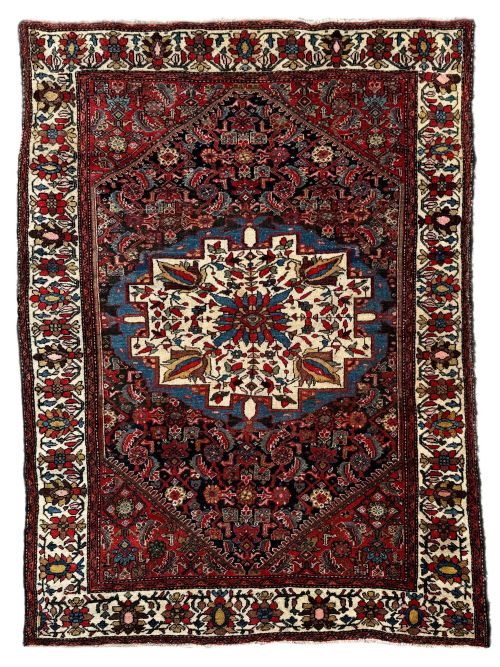
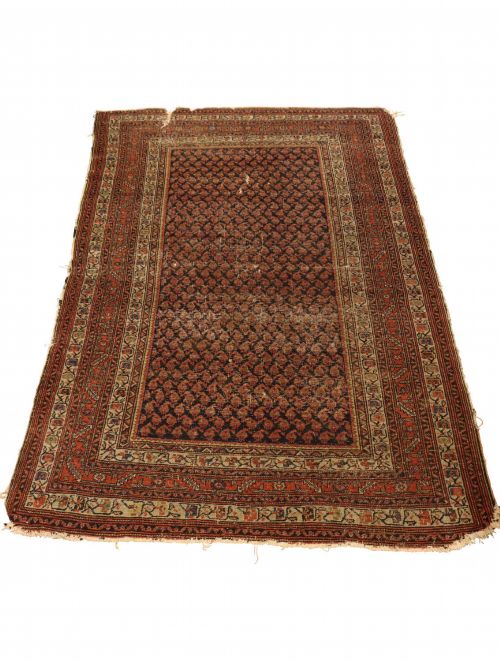
Red Navy Runner Rug
A red navy runner rug provides a linear expanse of hand-knotted wool, bringing durable tribal and traditional Persian design to hallways and narrow rooms.
Red Navy Runner Rug
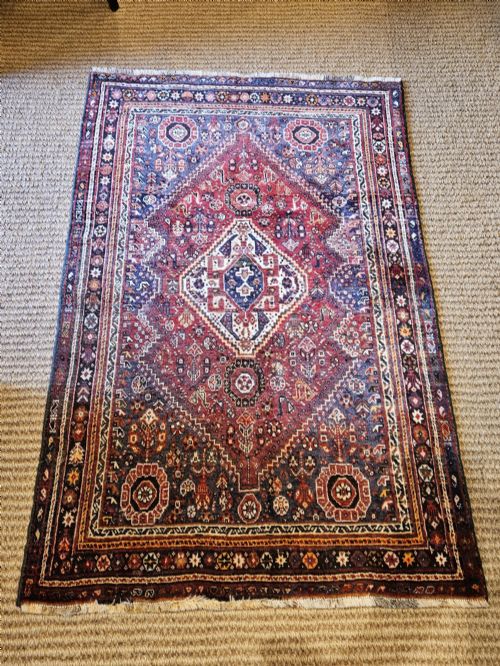
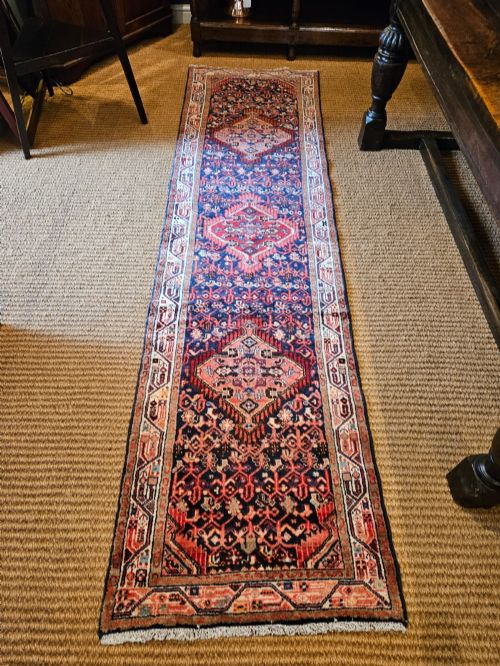
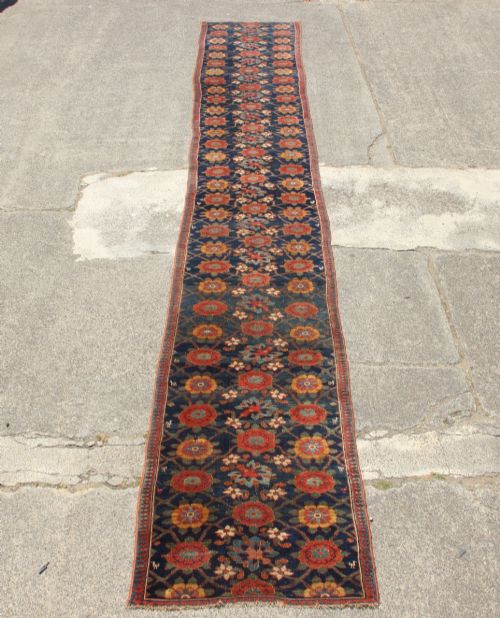
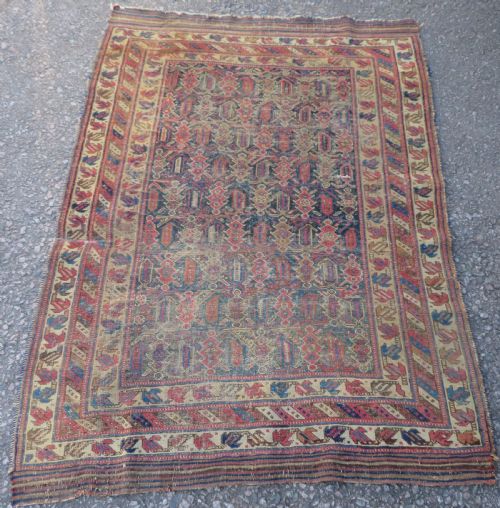
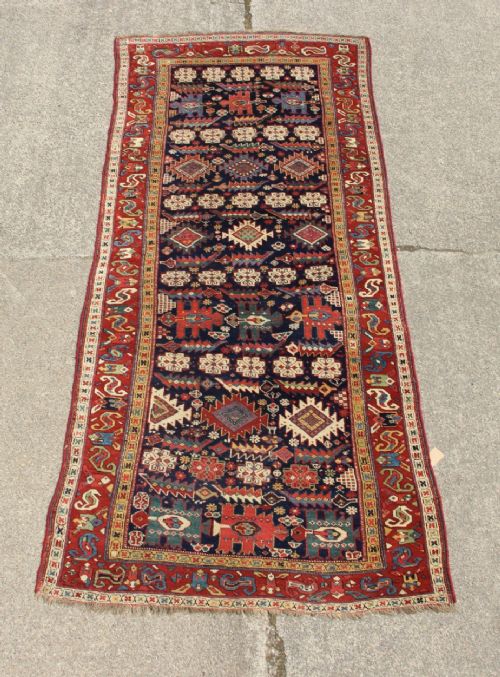
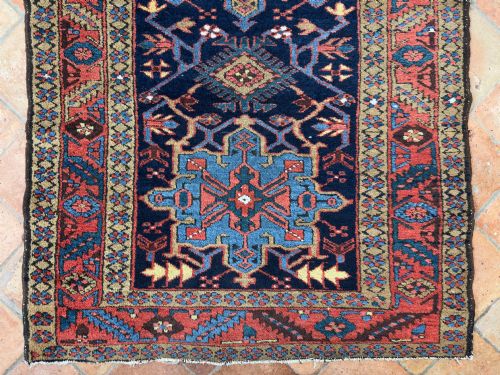
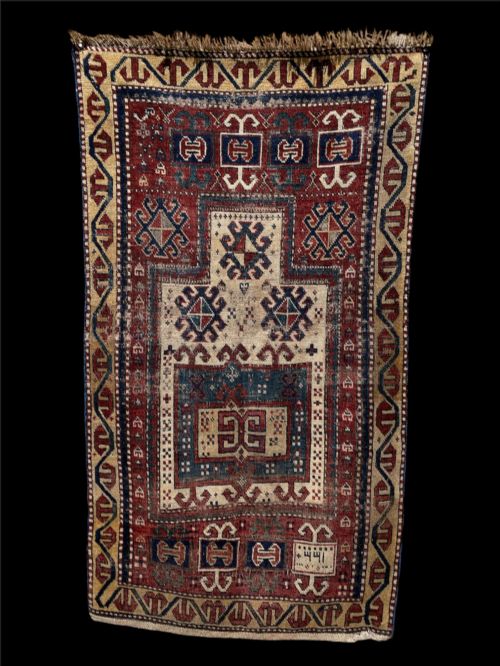
A red navy runner rug is a long, narrow floor covering intended for corridors, hallways, and transitional spaces. These pieces draw from Persian tribal, traditional Persian, Caucasian, and Baluch traditions, manifesting in lengths designed to anchor linear interior architecture.
The selections span periods from the mid-nineteenth century through the early twentieth century, incorporating village and nomadic expressions such as Kurdish, Hamadan, Heriz, and Baluch formats. Buyers encounter narrow formats like the long Malyor runner alongside structured Heriz and Hamadan hallway runners.
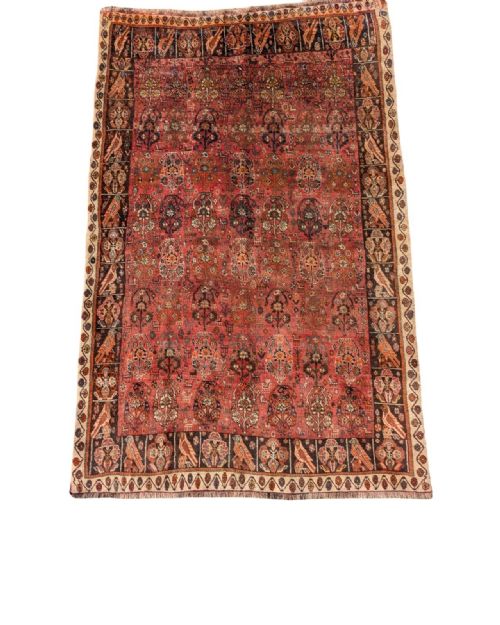
Makers utilised familiar regional motifs, integrating boteh designs, Mina Khani patterns, and prayer mihrabs into formats suited to high-traffic domestic passages. Each piece reflects the specific weaving conventions of its district of origin, from Khorassan to Northwest Persia.
Materials and construction methods
Construction relies on natural animal and plant fibres, primarily utilising wool for the pile and cotton for foundation warps and wefts. Certain pieces incorporate hand-spun wool, giving the yarn varied tactile density and irregular dye absorption.
Weavers knotted the pile by hand onto foundational warps, securing the rows with sturdy weft threads to create a dense textile capable of enduring generations of foot traffic. Natural dyes provide the underlying red and navy palettes, reacting to age with subtle tonal variations.
Listings span from the 1850s to the 1930s, featuring wool and hand-spun wool across Persian, Caucasian, and Kurdish tribal forms.
Assessing quality in antique runners
Quality rests upon knot density, handle flexibility, and the integrity of the foundation weave. A tightly beaten-down weave yields a firm, resilient handle that maintains structural stability along long edges.
Visual depth distinguishes finer examples, where complex geometric or floral compositions retain crisp clarity across the narrow format. The handling of natural dyes creates harmonious shifts in shade, avoiding muddy transitions and maintaining structural symmetry from end to end.
The Red Navy Runner Rug Glossary
- Runner
- A long, narrow carpet format designed specifically for hallways, corridors, and stairs. It guides movement through domestic spaces.
- Mina Khani
- A repeating all-over floral pattern composed of interconnected rosette motifs and delicate vines. It appears frequently in traditional Persian weaving.
- Boteh
- A stylised almond or teardrop motif symbolising life and eternity. This shape originates in ancient Persian textile arts.
- Mihrab
- A niche design representing the prayer focal point, commonly found in rugs intended for devotional use. It directs the orientation of the piece.
- Warp
- The stationary vertical threads stretched onto the loom before knotting begins. The pile is tied around these foundational strands.
Red Navy Runner Rug: Frequently Asked Questions
Where should I place a runner rug?
These narrow formats suit hallways, corridors, entryways, and narrow galley kitchens where linear floor coverings soften foot traffic.
They also function well alongside beds or in narrow gallery spaces, protecting wood flooring while introducing colour and historic pattern.
How do I clean an antique wool rug?
Routine maintenance requires gentle vacuuming without a rotating brush roll to prevent snagging the hand-knotted wool pile.
Professional specialist cleaning is necessary for deep maintenance to protect natural dyes and fragile cotton foundations.
How can I tell the age of these pieces?
Dating relies on assessing dye palettes, wool characteristics, structural wear patterns, and regional weaving structures documented across nineteenth and early twentieth-century examples.
Hand-spun wool and specific tribal drawing styles often point towards the earlier decades represented in the collection.
What is the difference between tribal and village rugs?
Tribal rugs are woven by nomadic or semi-nomadic groups using memory-based geometric designs and spontaneous colour choices.
Village rugs are typically produced in settled communities with more structured formatting, though both share traditional hand-knotting techniques.