


Vintage Corridor Rug
A vintage corridor rug brings warmth and linear pattern to long hallways, stepping through styles from Persian tribal weaves to Anatolian village runners.
Vintage Corridor Rug
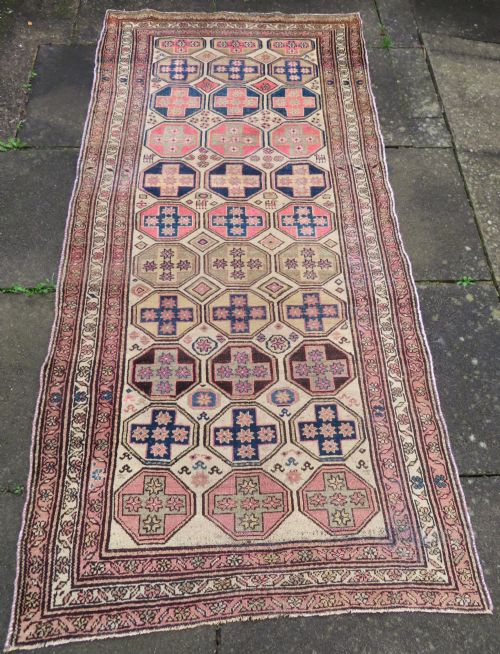
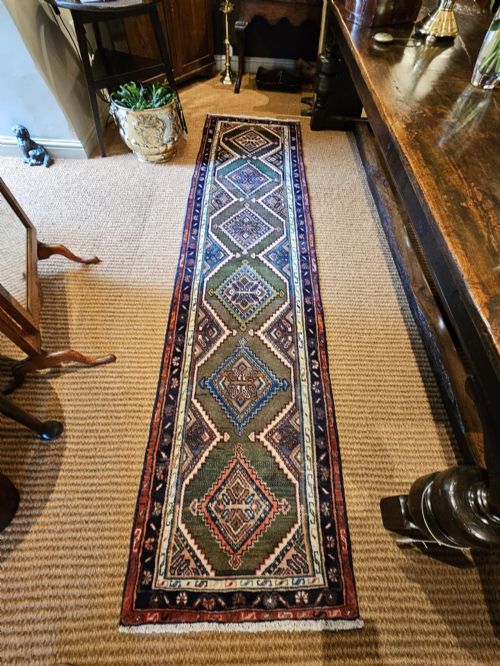
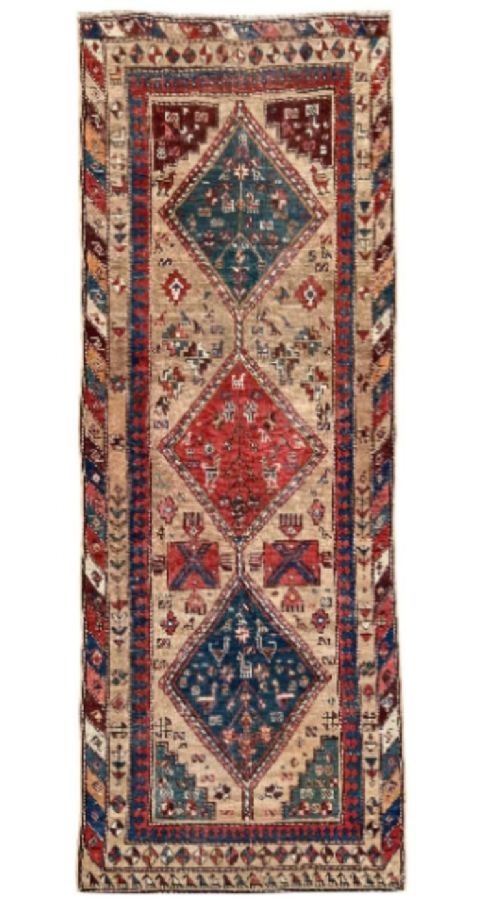
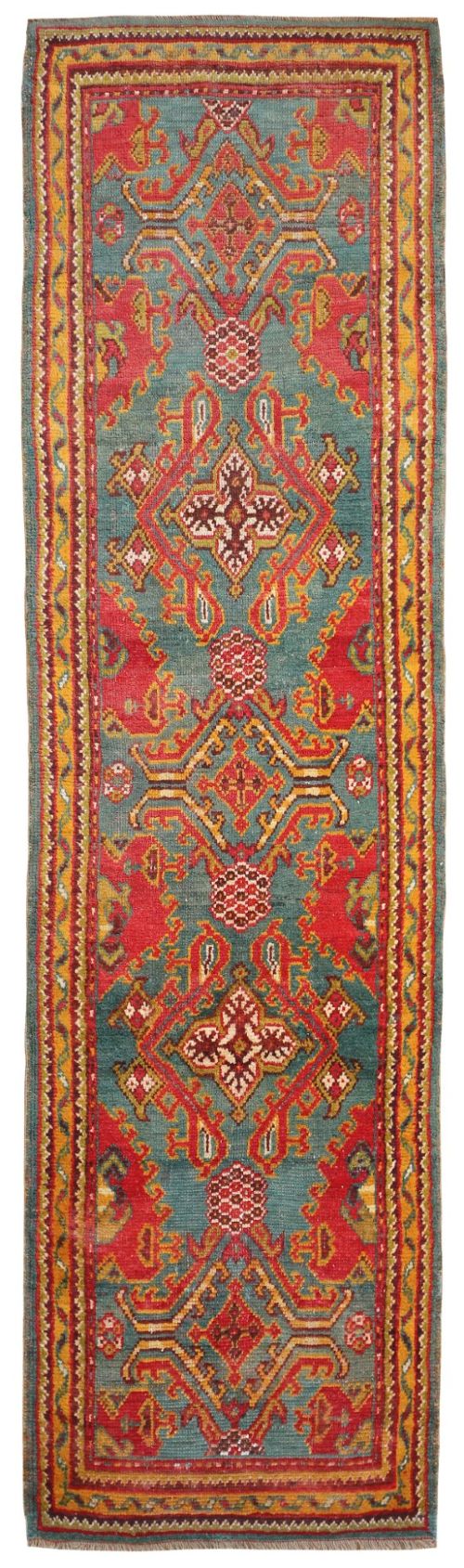
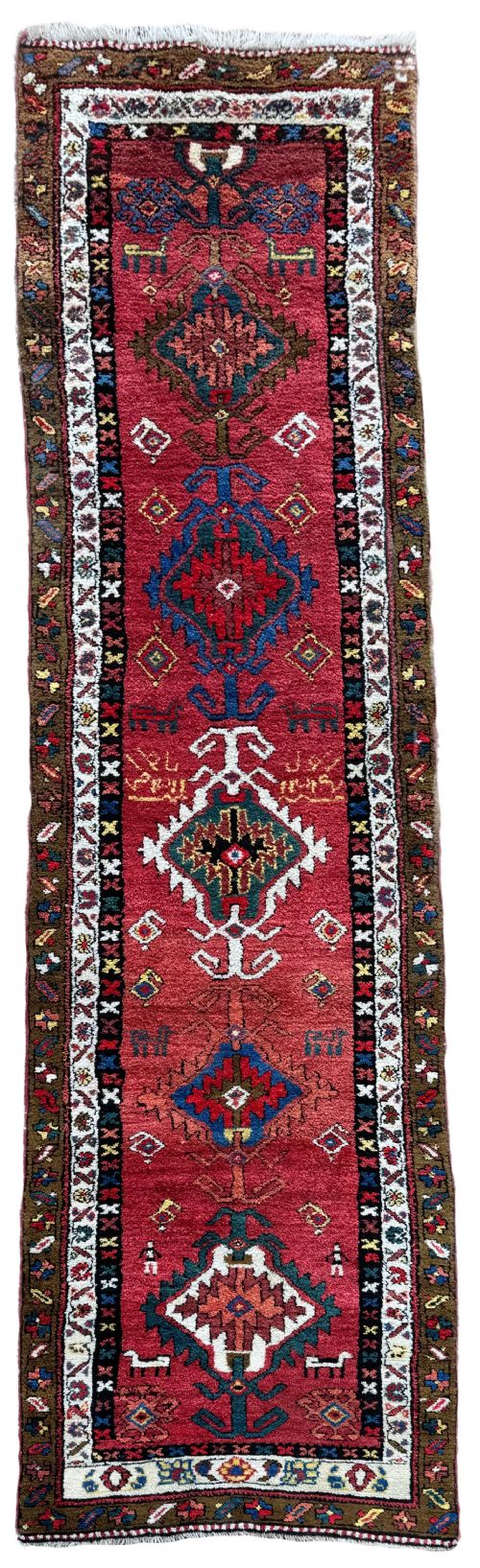
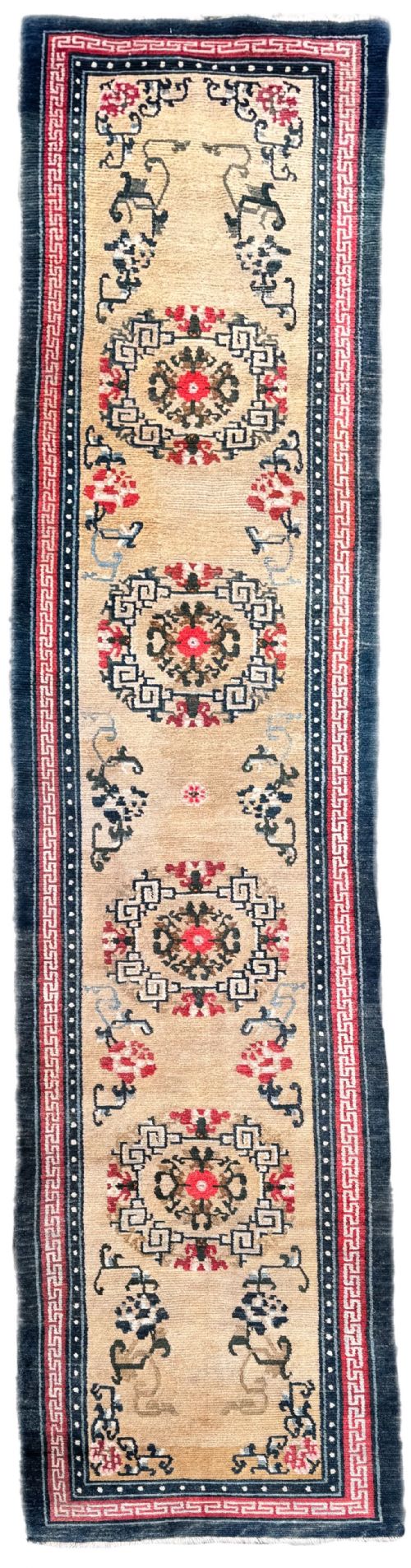
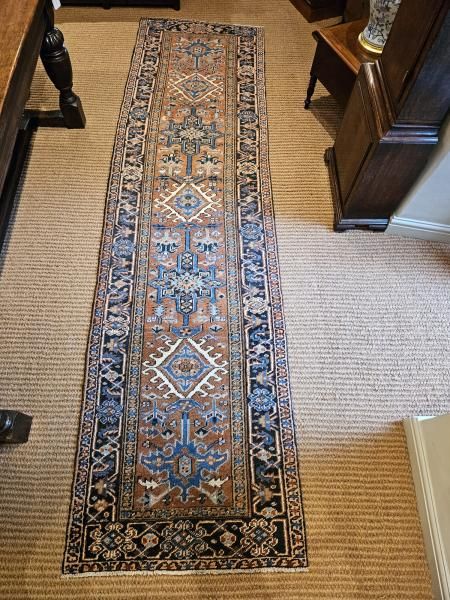
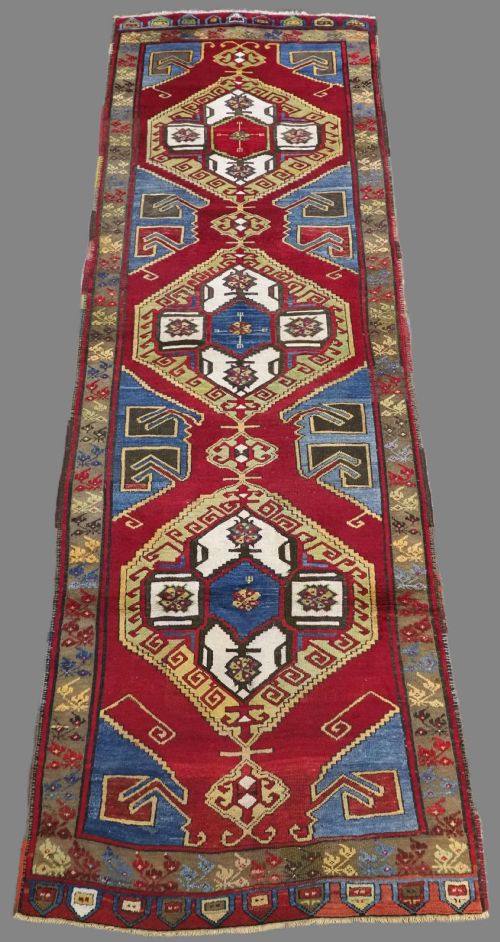
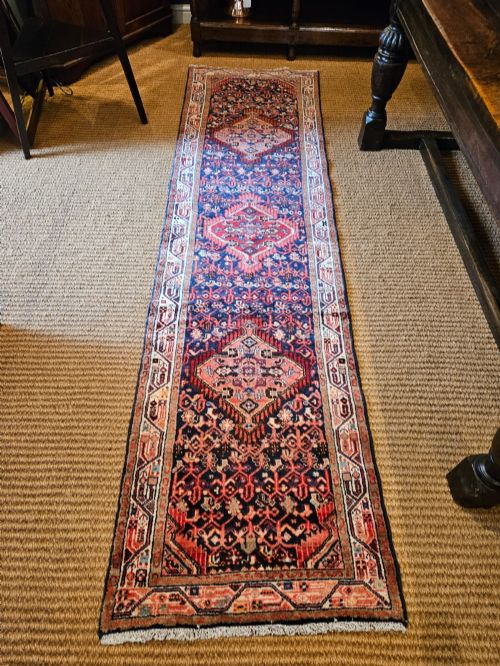
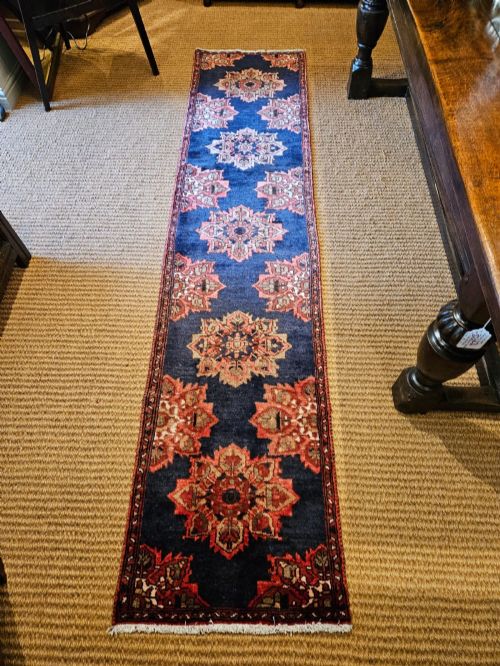
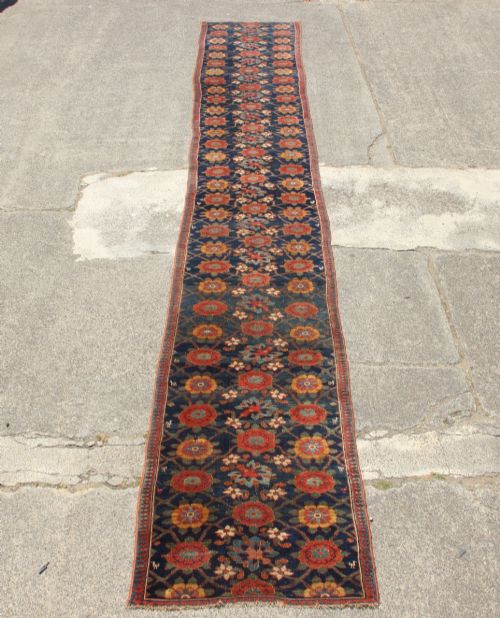
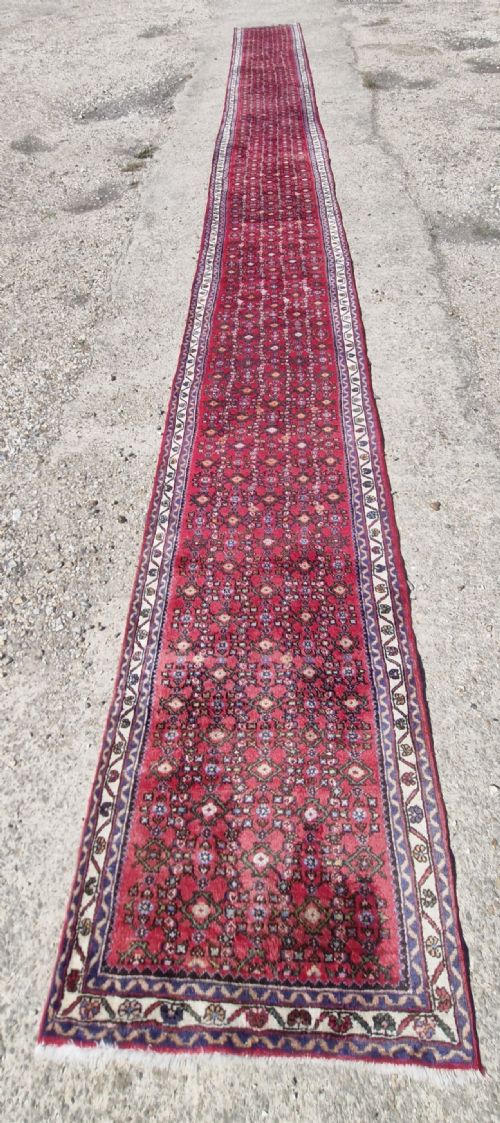
A vintage corridor rug typically takes the form of a long, narrow runner designed to bridge hallways, landings and transitional spaces in a home. The selection spans origins from Persia, Turkey, the Caucasus, Tibet, Morocco and beyond, capturing formats that range from compact lengths to expansive corridors stretching past several metres.
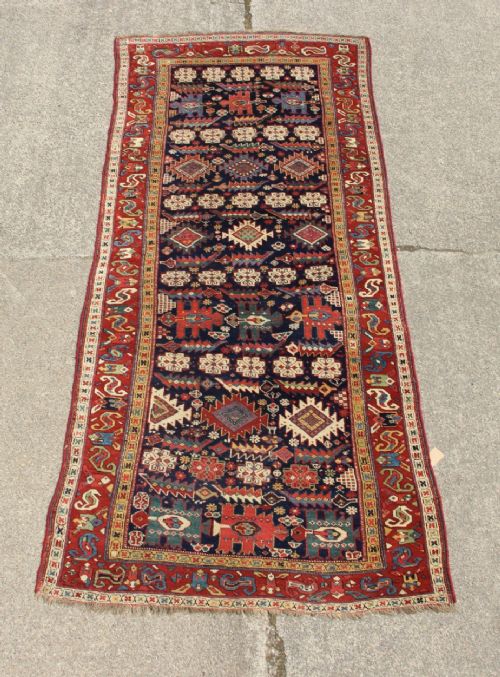
The most common examples on this page hail from the late nineteenth century and early decades of the twentieth century. Traditional styles dominate, including Kurdish, Heriz, Ushak, Kazak, Hamadan, and Caucasian Shirvan weaves, reflecting the distinct geometric and floral repertoires of their regional makers.
How they were made
These floor coverings rely on foundational textile traditions using wool and cotton materials. Many pieces incorporate hand-spun wool, providing a tactile texture and resilience suited to high-traffic domestic corridors.
Weavers constructed these runners using traditional hand-knotting and flatweaving techniques. These methods ensured structural integrity along extended formats, allowing intricate tribal and geometric motifs to hold firm across the length of the rug.
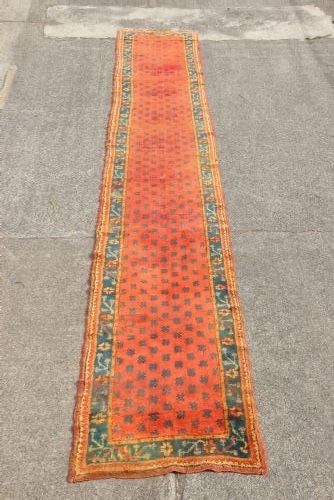
Several runners stretch to remarkable lengths, including one monumental hall runner measuring a sprawling thirty-two feet long.
What varies in quality
The distinction between tiers rests upon the fineness of the knotting and the complexity of the design execution. Tighter knot counts allow for crisper geometric lines and more intricate floral medallion details, particularly evident in Persian Heriz and Kurdish Mina Khani pieces.
Material preparation also plays a central role, where the grade of hand-spun wool and the depth of natural or traditional dye work dictate visual richness. Examples with consistent pile retention and balanced proportions across long dimensions represent the upper end of the selection.
The Vintage Corridor Rug Glossary
- Runner
- A long, narrow carpet format specifically proportioned for corridors, hallways and stairs. It guides movement through domestic layouts.
- Kelleh
- A large, elongated rug format often broader than a standard runner, bridging the scale between a carpet and a corridor piece.
- Kilim
- A flatwoven textile produced without a pile, offering a lighter weight and crisp geometric patterning.
- Mina Khani
- A repeating, all-over floral lattice pattern commonly found in Persian rugs and runners.
Vintage Corridor Rug: Frequently Asked Questions
How do I choose the right length for a hallway?
Measure your corridor while leaving an equal margin of exposed flooring around the edges of the rug to frame the space properly. Ensure doors can swing open freely over the pile thickness.
Consider the main pathway through the hall and select a length that anchors the journey without blocking entrances to adjoining rooms.
Where should I place a long runner rug?
These pieces suit high-traffic transitional zones such as entrance halls, long corridors, and wide stair landings where linear warmth is beneficial. They soften footsteps and introduce visual interest to otherwise plain architectural passageways.
Keep them away from damp areas unless the material tolerance matches the environment.
How do I identify a tribal runner from a village piece?
Tribal runners usually display memory-driven geometric symbols, bold medallions, and looser symmetry reflecting nomadic traditions. Village pieces often incorporate more structured floral repeats while retaining regional folk characteristics.
Examining the border motifs and abrash colour variations helps clarify the weaving origin.
How do I care for a vintage wool runner?
Vacuum gently using suction attachment without the rotating brush bar to protect the aged wool pile and fringes. Rotate the runner periodically to ensure even wear across high-footfall sections.
Use a quality underlay to prevent slipping and reduce friction between the backing and the floorboards.