


Antique Gallery Rug
An antique gallery rug brings enduring colour and hand-knotted structure to a large hallway, landing or expansive room.
Antique Gallery Rug
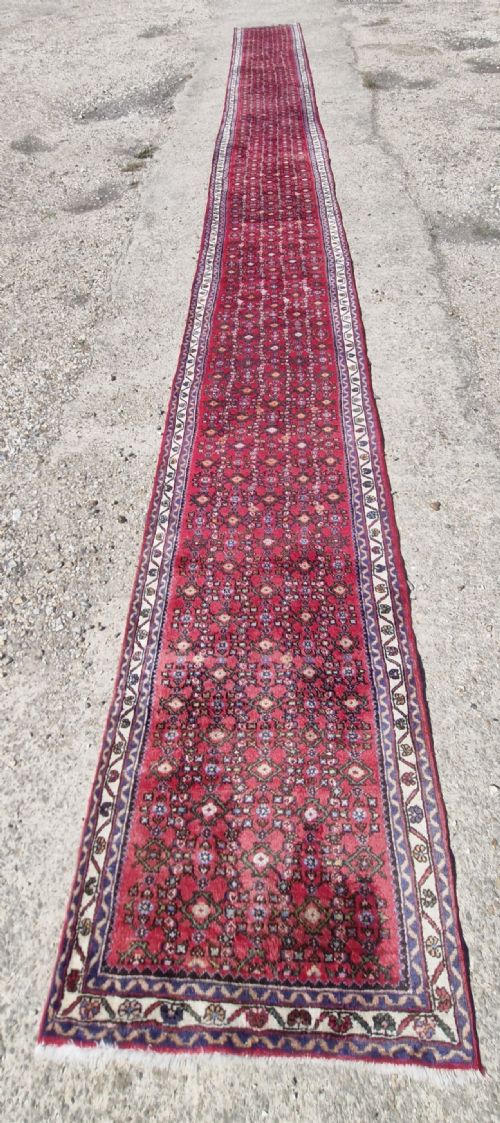
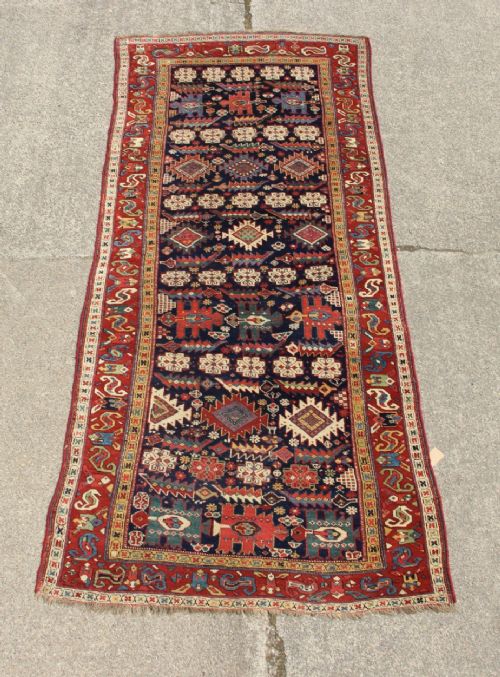
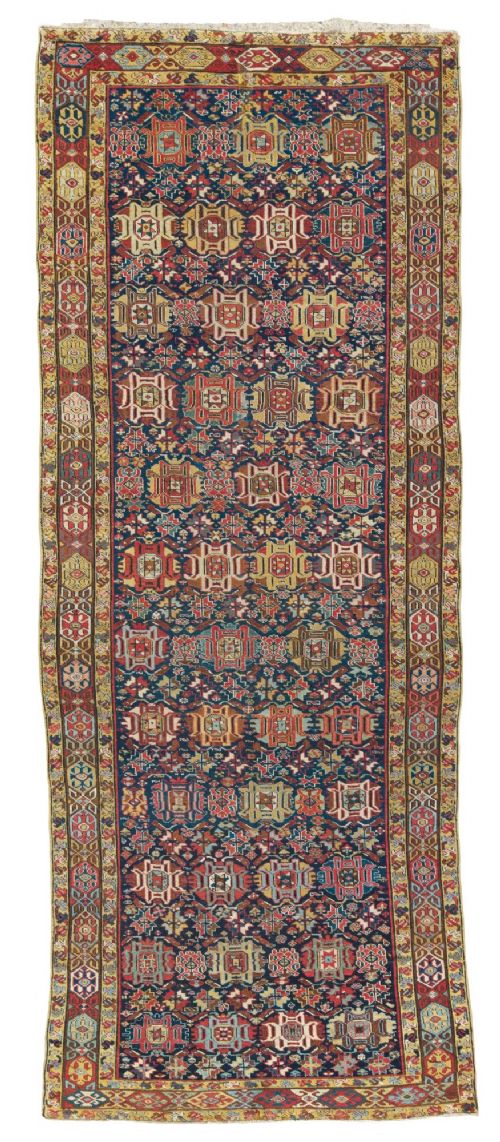
When you search for an antique gallery rug, you encounter substantial floor coverings designed specifically for long corridors, landings and grand reception rooms. These pieces typically take the form of elongated carpets and runners, often referred to as kellehs, measuring significantly longer than they are wide. Most examples originate from Persian and Caucasian weaving traditions, spanning the nineteenth and early twentieth centuries.
On this page, you are most likely to meet tribal and village productions from regions such as Kurdistan, Bidjar, Serapi and Malayer. These textiles serve both practical and decorative purposes, offering heavy wool piles built to withstand generations of foot traffic while displaying intricate geometric and floral motifs. Each rug reflects the distinct cultural vocabulary of the weavers who knotted them by hand.
How they were made
These floor coverings rely upon a foundation of hand-spun wool and cotton, providing a sturdy structural base for the dense pile. Weavers utilised natural dyes derived from plants and minerals, resulting in rich, nuanced shades of madder red, indigo and earthy yellow that soften gracefully over time.
The construction involves hand-knotting wool onto warp and weft threads, creating a durable textile designed for daily utility. Skilled artisans worked from memory or traditional patterns, producing distinctive borders such as the crab pattern or harshang motif alongside central field designs.
Regional styles include Persian Tribal, Caucasian, Kurdish, Serapi, Bidjar and Bakshiash.
What varies in quality
Quality in these textiles depends heavily on the density of the knotting and the precision of the wool preparation. Finer hand-spun wool yields a more resilient pile and allows for sharper delineation of geometric borders and intricate medallions.
The depth and harmony of the natural dye palette also distinguish superior examples. Variations in tone, known as abrash, demonstrate the authentic use of natural dyestuffs and contribute to the visual richness of the surface.
The Antique Gallery Rug Glossary
- Kelleh
- A large format carpet or long rug traditionally used in Persian rooms. These pieces offer extended rectangular proportions suited to gallery spaces.
- Abrash
- Natural colour variation within a field of wool caused by batches of yarn dyed at different times. This tonal shift signals traditional dyeing methods.
- Warp
- The vertical foundation threads stretched tightly on the loom before knotting begins. Cotton or wool warp threads form the structural skeleton of the textile.
- Weft
- Horizontal threads passed between rows of knots to bind the structure together. The tension of the weft determines the rigidity of the finished rug.
- Gul
- A repeating medallion or octagonal motif found in tribal weaving. These symbols often carry regional significance specific to the producing tribe.
Antique Gallery Rug: Frequently Asked Questions
Where should I place a gallery rug?
These elongated carpets suit long hallways, wide landings and spaces requiring a substantial linear floor covering.
Their narrow proportions allow them to anchor furniture arrangements in corridors or gallery rooms without overwhelming the floor area.
How do I care for an old wool rug?
Regular gentle vacuuming without a rotating brush bar prevents dirt from settling deep into the hand-spun wool pile.
Professional cleaning should be undertaken periodically by specialists familiar with natural dyes and antique textiles.
What is the difference between a runner and a kelleh?
Runners generally present very narrow, long proportions intended for corridors and stairs.
A kelleh typically offers a broader format, functioning as a long carpet suited to spacious rooms and galleries.
How can I tell a tribal rug from a city piece?
Tribal rugs often display geometric motifs, memory-driven designs and asymmetrical colour shifts unique to village weavers.
City carpets generally exhibit more formal, curvilinear floral patterns woven from fixed cartoons on professional looms.