






Vintage Oriental Hallway Runner
A vintage oriental hallway runner brings linear pattern and deep colour to a long floor.
Vintage Oriental Hallway Runner
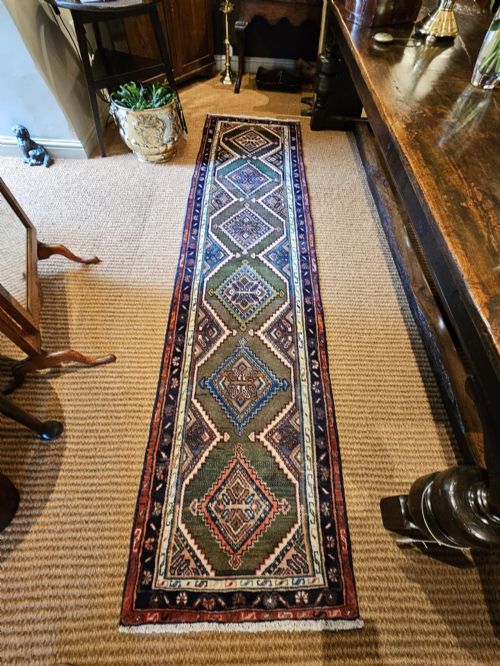
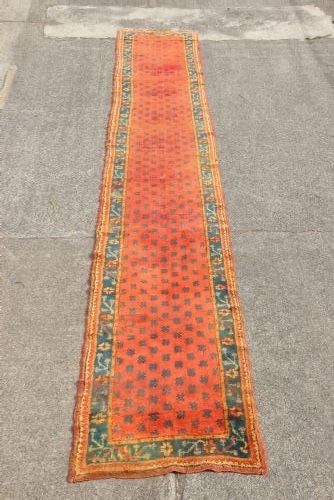
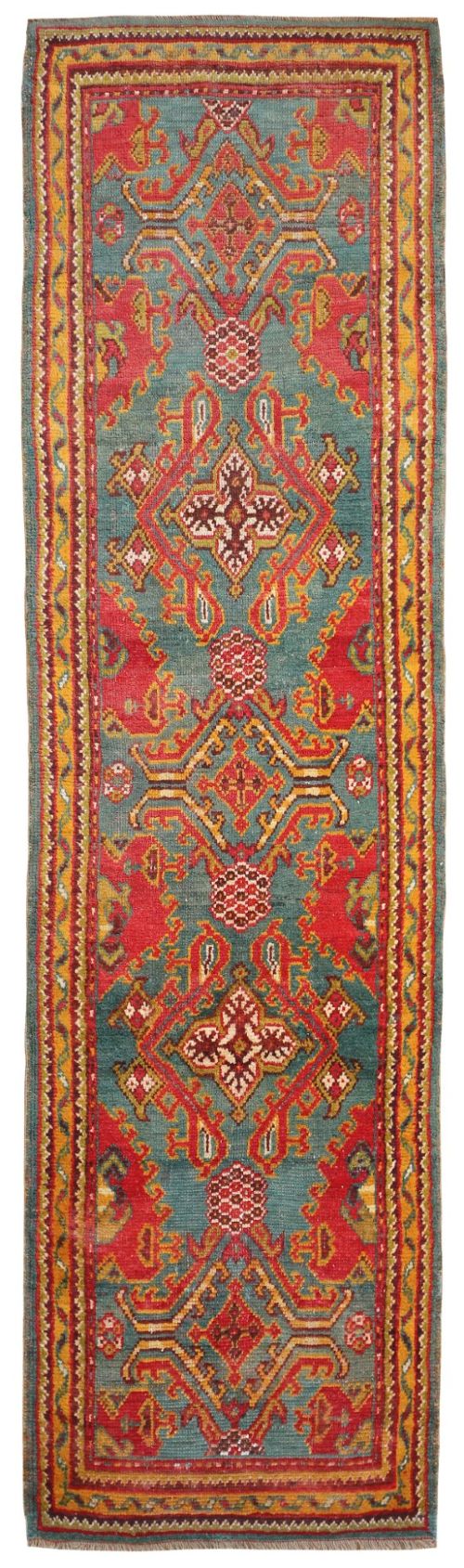
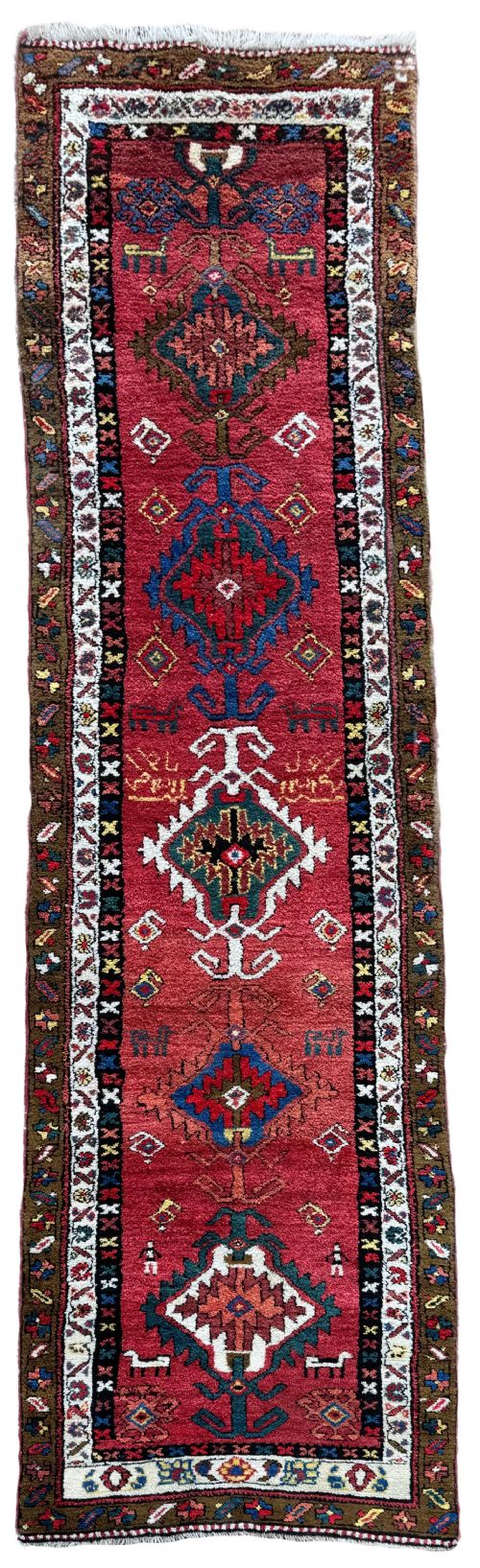
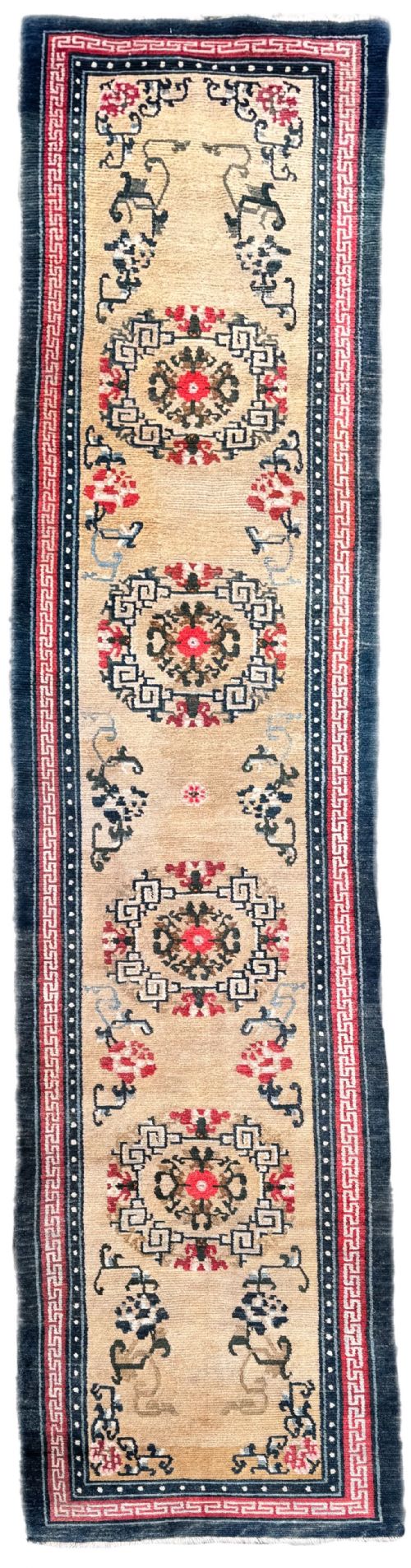
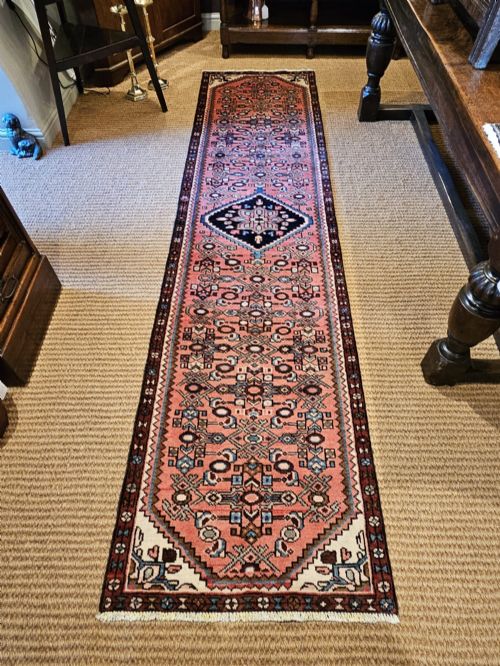
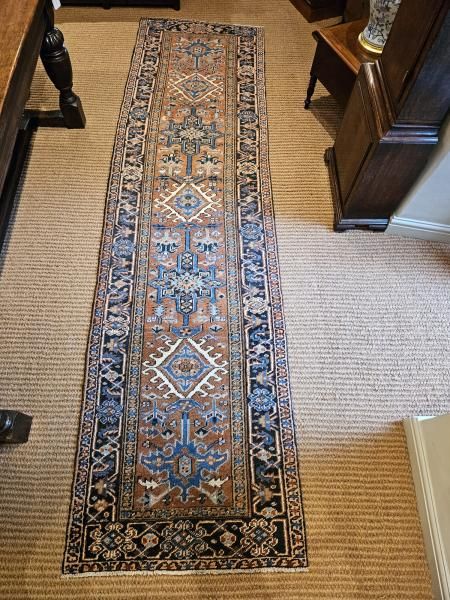
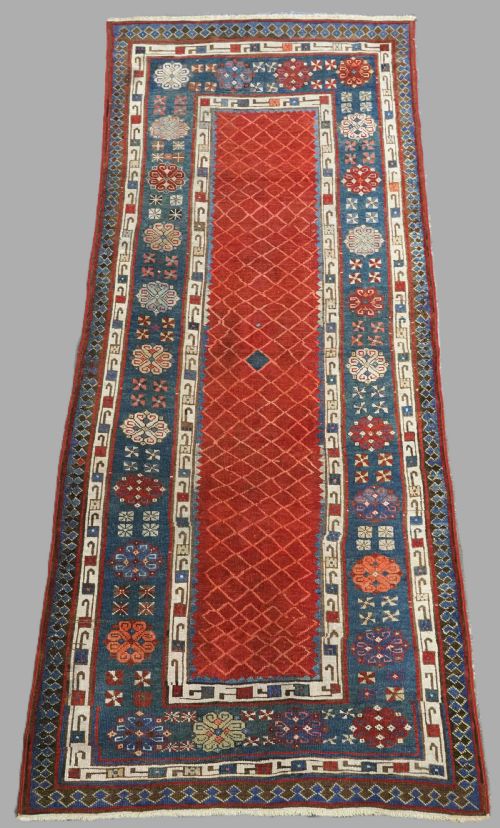
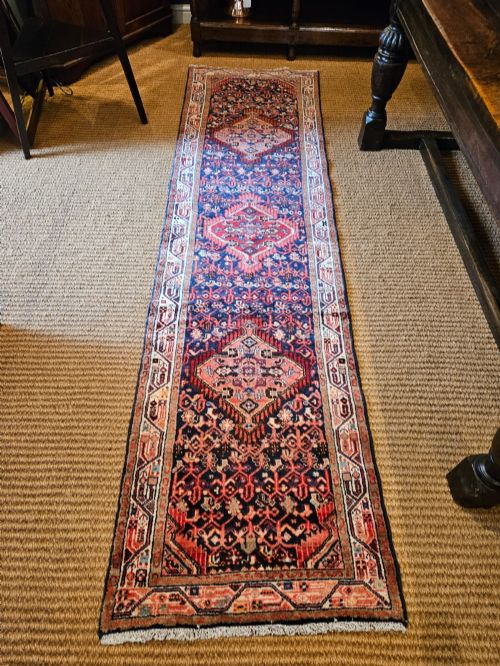
A vintage oriental hallway runner is a narrow, elongated textile designed specifically for corridors, landings and extended spaces. The pieces gathered under this phrase span periods from the nineteenth century through the early decades of the twentieth century, originating from weaving traditions across Persia, Turkey, the Caucasus and Tibet. Buyers find formats ranging from compact lengths to exceptionally extended carpets stretching over several metres.
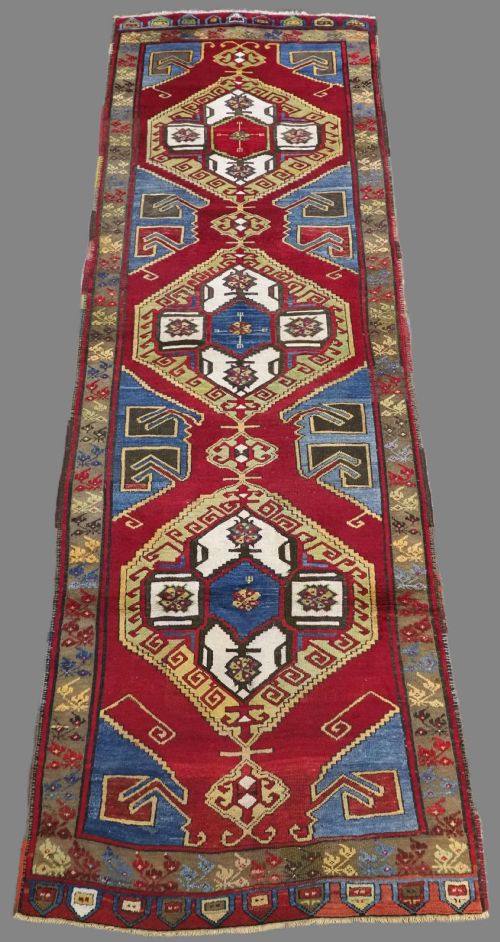
The selection on this page leans heavily toward traditional village and tribal workshops rather than city manufactories. Pieces attributed to Kurdish, Heriz, Ushak, Caucasian and Anatolian weavers appear frequently, displaying geometric medallions, repeating lattice motifs and bold tribal symbols. These rugs served practical domestic purposes in high-traffic areas, resulting in sturdy structures built to endure decades of footfall.
Distinctions in Standard
Quality in these long textiles rests upon the precision of the knotting, the integrity of the structural foundation and the clarity of the design layout. Finer knots per square inch allow for crisper geometric lines and more intricate medallion details, particularly in pieces originating from structured workshops.
The balance of the composition across a long narrow format dictates visual success. Superior examples maintain consistent width and straight edges down their entire length, whereas rustic tribal pieces often exhibit charming irregularities and width variations that reflect hand-beaten loom work.
Materials recorded across current pieces consist entirely of natural wool and cotton fibres.
The Vintage Oriental Hallway Runner Glossary
- Runner
- A long, narrow carpet format intended for hallways, corridors and stairs. These pieces measure significantly longer than they are wide.
- Pile
- The upright yarn surface of the carpet formed by individual knots tied to the foundation warp threads. This layer absorbs daily wear.
- Warp
- The vertical foundation threads stretched tightly on the loom before knotting begins. Fringe ends typically emerge from these parallel yarns.
- Weft
- Horizontal threads passed back and forth between rows of knots to bind the structure together. They stabilize the width of the textile.
- Medallion
- A central ornamental design motif placed symmetrically within the field of the rug. Tribal and village weavers often render these in geometric or stylized floral forms.
Vintage Oriental Hallway Runner: Frequently Asked Questions
How do I clean an antique wool runner?
Regular gentle vacuuming without a beater bar removes surface grit and dust effectively. Professional specialist rug cleaning is necessary for deep washing to protect natural wool pile and dyes.
Avoid harsh household detergents or excessive water immersion. Proper drying prevents mildew and protects the underlying cotton or wool foundation structures.
Are these runners suitable for heavy traffic areas?
Village and tribal runners were originally constructed for heavy domestic use in homes and corridors. The dense wool pile handles regular footfall well when paired with a quality underlay.
An appropriate underlay prevents slipping and cushions the textile against hard subfloors. This simple addition reduces direct friction between the floorboards and the historic foundation.
How do I identify a Caucasian runner?
Caucasian pieces typically feature bold geometric medallions, stark primary colours and sharp rectilinear motifs. The wool often feels slightly crisper and the weave tends to be structurally tight.
Design elements frequently include hooked polygons, stylized animals and structured latch-hook borders. These visual markers separate Caucasian weaving from softer floral Persian styles.
Why do some antique runners have crooked edges?
Hand-beaten village and nomadic looms relied on manual tension rather than mechanical frames. Slight shifts in tension during months of weaving caused natural undulations along the outer margins.
This characteristic confirms hand production by individual artisans rather than factory output. Collectors appreciate these subtle irregularities as evidence of genuine age and handmade origin.