

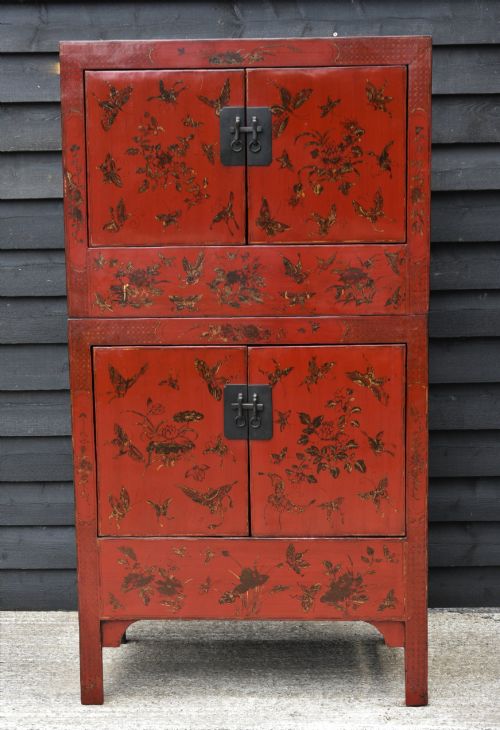
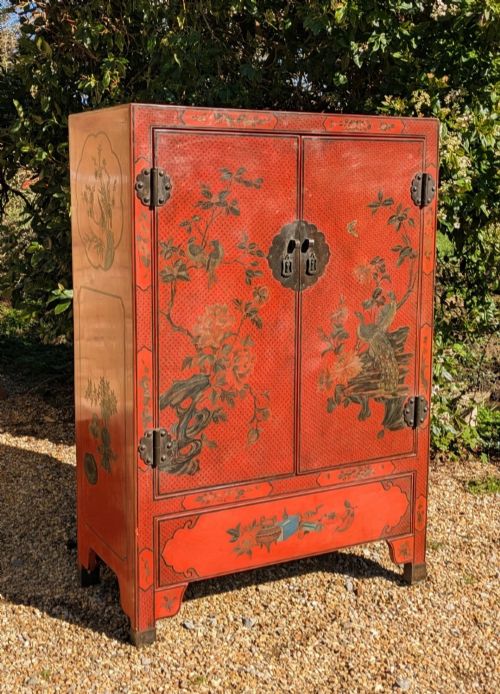
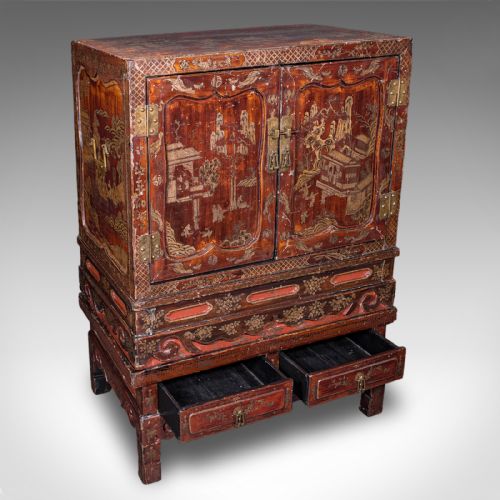
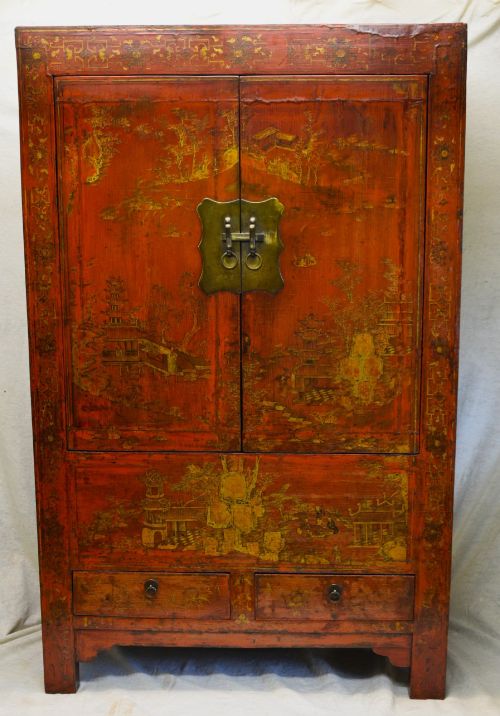


Red Lacquered Chinese Cabinet
A red lacquered chinese cabinet brings deep pigment and striking form to an interior, drawing the eye with its layered surface.
Red Lacquered Chinese Cabinet
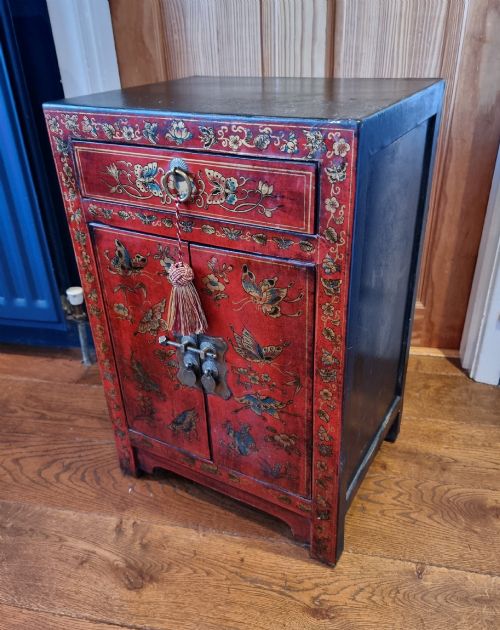
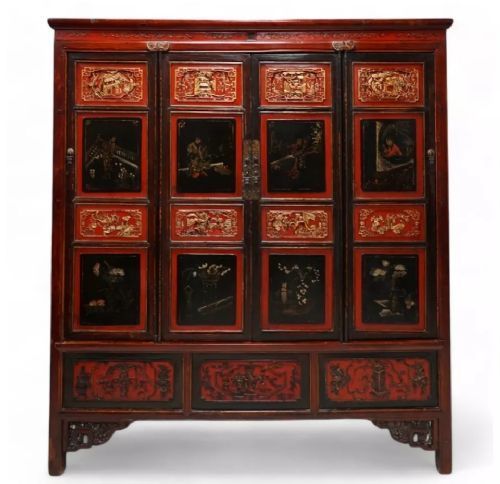
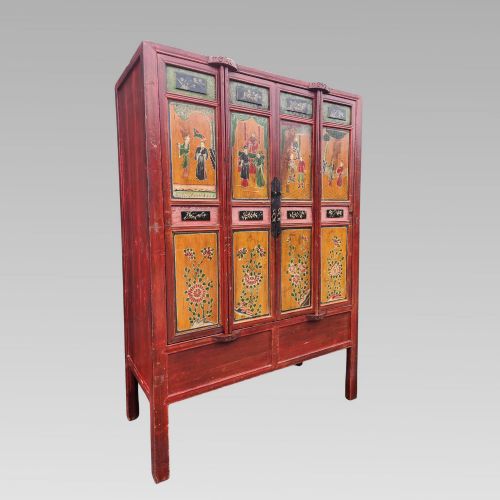
A red lacquered chinese cabinet groups large storage furniture and smaller table chests built from wood and coated in pigmented varnish. The pieces appearing most frequently range from grand marriage and wedding armoires to side cabinets, apothecary chests and smaller bedside pieces.
Origins stretch across nineteenth-century output into early twentieth-century examples, incorporating provincial workshops and Qing Dynasty traditions. Buyers encounter everything from monumental storage cupboards to compact table cabinets designed for jewellery or cutlery.
How they were made
Workshops built these carcases primarily in timber such as elm or hardwood, then applied successive layers of lacquer to seal the structure. Artisans frequently integrated brass hardware, iron hinges and delicate gold leaf detailing across the red surfaces.
Carved elements and gilt decoration defined the ornamentation on many provincial examples, while other surfaces received inlaid details or painted Chinoiserie motifs directly into the cured lacquer finish.
Red Lacquered Chinese Cabinet Retail Price Guide 2026
Typical asking prices for red lacquered chinese cabinet among the pieces listed under this phrase on Sellingantiques today, from the lower quarter to the upper quarter. They describe what is for sale here now, not the wider market.
Listings feature pieces spanning the nineteenth century, Victorian era, and early twentieth century up to the 1930s, constructed in wood, lacquer, brass, and iron.
What varies in quality
The depth of the lacquer finish and the precision of the underlying woodwork distinguish finer examples from standard production. Rich pigment application and well-preserved gilding elevate the visual impact across larger wedding cupboards and side cabinets alike.
Hardware execution and the integrity of carved panels determine the overall refinement of the piece. Superior items maintain stable joinery alongside crisp carving that retains its original decorative character.
The Red Lacquered Chinese Cabinet Glossary
- Lacquer
- A natural resin varnish applied in multiple layers to wood surfaces to create a hard, glossy protective coating. This technique forms the primary visual and tactile characteristic of these cabinets.
- Chinoiserie
- A European decorative style reflecting Chinese artistic influences, frequently applied to domestic furniture items. It appears across various nineteenth-century and early twentieth-century British and continental interpretations.
- Marriage Cabinet
- A traditional large storage piece historically given to newlywed couples in China. These tall cupboards typically feature double doors and significant brass locking plates.
- Apothecary Chest
- A multi-drawer cabinet originally utilised for storing medicinal herbs, roots and powders in traditional pharmacies. They survive today as compact storage units with numerous small drawers.
- Qing Dynasty
- The final imperial dynasty of China, spanning from the seventeenth to the early twentieth century. Pieces attributed to this period reflect established regional crafting traditions from provinces such as Shanxi and Fujian.
Red Lacquered Chinese Cabinet: Frequently Asked Questions
What is a red lacquered chinese cabinet used for?
These cabinets provide striking visual storage in modern living spaces, functioning as wardrobes, sideboards or media units depending on their scale. Their internal shelving accommodates everyday items while the decorative exterior acts as a focal point in a room.
Smaller table variants serve as jewellery boxes or decorative surface pieces on desks and side tables. Their versatile dimensions allow them to integrate easily into diverse interior schemes.
How do I care for lacquer furniture?
Maintaining lacquer requires keeping pieces out of direct sunlight and away from extreme temperature shifts that could affect the wood underneath. Dusting gently with a soft, dry cloth preserves the polished surface without abrasion.
Avoid commercial polishes or chemical solvents, which can damage the delicate top layers of the finish. Gentle cleaning preserves the historical integrity of the surface.
How do I date a red lacquered chinese cabinet?
Dating relies on examining the timber construction, the style of the brass or iron hardware, and the wear patterns within the lacquer layers. Nineteenth-century examples often display hand-forged fittings and dense native hardwoods beneath the finish.
Later pieces from the early twentieth century may show different construction methods or standardised hardware components. Regional variations from provinces like Fujian or Shanxi also offer clues regarding the period of production.
Where were these cabinets made?
Production took place across various regions of China, with distinct workshops operating in provinces such as Fujian and Shanxi. Regional carpenters utilised local woods like elm alongside traditional lacquer techniques passed down through generations.
Export markets also influenced later production variants destined for Western buyers during the late Victorian era and the early twentieth century. This cross-cultural exchange shaped the specific Chinoiserie styles seen today.