






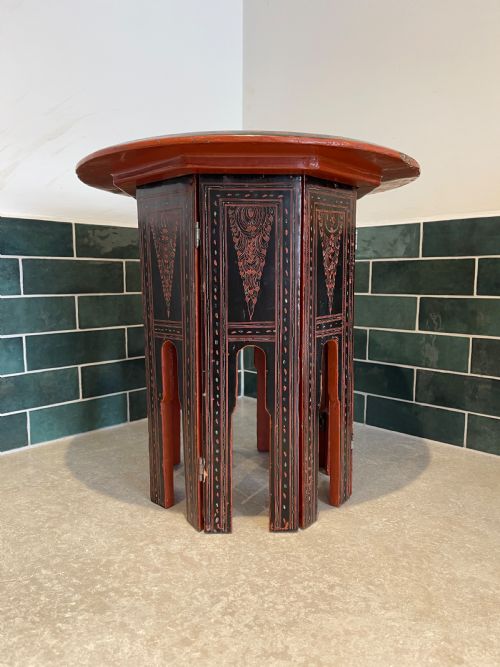
Red Lacquer Side Table
A red lacquer side table brings vibrant colour and layered decoration into a room, spanning styles from Chinoiserie to Regency.
Red Lacquer Side Table
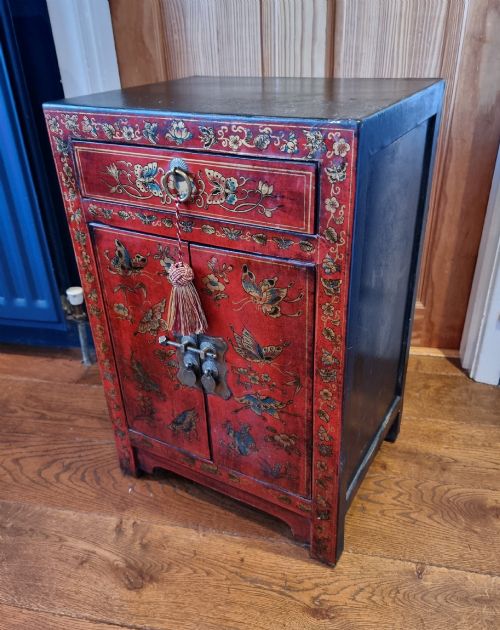
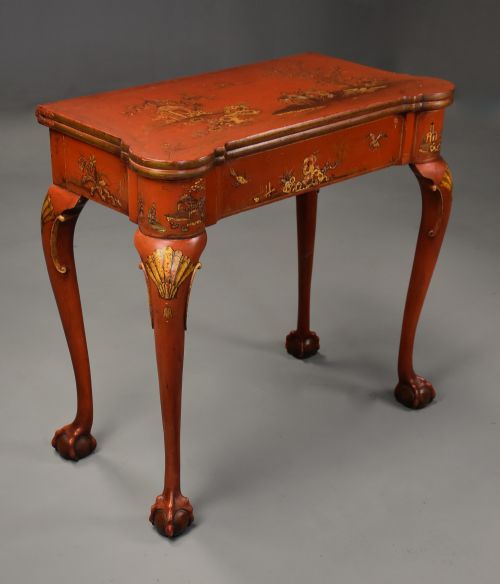
A red lacquer side table encompasses low occasional pieces, writing desks, and altars originating from China, Japan, Burma, and English workshops. These items combine utility with striking surface decoration.
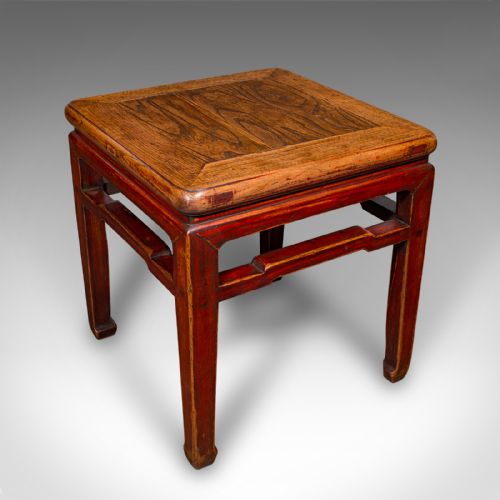
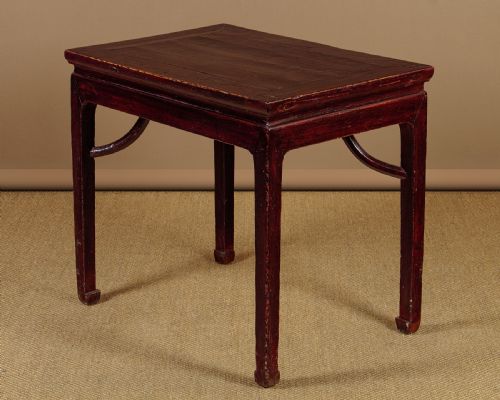
The most common examples on this page date from the nineteenth century and the early twentieth century. They include elm and hardwood frames finished with red lacquer, alongside bamboo and brass integrations.
Forms range from demi-lune tables and nests to two-tier stands and low coffee tables. They serve functional roles as bedside surfaces or display stands.
How They Were Made
Construction relies on timber foundations such as elm, hardwood, and bamboo, selected for stability before surface application. Artisans built frames using traditional joinery appropriate to each regional workshop.
Surface finishes involve layers of lacquer applied over wood, frequently embellished with gilt decoration, painted Chinoiserie motifs, or carved cinnabar details. Brass mounts and galleries sometimes accent the design.
Red Lacquer Side Table Retail Price Guide 2026
Typical asking prices for red lacquer side table among the pieces listed under this phrase on Sellingantiques today, from the lower quarter to the upper quarter. They describe what is for sale here now, not the wider market.
Listings feature periods from the eighteenth century through the 1930s, utilising materials such as lacquer, elm, bamboo, and brass.
What Varies in Quality
Quality rests in the depth and preservation of the lacquered surface, where hand-applied gilt work and detailed pictorial scenes demonstrate superior craftsmanship. Intricate carving in cinnabar or structured bamboo framing further elevates a piece.
Construction integrity distinguishes regional export items from bespoke English or French cabinetmaking. Pieces retaining their original decorative schemes and integrated hardware achieve higher standing.
The Red Lacquer Side Table Glossary
- Chinoiserie
- European decorative style reflecting Chinese artistic traditions. It appears frequently on English and continental furniture from various periods.
- Cinnabar lacquer
- Carved red lacquer built up in numerous layers before being cut with intricate designs. This technique demands considerable time and skill.
- Elm
- A durable hardwood utilised extensively in Chinese furniture construction. It provides a strong structural base for lacquer application.
- Etagere
- Open tiered furniture designed for displaying small objects or books. These pieces often incorporate bamboo and lacquer panels.
- Demi-lune
- Half-moon shape characteristic of tables designed to sit flush against a wall. Pairs of these tables frequently combine to form a circular surface.
Red Lacquer Side Table: Frequently Asked Questions
Where were these tables made?
The pieces originate from diverse locations including China, Japan, Burma, and European workshops inspired by Eastern aesthetics.
Craftsmen in each region utilised local timbers like elm and bamboo alongside traditional lacquering methods.
How do I care for a lacquered surface?
Keep these pieces away from direct sunlight and excessive heat to prevent the lacquer from drying or cracking. Dust gently with a soft, dry cloth without chemical polishes.
Maintaining stable room humidity protects both the wooden core and the delicate surface decoration.
Are these tables sturdy enough for daily use?
Most occasional tables, desks, and cabinets suit everyday placement for lamps or decorative items. Their solid hardwood or bamboo frames provide reliable daily support.
Care should be taken with delicate surfaces to avoid scratching the lacquer finish during active use.
What is the difference between Chinoiserie and Chinese export pieces?
Chinoiserie describes European-made furniture decorated in a European interpretation of Chinese styles. Chinese export items were produced in Asia specifically for Western markets.
Both categories share vibrant red lacquer finishes and pictorial motifs but stem from different manufacturing traditions.