


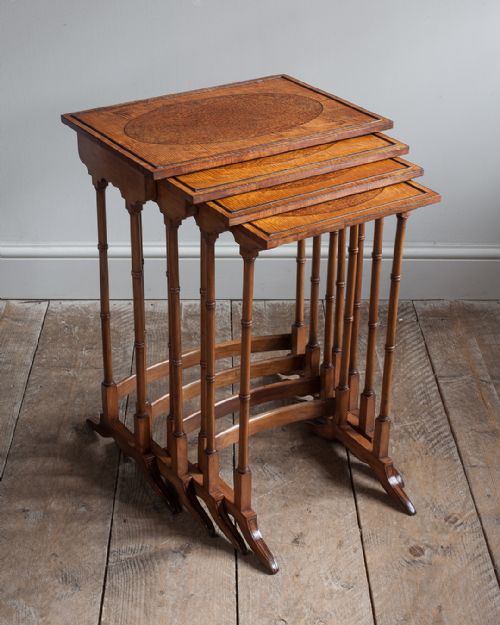


Victorian Bamboo Side Table
A victorian bamboo side table brings lightness and exotic texture into a room, favoured for its versatility and nineteenth-century charm.
Victorian Bamboo Side Table
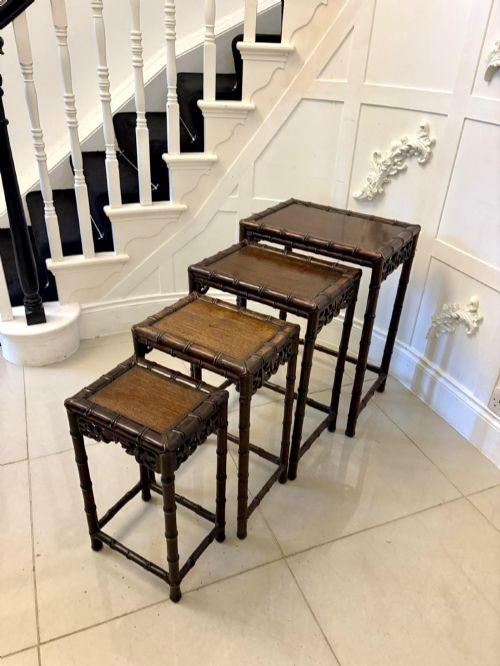
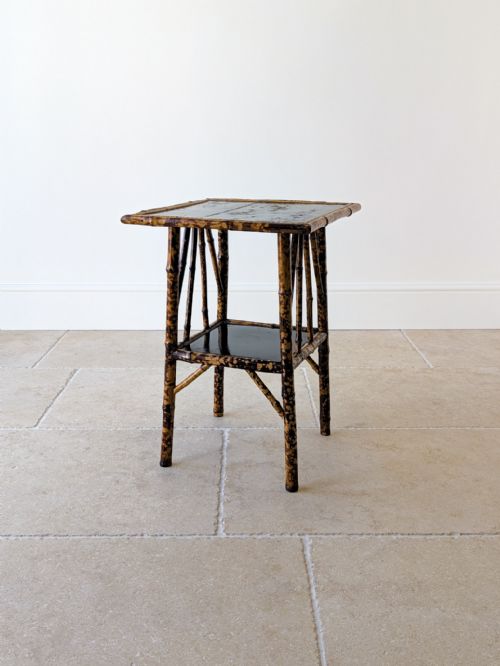
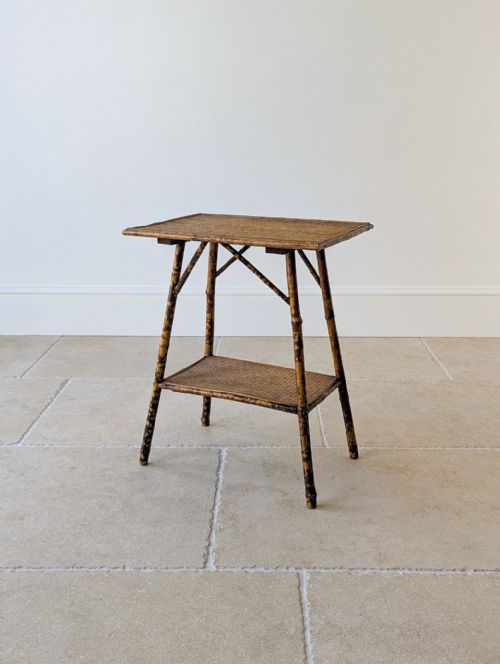
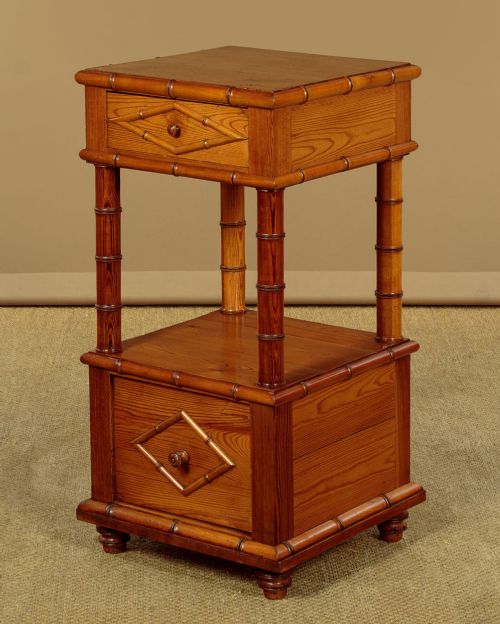
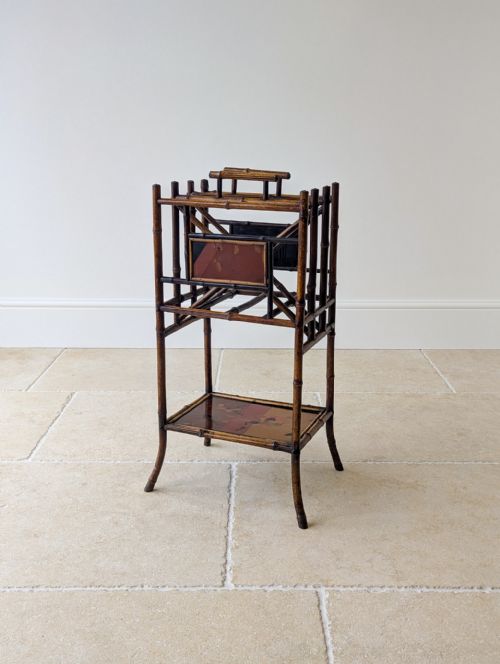
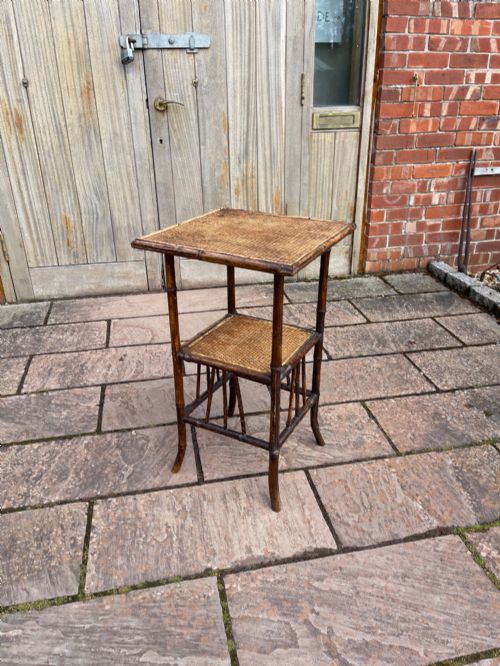
A victorian bamboo side table is a light, decorative occasional piece produced during the latter half of the nineteenth century. These tables frequently appear with two or three tiers, sometimes incorporating shelves or magazine racks beneath the main surface.
Makers often drew inspiration from oriental designs, resulting in forms that complemented the aesthetic movement and chinoiserie tastes of the period. Alongside genuine cane, pieces modelled in simulated or faux bamboo appear regularly.
The selections span simple lamp stands to elaborate two-tier display surfaces and folding frames. Buyers encounter these practical furnishings in varied formats suited for compact corners or central placement.
How They Were Made
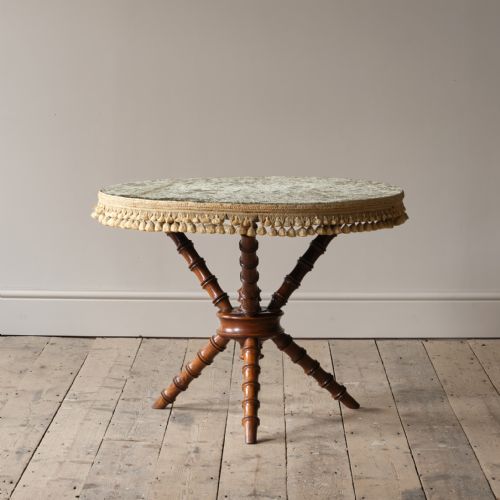
Construction relied on natural cane frameworks joined with pinned or glued tenons, often paired with contrasting materials. Lacquered panels, leather inserts, velvet tops and hand-painted tile or ceramic surfaces provided the main tabletops.
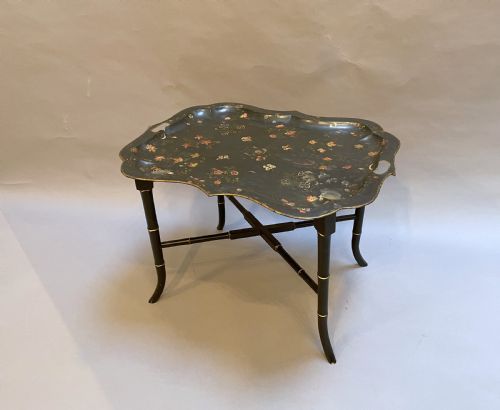
Many examples incorporated japanning or applied lacquer panels featuring oriental motifs, while others utilised simulated wood turned to mimic segmented bamboo stems. Brass fittings and woven reed added structural detail and decorative contrast.
The listings demonstrate a strong presence of nineteenth-century pieces, incorporating materials such as lacquer, brass, velvet and leather alongside bamboo.
What Varies in Quality
Distinction in these pieces rests upon the integrity of the cane framework and the complexity of the surface decoration. Superior items display tightly bound joints, rigid structural stability and undamaged lacquer panels with intricate hand-painted detail.
Plain surfaces with minimal detailing occupy the simpler end of the spectrum, whereas examples featuring inset leather, hand-painted decoupage or integrated lower tiers demonstrate finer craftsmanship. The precision of the lacquerwork and the preservation of the original finish dictate the standing of an individual table.
Liberty & Co.·John Taylor Edinburgh·WF Needham
The Victorian Bamboo Side Table Glossary
- Bamboo
- A woody grass utilised for nineteenth-century furniture frames due to its hollow lightness and flexibility. It forms the primary structural material for these tables.
- Japanning
- A European imitation of East Asian lacquerwork applied to wood or metal surfaces. This technique created glossy dark finishes decorated with gilt motifs.
- Canterbury
- A low multi-partitioned stand originally designed for holding sheet music or books. In bamboo furniture, this form frequently combines with a side table.
- Bijouterie table
- A glass-topped display table intended for showcasing small ornaments and curiosities. These pieces often feature hinged lids above lined compartments.
- Occasional table
- A small, portable piece of furniture designed for general utility rather than a single fixed purpose. They appear widely across nineteenth-century interiors.
Victorian Bamboo Side Table: Frequently Asked Questions
Where were these tables used?
Nineteenth-century households placed these lightweight furnishings in drawing rooms, parlours and bedrooms as convenient surfaces for lamps, books and decorative objects.
Their portable nature allowed servants or residents to shift them easily between rooms depending on daily requirements.
How do I care for bamboo furniture?
Keep these items away from direct sunlight and excessive moisture to prevent the natural cane from drying out or splitting.
Dust gently with a dry cloth and avoid harsh chemical polishes that might damage aged lacquer or painted surfaces.
What is an aesthetic movement table?
Aesthetic movement pieces reflect the late nineteenth-century emphasis on artistic design and oriental influences rather than strict historical revival styles.
These tables frequently feature ebonised frames, lacquered panels and bamboo construction aligned with the tastes of the period.