
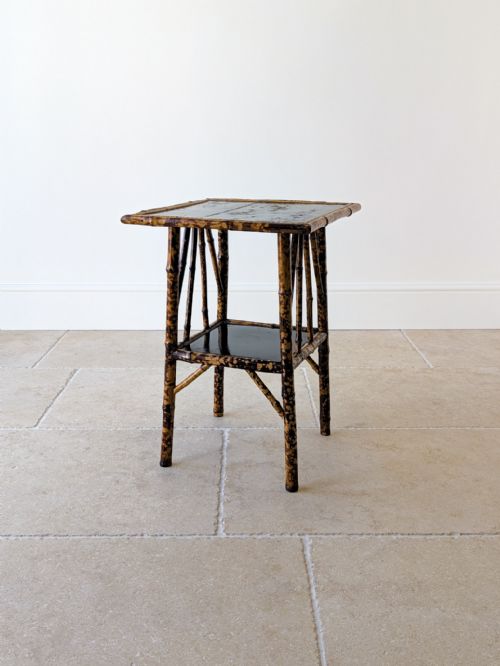
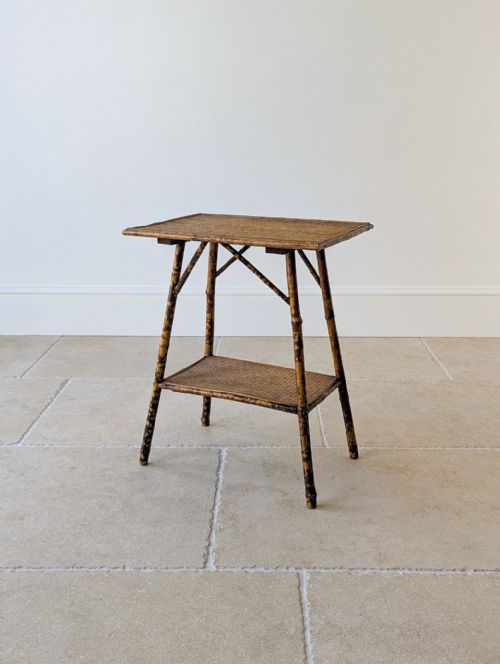
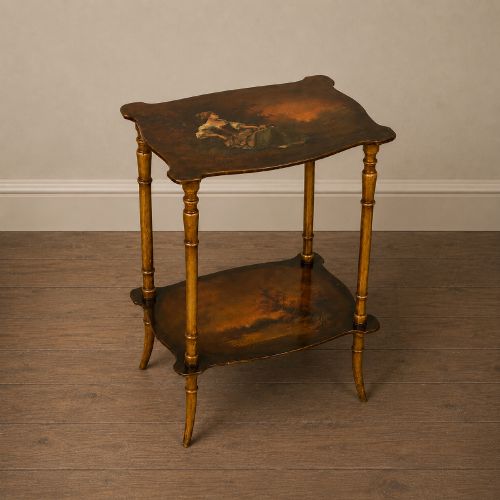
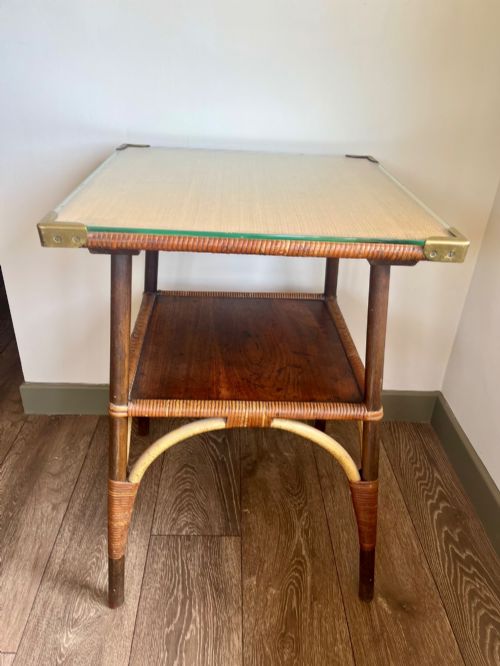
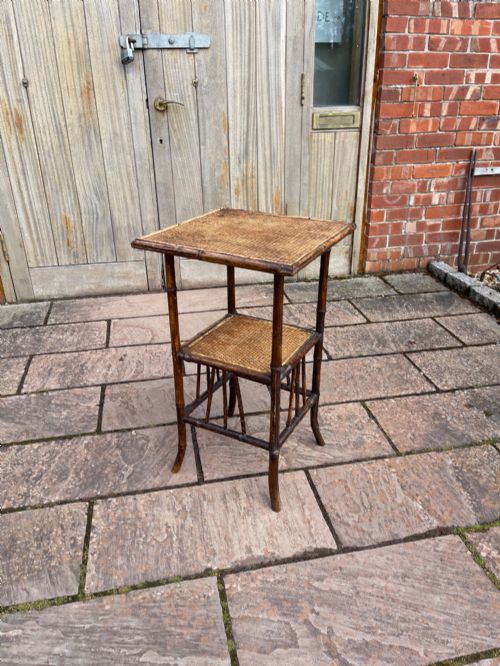


Tiered Bamboo Occasional Table
These tiered bamboo occasional tables bring lighter, exotic forms into period rooms, offering multiple shelves for display.
Tiered Bamboo Occasional Table
A tiered bamboo occasional table provides practical surface space across multiple levels, combining light framing with distinct decorative character. When searching for a tiered bamboo occasional table, buyers encounter nineteenth-century and early twentieth-century examples shaped by the Aesthetic Movement and Anglo-Japanese taste.
The pieces on this page span Victorian and Edwardian periods, stretching into the early twentieth century with specific makers and regional styles. Common forms include side tables, étagères, and sewing tables equipped with two or more tiers for storage and display.
Origins range from English workshops to continental Europe and Anglo-Indian production, employing materials that mimic or incorporate Eastern design principles. These tables suit smaller spaces where traditional heavy timber furniture feels too dominant.
Materials and construction
Makers constructed the primary framework using natural bamboo, sometimes pairing it with wood, rattan, or ebonised surfaces. Structural joints required careful bending and fixing to support multiple tiers without excess weight.
Surfaces frequently feature lacquer work, painted panels, or gilt details, particularly in pieces following Chinoiserie or Aesthetic Movement traditions. Additional elements such as brass fittings, leather inserts, and gesso enrich the finished appearance.
Materials recorded across the available pieces include bamboo, wood, lacquer, rattan, brass, gesso, gold leaf, and paint.
Distinctions in quality
Quality rests in the firmness of the frame and the intricacy of the secondary materials, such as hand-painted lacquer panels and woven reed work. Finer examples display precise joinery where bamboo poles meet, maintaining stability across multiple tiers.
The integration of decorative flourishes like gold leaf, gesso, and specialised hardware elevates certain pieces above standard utilitarian items. Origin also plays a part, with documented makers or distinct regional styles commanding closer attention from collectors.
Liberty and Co·Dryad Leicester
The Tiered Bamboo Occasional Table Glossary
- Étagère
- A piece of furniture with a set of open shelves for displaying small objects. These tiered structures became popular during the nineteenth century for showing ornaments.
- Aesthetic Movement
- A late nineteenth-century design current that emphasised visual and decorative beauty over narrative or moral themes. It drew heavily on Japanese art and craftsmanship.
- Anglo-Japanese
- A hybrid style combining British furniture forms with Japanese motifs, construction methods, and aesthetic principles. This style heavily influenced late Victorian bamboo design.
- Chinoiserie
- European artistic interpretation of Chinese and East Asian artistic traditions, often featuring painted or lacquered scenes. It appears frequently on the panels of Victorian occasional tables.
- Gesso
- A plaster-like mixture applied to surfaces as a base for paint or gilding. It provides a smooth ground for decorative highlights on furniture panels.
Tiered Bamboo Occasional Table: Frequently Asked Questions
What periods do these tables come from?
The listings span the nineteenth century through the Edwardian era up to nineteen thirty, taking in Victorian and early twentieth-century production.
Key periods include the height of the Aesthetic Movement and the subsequent Anglo-Japanese and Chinoiserie revivals.
How were tiered bamboo tables used originally?
These tables served as light, movable surfaces for serving tea, holding books, or displaying decorative objects in drawing rooms.
Their multiple tiers allowed owners to maximise display space in smaller rooms without crowding the floor plan.
Are all these tables made of real bamboo?
Most examples utilise natural bamboo for the main structural framework, combined with wood for internal supports and shelves.
Some pieces incorporate supplementary materials like rattan, woven reed, or leather top inserts alongside lacquered panels.
How do I identify an Aesthetic Movement piece?
Aesthetic Movement tables often feature ebonised bamboo, asymmetrical designs, and Japanese-inspired motifs or lacquer work.
They reflect the period's shift toward lighter, more decorative furniture that broke away from heavy Victorian styles.