
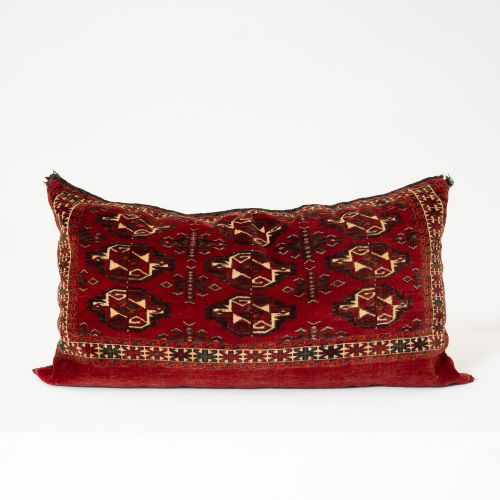


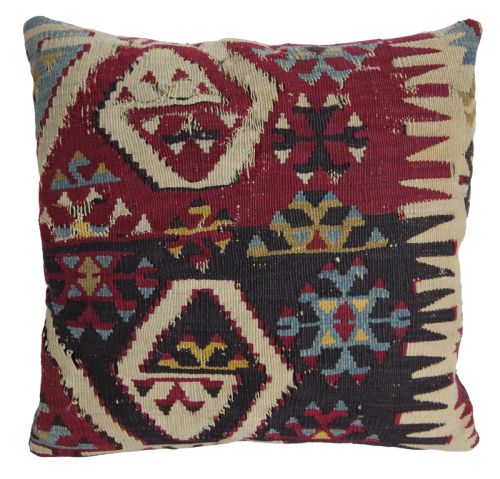

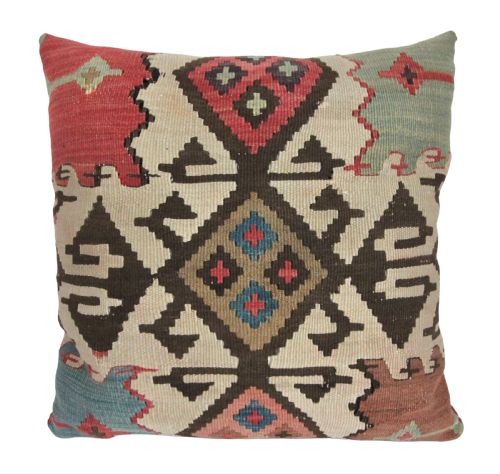

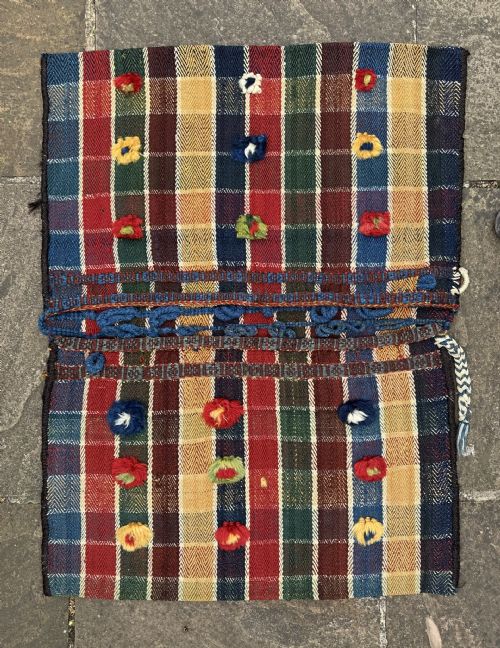


Red Kilim Pillow
These red kilim pillow options bring warmth and texture into a room, formed from authentic tribal textiles.

Red Kilim Pillow
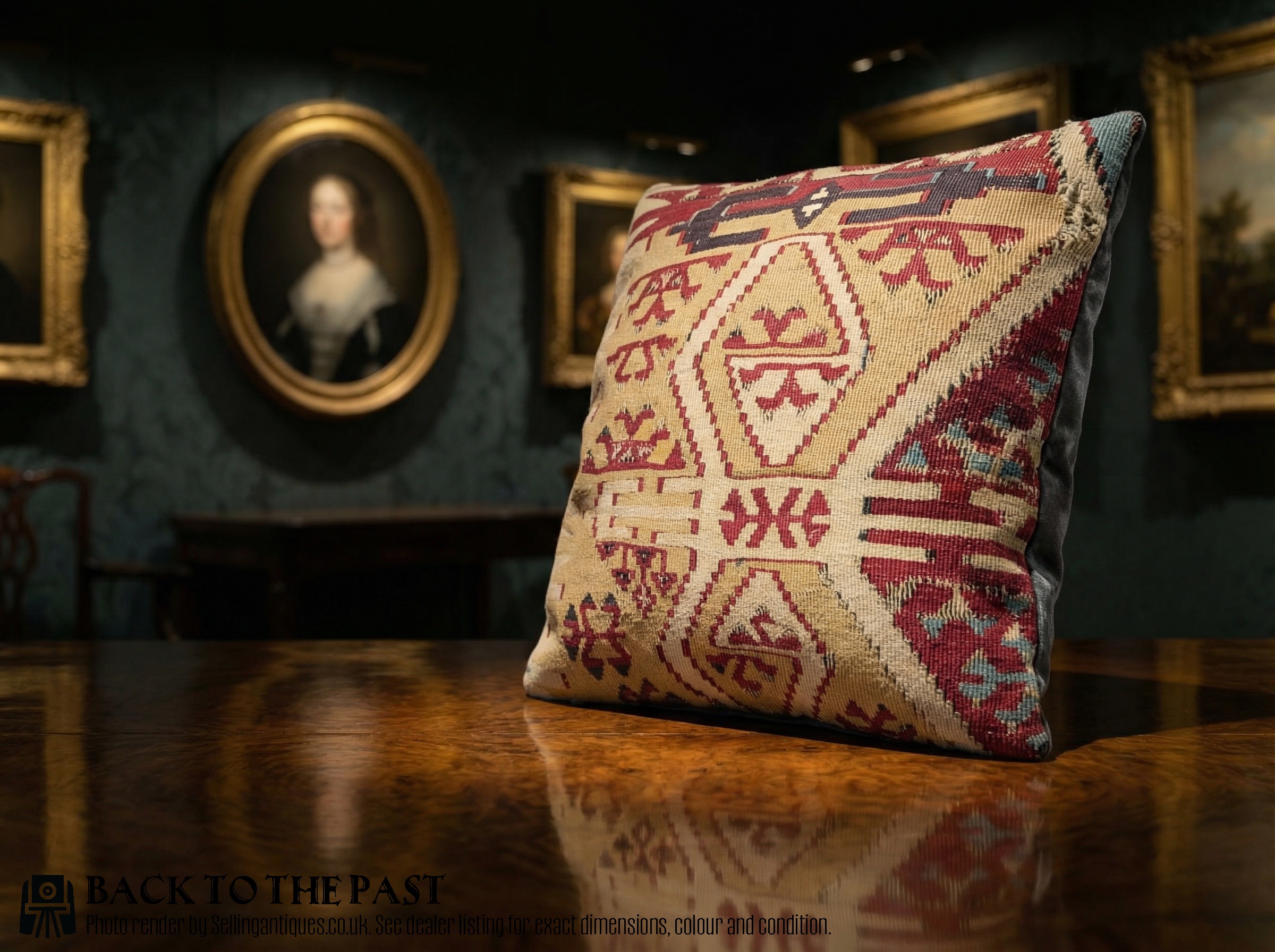
A red kilim pillow takes historic flatwoven textiles and repurposes them into cushions and soft furnishings. Buyers seeking a red kilim pillow encounter pieces fashioned from antique bag faces, torbas, mafrash panels, and chuvals originating from Anatolian, Persian, and Turkmen tribal traditions.
The selections span from the mid-nineteenth century through to the early twentieth century. Most examples utilise repurposed nomadic weaving traditions, transforming utilitarian bags and saddle-bags into decorative cushions with complete backs and tassels.
How they were made
Makers utilised hand-spun wool combined with cotton foundations to create durable flatweaves. Natural dyes provide the characteristic red coloration seen across the regional tribal groups.
Weavers employed slit-tapestry weaving techniques to produce geometric patterns without extra supplementary wefts. The resulting textiles were originally constructed as functional storage bags, torbas, or saddle-bags before later conversion into cushions.
Listings feature flatweave cushions dated across the nineteenth and early twentieth centuries, spanning 1850 to 1920.
What varies in quality
The calibre depends upon the fineness of the flatweave and the integrity of the original tribal textile. Pieces retaining complete bag faces, crisp geometric motifs, and original wool yarns stand apart from heavily restored or fragmented examples.
The depth and variation of the natural dyes influence visual merit. Strong structural execution in the original flatweaving alongside careful conversion with appropriate backing materials determines the overall standard of the finished cushion.
The Red Kilim Pillow Glossary
- Kilim
- A flatwoven textile produced by tightly interweaving warp and weft strands without a pile. This technique creates a smooth surface with patterns visible from both sides.
- Chuval
- A large tent bag made by Turkmen nomads for household storage. These pieces frequently feature characteristic guls and geometric repeat patterns.
- Torba
- A smaller storage bag traditionally hung inside a nomad tent. They are wider than they are tall and display intricate banded flatweave designs.
- Mafrash
- A rectangular storage chest panel woven in flatweave technique by nomadic groups. They often form long panels featuring bold tribal motifs.
- Bag face
- The decorative front panel of a nomadic utility bag. These portions are the most commonly repurposed sections utilised for antique cushions.
Red Kilim Pillow: Frequently Asked Questions
What is a red kilim pillow?
A red kilim pillow is a decorative cushion created from antique flatwoven nomadic textiles such as bag faces, torbas, and chuvals. These pieces repurpose historic tribal weaving into functional soft furnishings for the home.
They incorporate wool and natural dyes from regions including Anatolia, Persia, and Central Asia. Each cushion preserves portions of nineteenth and early twentieth century tribal artistry.
How were kilim pillows used originally?
The textiles used for these pillows were not originally made as cushions. They served as functional storage bags, saddle-bags, and tent containers for nomadic tribes.
Nomads utilised these woven bags to transport and store household goods, blankets, and personal belongings. Later, the decorative front panels were salvaged and turned into cushions.
How do I style a kilim pillow?
These cushions suit both traditional and modern interiors by adding rich colour and texture. They work well placed upon sofas, armchairs, or beds as accent pieces.
Pairing them with neutral fabrics allows the geometric patterns and red natural dyes to stand out. Mixing different tribal origins creates a layered, collected interior aesthetic.
How do I date an antique kilim pillow?
Dating relies on examining the materials, weave structure, and dye types used in the textile panel. Pieces from the nineteenth century often display distinct hand-spun wool characteristics and specific regional palettes.
Turkmen, Anatolian, and Persian tribal groups utilised characteristic motifs that help contextualise the age of the flatweave. Structural evidence such as wool quality and natural dye variation guides the dating process.