





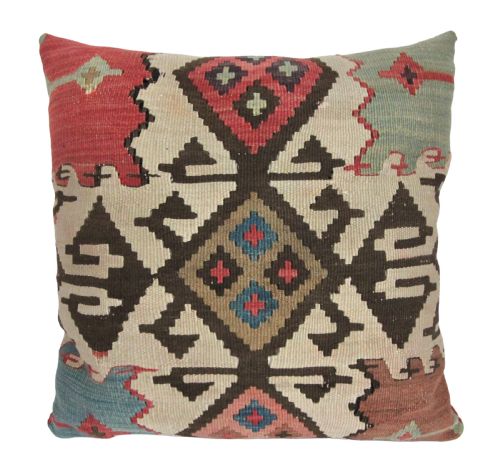


Geometric Throw Pillow
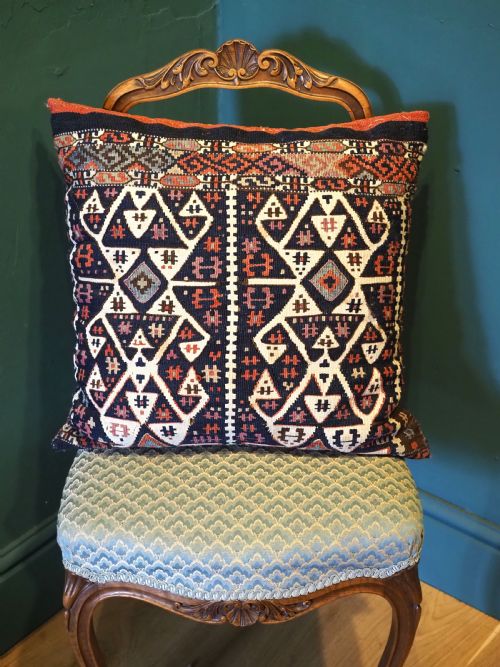
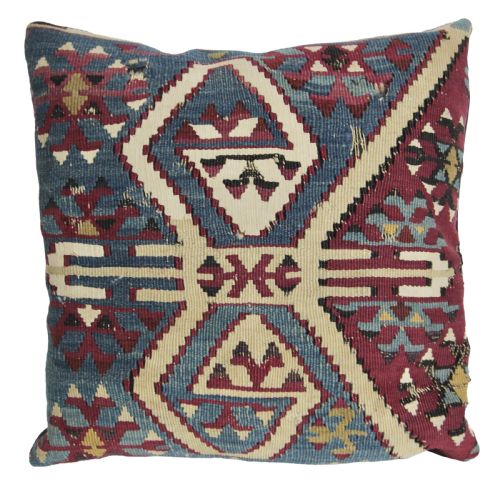
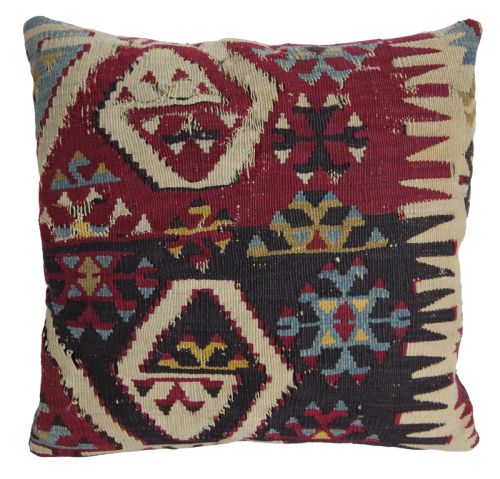
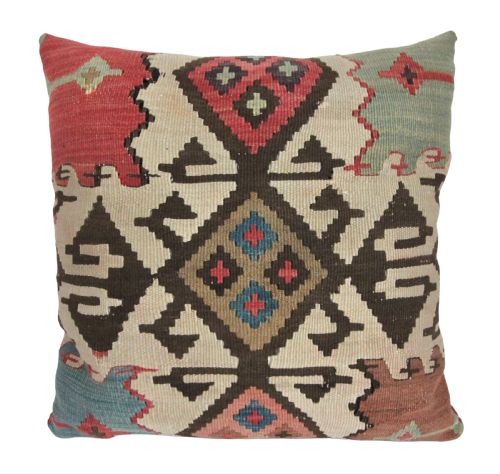
These geometric throw pillow examples are woven from wool and cotton, offering tactile tribal patterns from the nineteenth and early twentieth centuries.
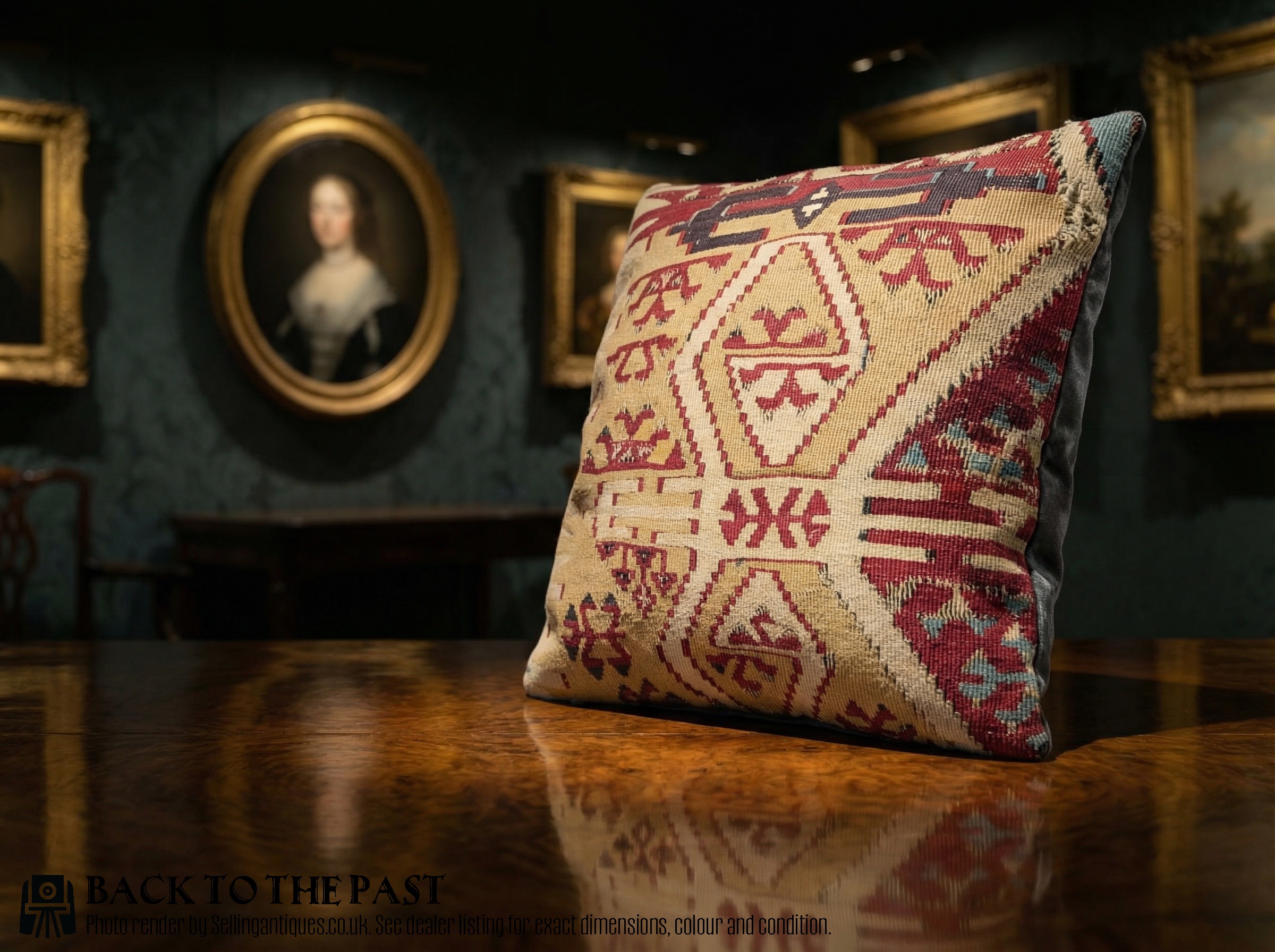
Geometric Throw Pillow
A geometric throw pillow transforms antique tribal weavings into functional home furnishings. Buyers searching for a geometric throw pillow encounter pieces fashioned from repurposed bag faces and kilims originating in Anatolia and Persia. The common form here is the cushion, created from older Kurdish, Baluch, and Malatya textiles.
The majority of these pieces originate from the nineteenth and early twentieth centuries, bringing authentic nomadic designs into domestic spaces. These items utilise traditional Anatolian tribal and nomadic aesthetics, often maintaining the original flatweave structure of the source textile. Each cushion represents a fragment of regional weaving history adapted for modern interiors.
Materials and construction
These textiles are constructed primarily from hand-spun wool and cotton, materials chosen for durability and texture. The face of the cushion typically consists of a hand-woven kilim or tribal bag face utilising flatweave techniques. Artisans integrated wool yarns to achieve dense, durable surfaces capable of handling daily domestic use.
The construction relies on traditional nomadic weaving methods where geometric patterns emerge directly from the warp and weft alignment. These techniques create distinct structural patterns that define the visual character of each piece. The backings are subsequently added to support the historical woven fronts.
Listings feature items dated from eighteen-fifty up to the nineteen-twenties, constructed using wool and cotton materials.
Assessing quality and character
Quality in these textiles rests upon the fineness of the original weave and the clarity of the geometric motifs. Tightly packed wool yarns and well-preserved tribal patterns distinguish superior examples from simpler variations. The structural integrity of the flatweave face remains paramount to the longevity of the cushion.
The nuance of natural dye colours and the precision of the tribal design work elevate certain pieces above others. Artisanal skill is evident in the balance of the composition and the preservation of the antique bag face or kilim. Condition and authenticity of the source material drive the distinction between standard and exceptional pieces.
The Geometric Throw Pillow Glossary
- Kilim
- A flat-woven carpet or rug produced in countries of the former Ottoman Empire, Persia, and Central Asia. These textiles lack a pile, making them suitable for repurposing into durable cushions.
- Bag face
- The decorative front panel of a nomadic storage bag, often removed and transformed into a cushion. These panels frequently display dense tribal geometric motifs.
- Flatweave
- A textile technique where no pile is formed, creating a smooth surface similar to tapestry. This method produces the characteristic crisp geometric lines seen on these cushions.
- Anatolian
- Pertaining to the region of Anatolia, encompassing modern-day Turkey. Textiles from this area are noted for specific tribal weaving traditions and regional wool characteristics.
- Nomadic
- Pertaining to pastoral peoples who move seasonally with their livestock. Their woven works reflect portable art forms incorporating symbolic geometric patterns.
Geometric Throw Pillow: Frequently Asked Questions
How were these cushions made?
These pieces are constructed by repurposing historical hand-woven flatweaves, primarily utilising wool and cotton yarns. Artisans take fragments of older kilims or tribal bag faces to form the decorative front of each cushion.
The underlying structure relies on traditional nomadic weaving techniques where geometric designs are woven directly into the textile. Durable backings are then added to support the antique decorative face.
Where do these textiles originate?
The source textiles originate primarily from nomadic and tribal regions in Anatolia and Persia. Specific groups, including Kurdish and Baluch weavers, produced the original flatweaves.
These pieces reflect the cultural motifs and traditional dye methods of their specific geographical origins. The materials represent regional craft traditions from the nineteenth and early twentieth centuries.
How do I care for an antique cushion?
Care for these items requires gentle treatment appropriate for historical wool and cotton textiles. Professional cleaning is generally recommended to preserve the natural fibres and dyes.
Avoiding direct, prolonged sunlight helps protect the wool from fading over time. Regular gentle rotation and light airing maintain the condition of the woven surface.
How do I identify the period?
Identifying the period involves examining the wool quality, dye characteristics, and specific tribal weaving structures. Pieces range from the mid-nineteenth century through the early twentieth century.
Traditional motifs and regional weaving styles provide key indicators for dating the source textile. The absence of synthetic materials generally points towards earlier production dates.