


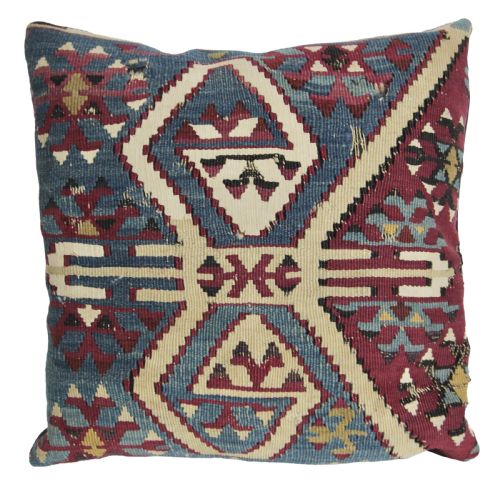

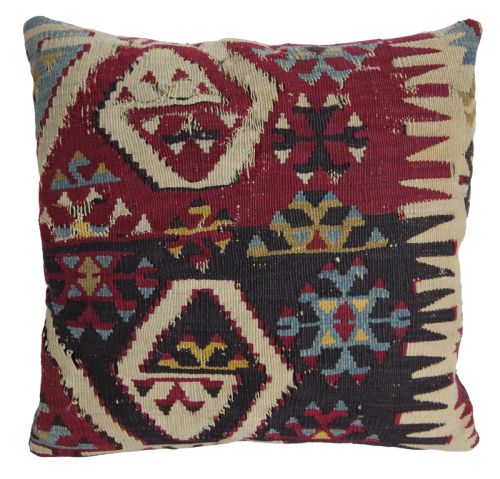


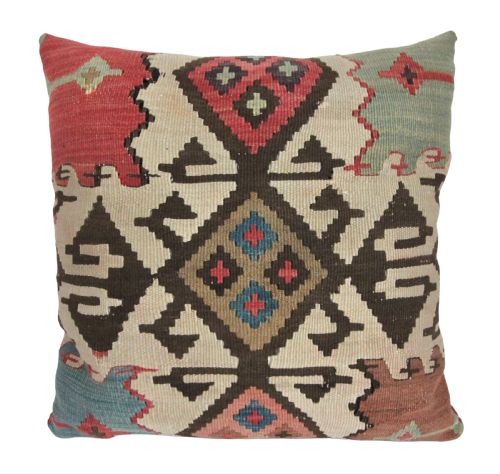
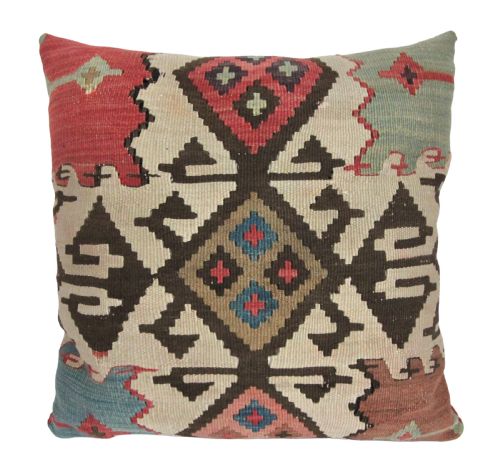

Traditional Kilim Throw Pillow
These traditional kilim throw pillow pieces bring authentic Anatolian tribal character and rich wool texture directly into your living space.
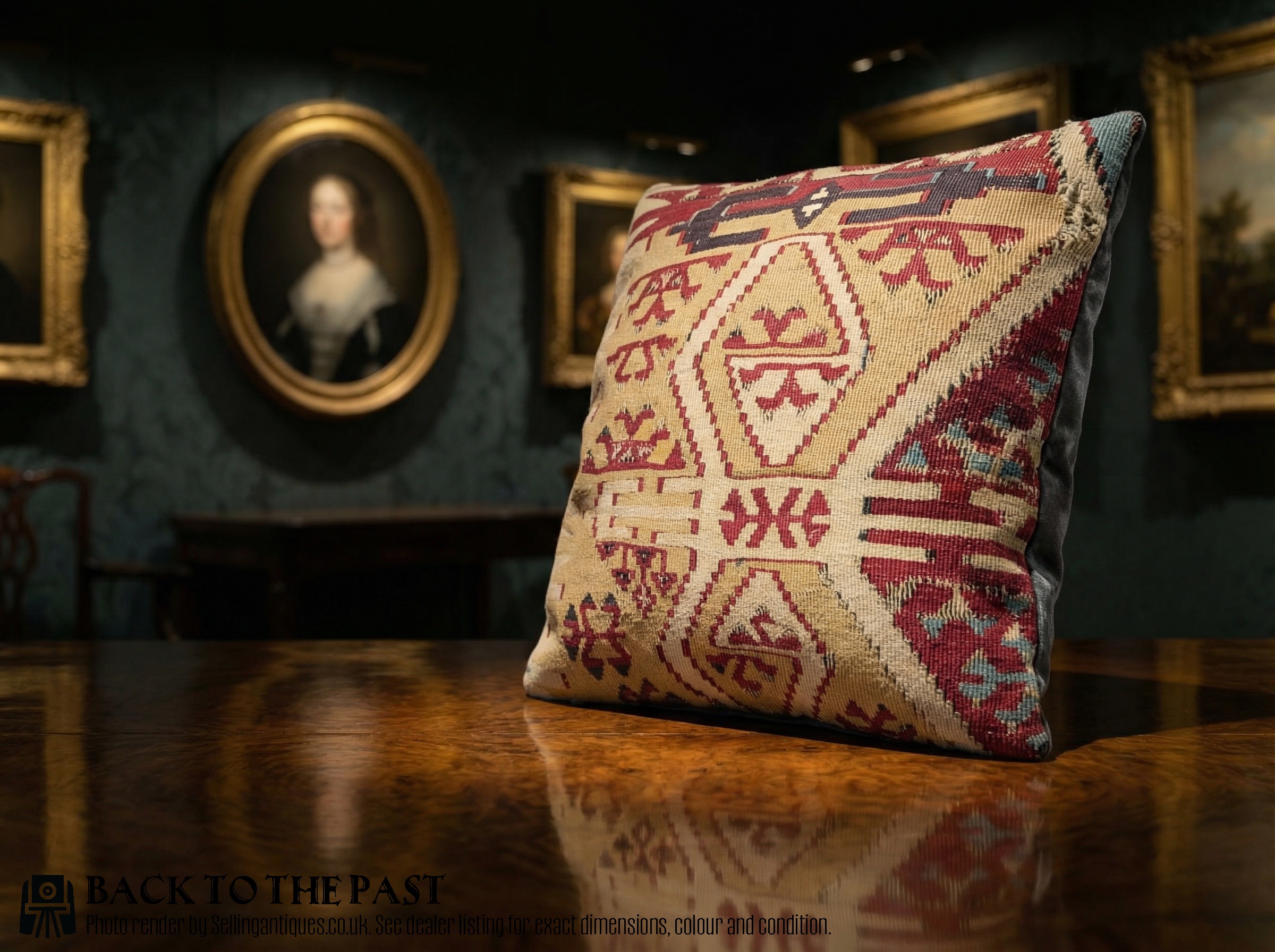
Traditional Kilim Throw Pillow
A traditional kilim throw pillow takes woven textile history and repurposes it into functional home decor. These cushions originate primarily from Anatolian tribal and traditional Anatolian design traditions, carrying motifs that reflect generations of weaving heritage.
The pieces available on this page take the form of antique kilim cushion and throw cushion items. Dating from the mid to late nineteenth century, specifically across the 1850 and 1870 periods, they offer tangible connections to traditional craftsmanship.
How traditional kilim throw pillow pieces were made
Makers utilised durable wool and cotton fibres to construct these textiles. The flatweave technique produces a sturdy surface without a pile, relying on tight interlock methods to form distinct geometric patterns.
These materials and methods combine to create resilient covers designed to withstand daily use while maintaining their structured form.
Listings span the years 1850 and 1870, utilising wool and cotton across Anatolian tribal and traditional styles.
What varies in quality
The distinction between standard and superior pieces rests in the tightness of the weave and the consistency of the wool. Tighter tension creates a firmer structure that holds its shape better over decades of use.
The complexity and clarity of the Anatolian tribal designs also differentiate individual cushions. Greater precision in the geometric motifs indicates a higher level of weaver skill during production.
The Traditional Kilim Throw Pillow Glossary
- Kilim
- A flatwoven textile produced by tightly interweaving warp and weft strands. This construction method yields a lightweight fabric without a raised pile.
- Anatolian
- Pertaining to the geographic region historically known as Asia Minor. Pieces bearing this descriptor reflect the specific weaving traditions of the area.
- Flatweave
- A textile construction technique where yarns are woven on a loom without knotting. This method produces a thin, durable fabric used extensively for floor coverings and cushions.
- Warp
- The vertical threads held in tension on a loom before weaving begins. They form the structural foundation of the textile.
Traditional Kilim Throw Pillow: Frequently Asked Questions
What is a traditional kilim throw pillow?
A traditional kilim throw pillow is a cushion cover fashioned from antique flatwoven textiles originating in Anatolia. These pieces repurpose historical wool and cotton fabrics into functional home accessories.
They bridge historical textile arts and modern interior styling by introducing authentic tribal patterns and robust natural materials into everyday spaces.
How do I date these cushions?
Dating relies on examining the specific characteristics of the wool, the natural dye palettes, and the structural integrity of the flatweave. Pieces in this category typically date back to the mid and late nineteenth century.
Consulting the recorded period markers helps place each cushion within the broader timeline of Anatolian textile production.
How should I care for wool cushions?
Wool textiles require gentle maintenance to preserve the integrity of the natural fibres and flatweave construction. Regular airing and careful surface cleaning help maintain the material without causing damage.
Avoiding harsh chemical treatments ensures the traditional dyes and fibres remain stable over time.