


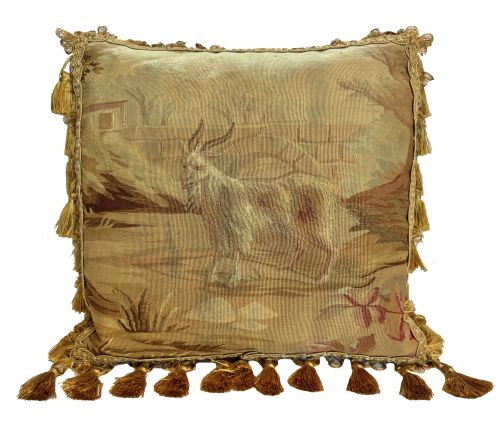
Beige Wool Cushion
A beige wool cushion brings texture and history to a room, offering tactile warmth through antique tapestry fragments and woven tribal flatweaves.
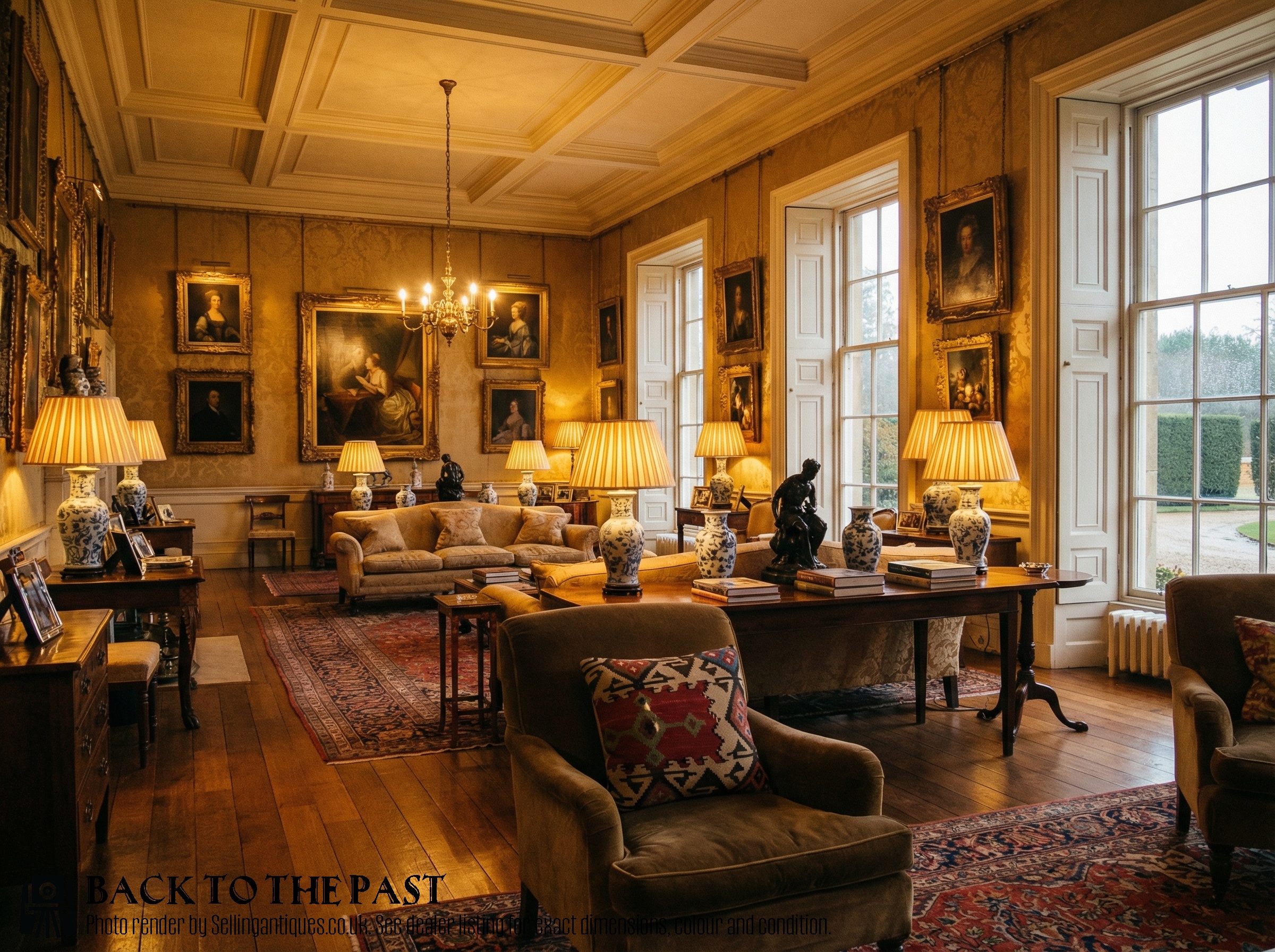
Beige Wool Cushion
The assortment on this page leans heavily towards repurposed French tapestry cushions and Anatolian tribal flatweaves. These objects transform antique wall hangings and vintage floor coverings into decorative cushions suitable for contemporary interiors.
Forms span simple square cushion covers to pairs of historic textile fragments mounted on complementary backing materials. Each piece relies on neutral wool tones, often accented with silk, cotton, or linen elements derived from the original source material.
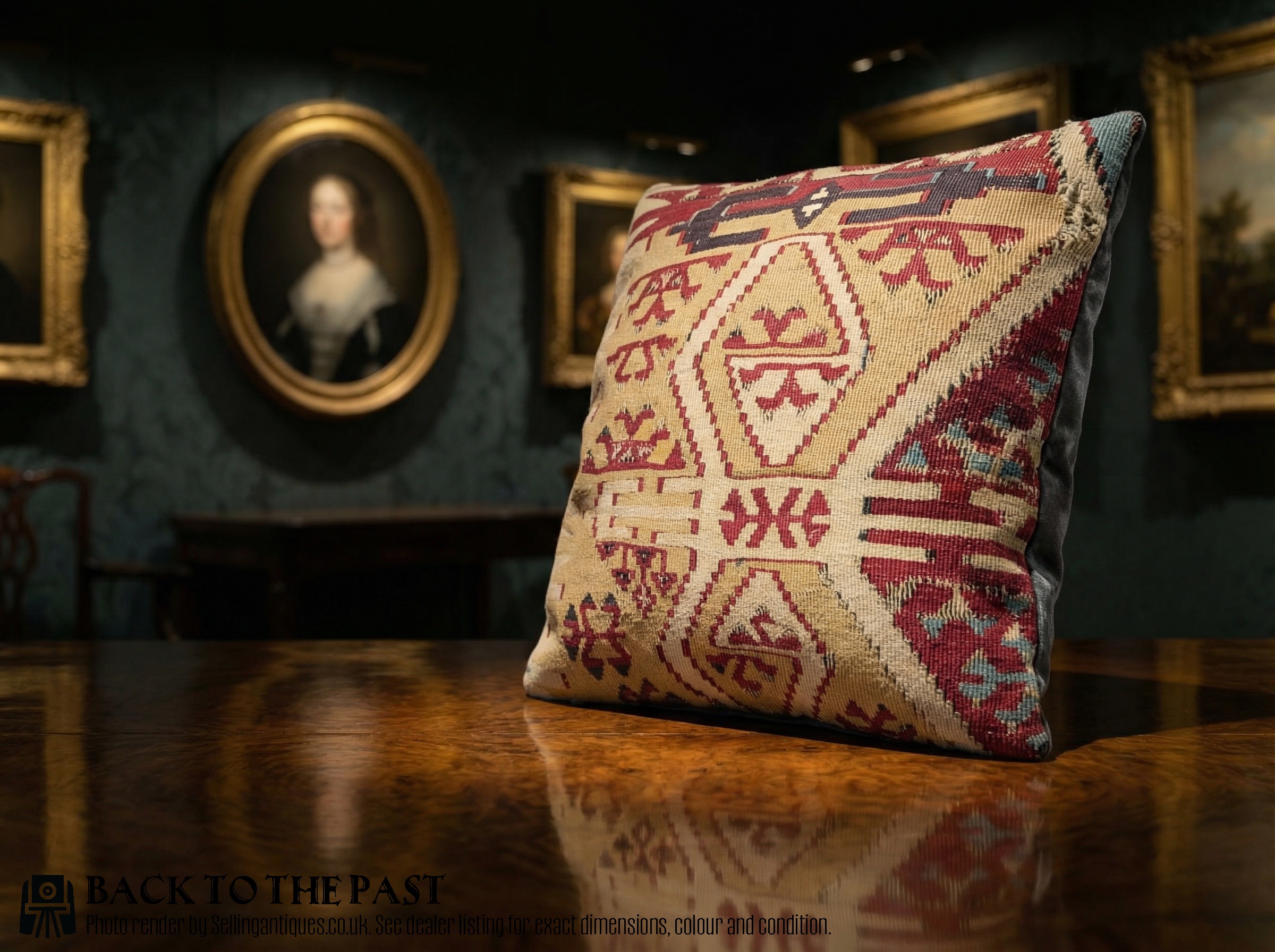
How they were made
Makers constructed these cushions using hand-woven wool, frequently combined with cotton, silk, and linen threads to achieve varied surface textures. Many examples incorporate passementerie trim, applying decorative borders around the edges of the textile fragments.
Artisans repurposed antique Flemish tapestries, Aubusson panels, and Kilim carpets by cutting the historic cloth to shape and backing it with durable fabrics. This technique preserved fragile historic weaves while adapting them for functional domestic use.
Some cushions carry the invisible weight of a seventeenth-century Flemish castle wall hanging inside a modern sofa.
What varies in quality
Quality rests primarily on the integrity and age of the source textile used for the front panel. Finer pieces display tight, complex wool and silk weaves from seventeenth-century Flemish or nineteenth-century Aubusson workshops, whereas simpler tribal Kilims show coarser flatwoven structures.
The skill involved in mounting and trimming the textile affects the overall success of the piece. Superior examples integrate passementerie and backing fabrics that complement the palette and period of the original wool fragment without overwhelming its design.
The Beige Wool Cushion Glossary
- Kilim
- A flatwoven carpet or rug produced in Anatolia and surrounding regions. These wool textiles lack a pile, presenting a smooth surface that translates well into durable decorative cushion covers.
- Aubusson
- A style of hand-woven tapestry originating from the French town of the same name. These wool and silk panels typically feature pastoral or floral motifs suited to formal interior decoration.
- Passementerie
- Elaborate trimmings, edgings, or tassels woven from silk, wool, or metallic threads. Artisans use these decorative borders to finish the edges of high-end antique cushions.
- Tapisserie
- The French term for tapestry, denoting woven wall hangings created on a loom. Historic fragments of these wool and linen textiles are frequently salvaged to make decorative cushions.
Beige Wool Cushion: Frequently Asked Questions
How do I care for an antique cushion?
Treat these pieces with care, avoiding direct sunlight to protect the natural wool and silk dyes from fading over time.
Professional gentle cleaning is recommended when necessary, as the historic fabrics and woven structures cannot withstand standard machine washing.
Are these cushions made from original antique textiles?
Yes, the pieces utilise genuine historic fragments salvaged from older tapestries, wall hangings, and flatwoven carpets.
Artisans adapt these surviving textiles into cushion covers, preserving the original nineteenth-century or seventeenth-century craftsmanship.
How do I identify a Kilim cushion?
Kilim cushions feature distinct flatwoven geometric patterns originating from Anatolian tribal traditions.
Unlike pile carpets, their smooth wool surfaces display traditional motifs that reflect the cultural weaving practices of their makers.