


Red Ivory Rug
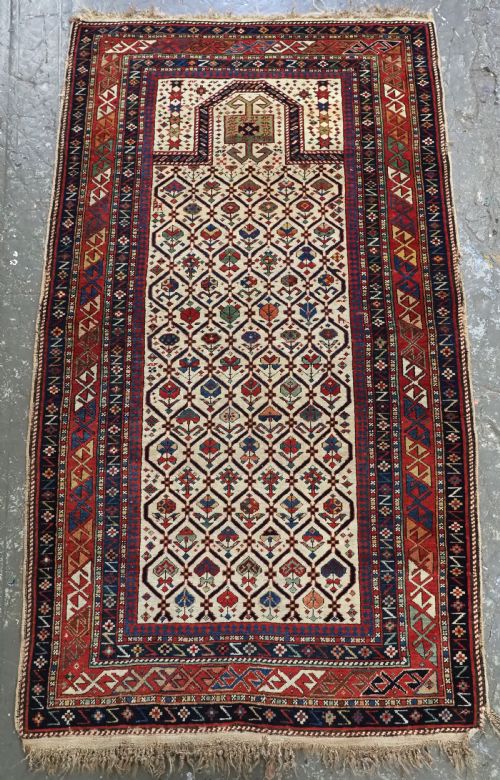
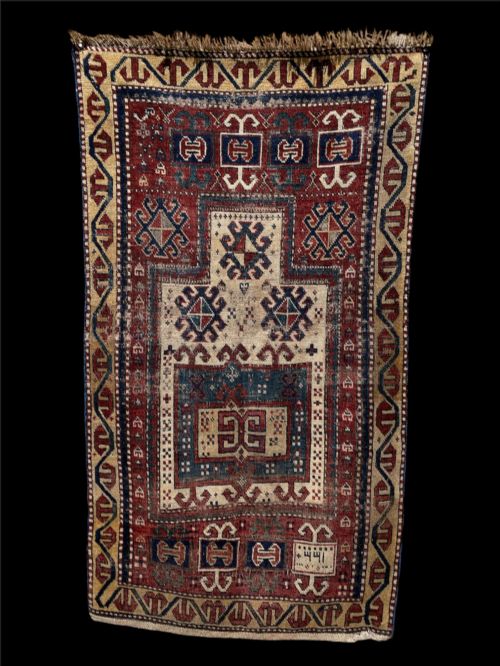
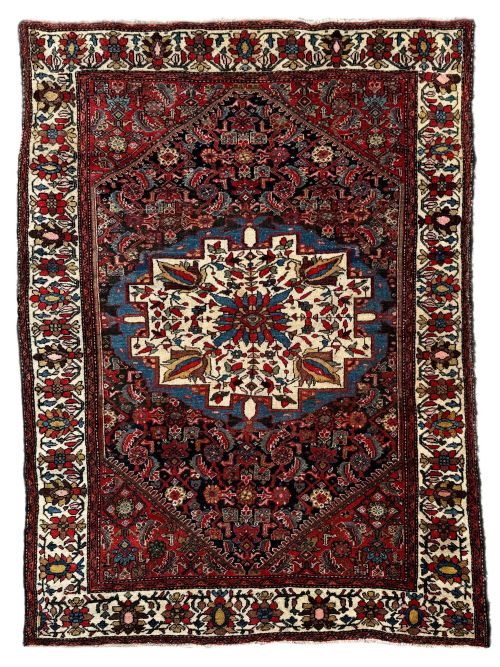
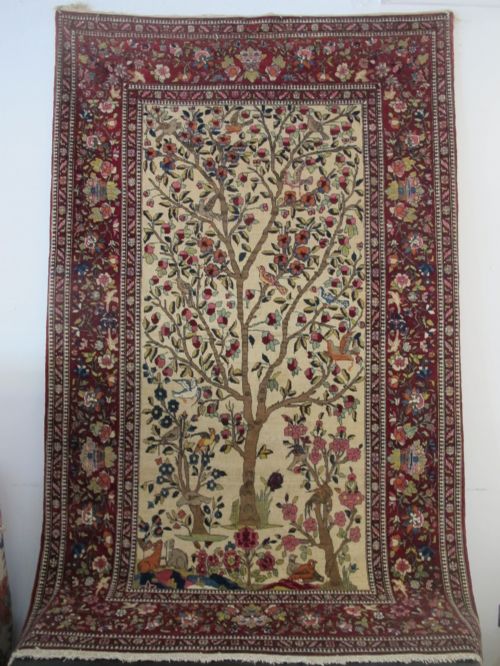
When you search for a red ivory rug, you are looking at hand-knotted carpets featuring light grounds and striking crimson tones.
Red Ivory Rug
A red ivory rug brings together pieces originating from Persian, Caucasian, Turkmen, and Anatolian weaving traditions. You will encounter prayer rugs, village pieces, and tribal saddlebag faces spanning the nineteenth and early twentieth centuries.
The selection ranges from small scatter formats to room-sized carpets and wall hangings. These floor coverings bridge nomadic textile artistry and court workshop output.
Materials and construction methods
Weavers utilised wool, cotton, and silk foundations combined with hand-spun wool pile. Natural dyes created the distinctive crimson and pale ground hues found across these textiles.
Traditional knotting techniques secured the dense pile, allowing intricate floral lattice and geometric medallion designs to hold their form over generations of use.
Some weavers included accidental crooked lines in their borders, leaving a charming human fingerprint in the wool.
Distinctions in quality
Quality rests in the precision of the knot density and the clarity of the design motifs. Superior examples maintain crisp lines in complex floral lattices and star medallions.
The handled handle and resilience of the wool reflect the primary materials chosen at the loom. Finer foundations utilise silk or tightly spun cotton and wool to achieve longevity.
The Red Ivory Rug Glossary
- Ground
- The background field colour of a rug upon which the main patterns sit. In these pieces, an ivory ground provides contrast to red motifs.
- Prayer rug
- A textile featuring a Mihrab or arch design intended for religious devotion. These formats often display intricate floral lattices.
- Torba
- A small Turkmen storage bag face woven in tent settlements. They frequently display characteristic guls and curled leaf designs.
- Medallion
- A central ornamental design motif placed in the middle of the rug field. Star and classic medallion patterns structure the composition.
- Chuval
- A large Turkmen tent bag face produced for household storage. They are prized for their detailed tribal iconography.
Red Ivory Rug: Frequently Asked Questions
How do I date a red ivory rug?
Dating relies on examining the specific wool characteristics, natural dye palettes, and structural weaves. Stylistic indicators like prayer arches and tribal motifs help place pieces within nineteenth and early twentieth-century periods.
Comparison with documented examples from regions such as the Caucasus, Persia, and Anatolia refines the timeline further. The handling of the foundation materials also guides the assessment.
Where were these rugs made?
Production centres span traditional weaving regions in Persia, the Caucasus, Anatolia, and Turkmenistan. Village and nomadic tribal groups created distinct regional styles.
Town workshops in places like Tabriz, Isfahan, and Kashan produced more formal court designs. Meanwhile, tribes such as the Qashqai and Bakhtiari worked in rural and nomadic settings.
How should I care for an antique rug?
Protect the textile by placing it in low-traffic areas away from direct, harsh sunlight to preserve the natural dyes. Regular gentle vacuuming without a beater bar prevents dust accumulation.
Professional cleaning tailored to antique wool and silk textiles maintains the structural integrity of the pile. Using a suitable underlay prevents slipping and reduces wear.
What is the difference between a village rug and a town carpet?
Village and tribal rugs often feature geometric patterns, spontaneous designs, and heavy wool. They reflect the personal expression of weavers working independently.
Town carpets display symmetrical, highly refined floral layouts woven to a strict cartoon. These urban pieces utilise finer materials like silk or tightly spun cotton.