
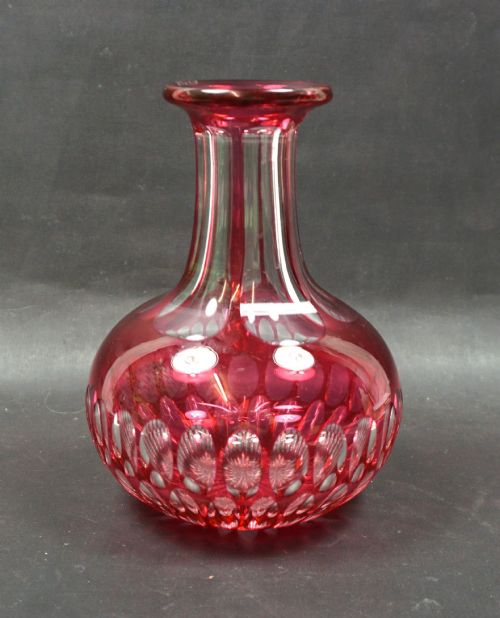
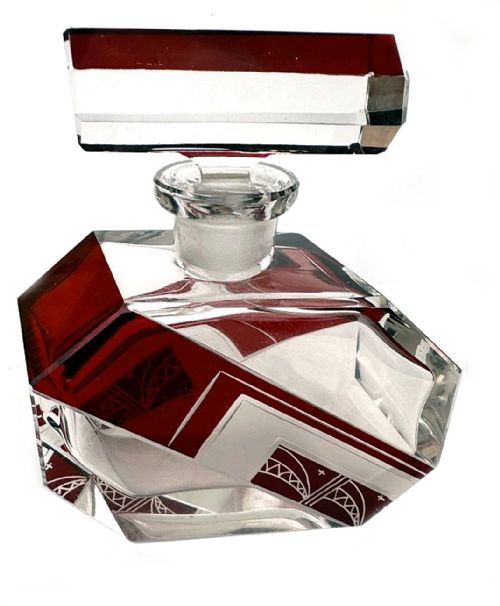
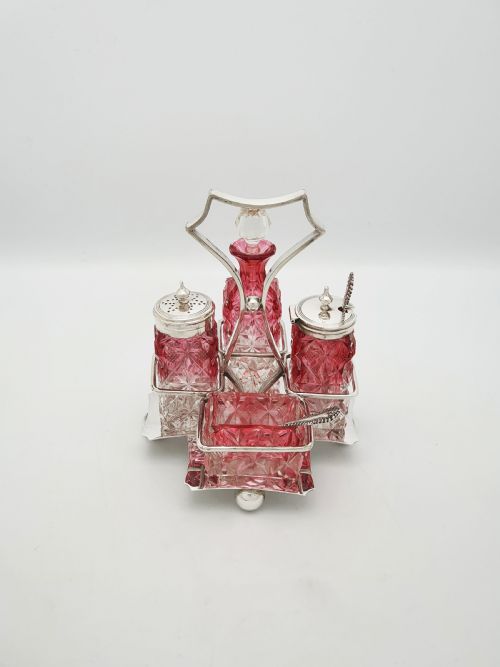
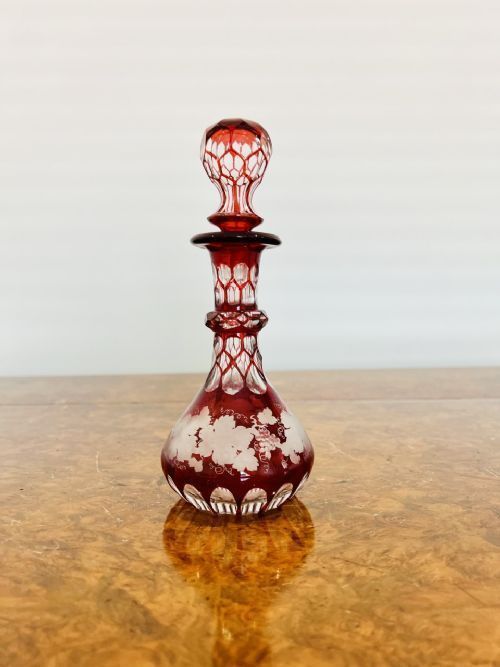

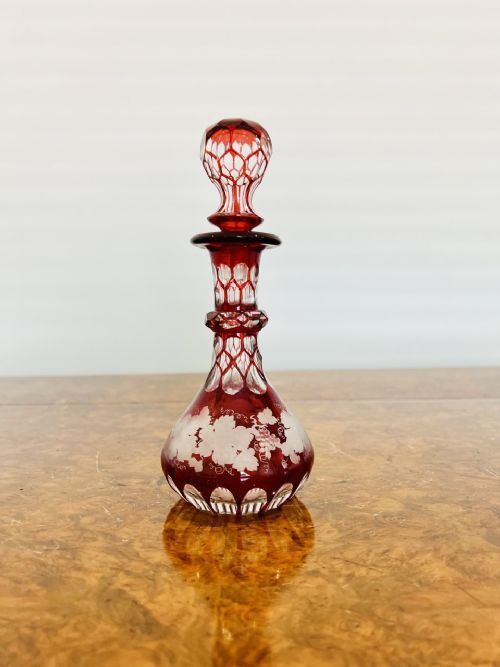


Red Cut Glass Bottle
These red cut glass bottle examples combine deep colour with precise wheel-cut facets, offering a striking display piece for any dressing table.
Red Cut Glass Bottle
When you search for a red cut glass bottle, you encounter vessels designed for scent, spirits, and dressing table use spanning from the Victorian era into the Art Deco period. The selection includes smaller perfume bottles alongside larger decanters and cruet sets.
Victorian examples frequently showcase cased or overlay techniques in cranberry and ruby glass, paired with silver mounts. Art Deco pieces from the nineteen thirties lean towards geometric crystal cuts and enamel decoration.
How they were made
Maker's workshops built these objects using layered glass, applying a rich ruby or cranberry layer over a clear crystal core before cutting away portions to reveal the colour beneath. This overlay technique created high contrast between the polished clear facets and the deep red glass.
Finishing touches involved metalwork mounts in silver plate or solid silver, occasionally paired with enamel work or fitted stoppers. Cutting wheels of varying sizes carved the geometric, floral, or fluted patterns directly into the surface.
Materials recorded across the inventory range from cranberry glass and ruby overlay to solid silver mounts and enamel.
What varies in quality
The precision and depth of the wheel-cutting separate standard vessels from finer work, as sharper facets catch the light more effectively. Crisp edges along the cut patterns indicate greater skill from the glasscutter.
The weight of the crystal and the integration of any silver or enamel mounts also influence the piece. Thicker glass blanks and fully hallmarked silver tops elevate the construction standard.
Karl Palda·John Grinsell and Sons
The Red Cut Glass Bottle Glossary
- Cranberry glass
- A transparent pinkish-red glass coloured with gold chloride during production. It appears frequently in Victorian tablewares and scent bottles.
- Overlay
- A technique where a layer of coloured glass is fused over a clear body before being cut through. This process creates strong contrast patterns.
- Cut crystal
- Glass with a high lead content that is shaped and faceted using grinding wheels. The lead content increases the refractive index and weight.
- Cruet set
- A matched group of bottles or containers used for holding condiments or liquids at the dining table. They often feature silver-plated stands.
Red Cut Glass Bottle: Frequently Asked Questions
How do I clean a glass scent bottle?
Wash the glass gently in warm soapy water using a soft brush to reach interior residue. Avoid submerging silver mounts or stopper corks for extended periods.
Dry the vessel thoroughly with a lint-free cloth to preserve the polished finish of the exterior cuts.
Were these bottles used for perfume?
Many smaller vessels served as scent or perfume bottles on dressing tables, often fitted with stoppers or silver caps to contain volatile fragrances. Larger examples functioned as decanters or cruet bottles for liquids.
Their dual role as decorative objects and functional containers meant they sat prominently in domestic spaces.
How do I date a red cut glass bottle?
Examine the overall style and mounting hardware for clues to the period of manufacture. Victorian pieces often feature heavy silver collars and rich cranberry overlay, while nineteen thirties examples display geometric Art Deco cuts.
Silver hallmarks, where present, provide precise assay office marks and date letters for verification.
What is the difference between ruby and cranberry glass?
Ruby glass exhibits a deeper, darker red tone, whereas cranberry glass tends toward a brighter pinkish-red hue. Both colours were achieved by adding specific metallic oxides during the melting process.
Victorian makers utilised both shades, frequently combining them with clear crystal through overlay techniques.