



Victorian Cranberry Cut Glass
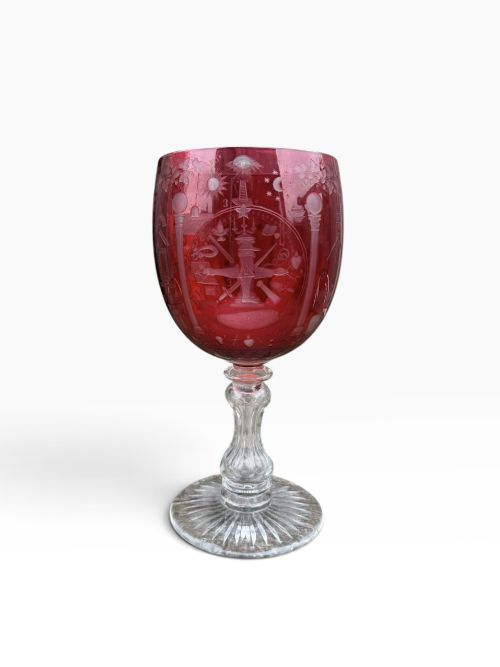
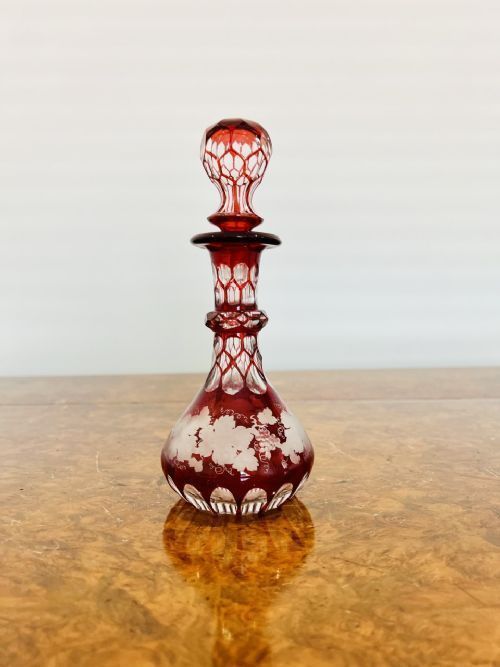
These pieces of victorian cranberry cut glass bring deep pink hue and brilliant wheel-cut facets to your table.
Victorian Cranberry Cut Glass
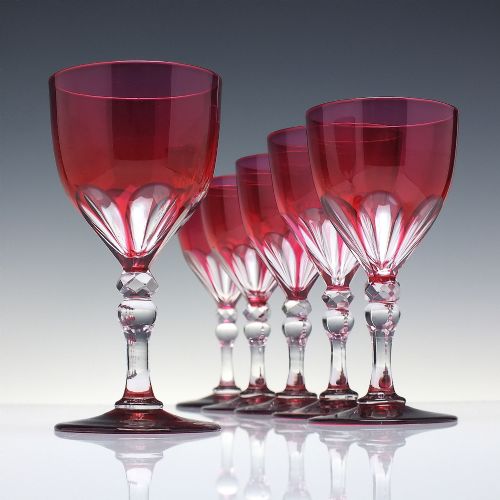
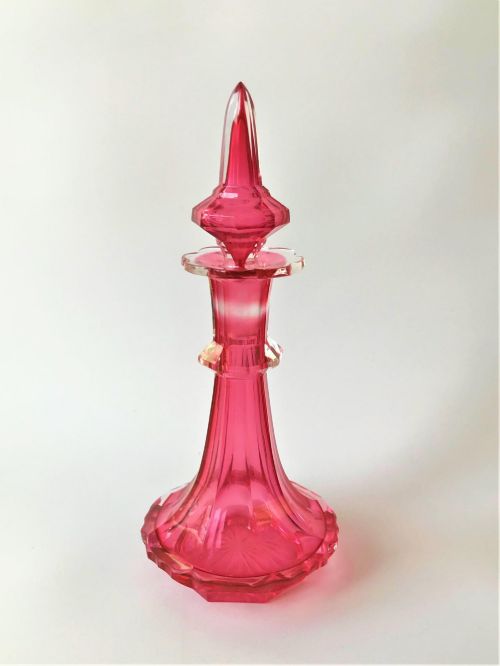
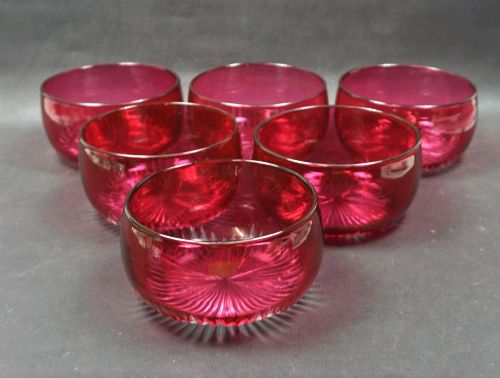
Victorian cranberry cut glass encompasses tableware, lighting, and dressing table items made primarily during the nineteenth century. The examples found here range from scent bottles and oil lamps to decanters, wine glasses, and finger bowls.
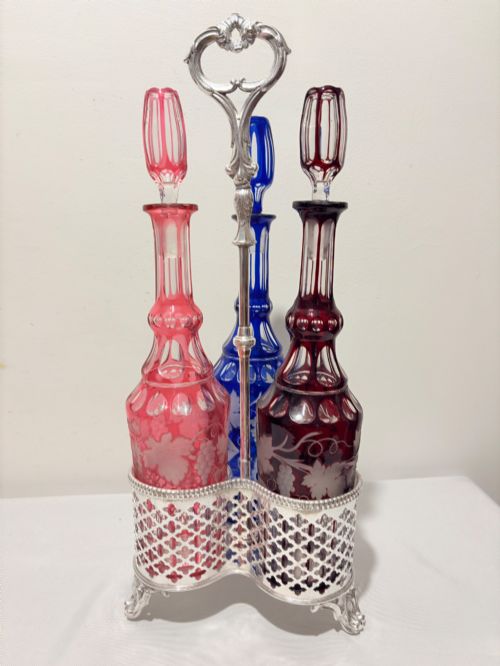
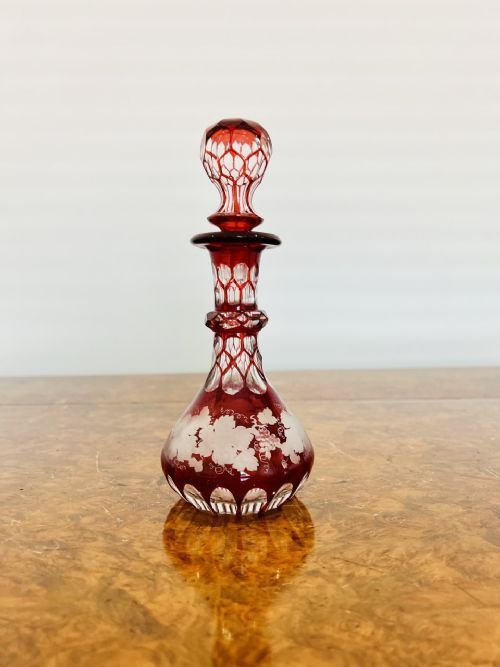
You will frequently meet table decanters and overlay glass scent bottles alongside oil lamps featuring bold cranberry shades. English and Bohemian makers dominate these pieces, utilising vibrant red and pink tones across various domestic forms.
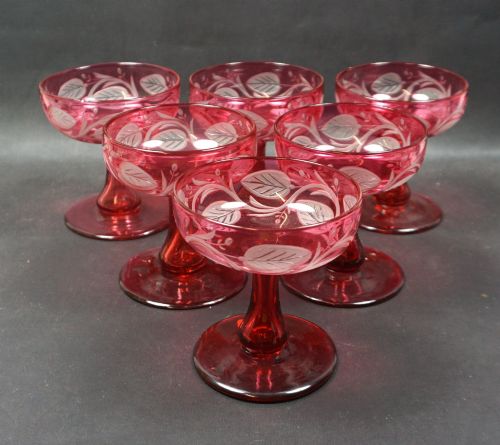
The objects span from the mid nineteenth century into the Edwardian era, showing how domestic glassware evolved in colour and weight. Collectors often find matching sets of champagne coupes, beakers, and finger bowls alongside individual mantle lustres and vases.
Materials and technique
The makers achieved the characteristic pink and red colour by adding gold to the molten glass batch during production. Craftsmen then applied an overlay of this coloured glass over clear crystal before cutting through the outer layer to expose the contrasting clear material beneath.
Wheel-cutting created deep geometric or naturalistic facets that caught the light, while secondary materials such as silver plate, solid silver, brass, and clear glass completed mounts and stoppers. Engravers further embellished surfaces with botanical motifs like birds, vines, and convolvulus flowers.
Victorian Cranberry Cut Glass Retail Price Guide 2026
Typical asking prices for victorian cranberry cut glass among the pieces listed under this phrase on Sellingantiques today, from the lower quarter to the upper quarter. They describe what is for sale here now, not the wider market.
Listings span from the 1850s through the Edwardian era, featuring materials like cranberry glass, silver plate, cut crystal, and brass.
Assessing quality
Quality rests on the crispness of the wheel-cut facets and the depth of the cranberry colour saturation within the glass. Superior pieces display precise contrast between the overlaid pink layer and the clear crystal underneath.
The refinement of any silver, silver-plated, or brass mounts dictates the overall standing of an object, particularly on oil lamps, decanter stands, and perfume bottles. Finer vessels also feature detailed hand-engraved ornamentation rather than plain surfaces.
The Victorian Cranberry Cut Glass Glossary
- Cranberry glass
- Transparent glass coloured with gold chloride to produce shades ranging from pale pink to deep crimson. It became immensely popular for domestic tableware and decorative items during the Victorian period.
- Overlay glass
- A technique where a layer of coloured glass is fused over a base of clear or contrasting glass. Artisans cut away portions of the outer layer to reveal the clear glass beneath.
- Mantle lustre
- A decorative glass vase hung with prismatic glass pendants designed to sit on a fireplace mantelpiece. They frequently incorporate rich cranberry tones and gilt highlights.
- Champagne coupe
- A shallow, broad-bowled stemmed glass traditionally used for sparkling wine. Victorian versions often showcase overlaid glass bowls with wheel-cut decoration.
Victorian Cranberry Cut Glass: Frequently Asked Questions
How do I clean cranberry glass?
Wash these pieces gently in warm water using a mild washing-up liquid and a soft cloth. Avoid abrasive sponges or harsh chemical cleaners that can scratch the surface or damage metal mounts.
Dry the glass immediately with a lint-free tea towel to prevent water spots. Take extra care around delicate stoppers, applied handles, and hanging prisms on lustres.
Can I use these decanters for wine?
Many nineteenth-century decanters remain entirely functional for serving wine and port today. Ensure you inspect the interior for any residue before pouring.
Hand wash only after use and store them without the stopper inserted to allow air circulation. Avoid subjecting antique glass to sudden temperature changes.
How do I date these items?
Dating relies on stylistic clues, manufacturing techniques, and any accompanying hallmarks on silver mounts. Mid-nineteenth-century pieces often display heavier casting and deep, organic engraving.
Later Victorian and Edwardian examples may show machine-led facets or lighter silver-plated fittings. Comparing the object type and glass weight against known period examples helps narrow the decade.