

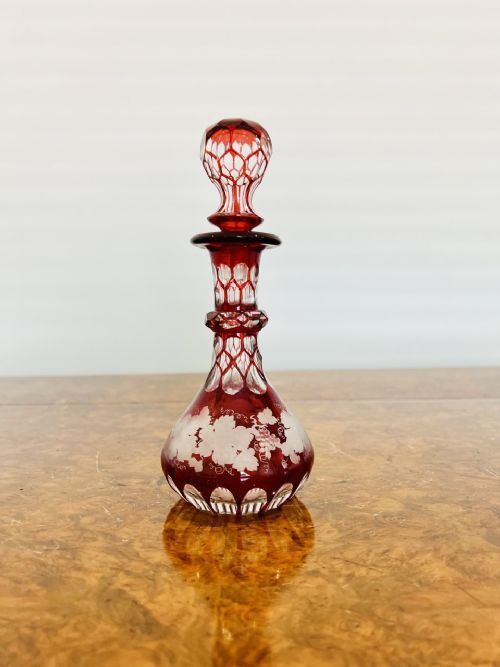


Engraved Glass Vanity Bottle
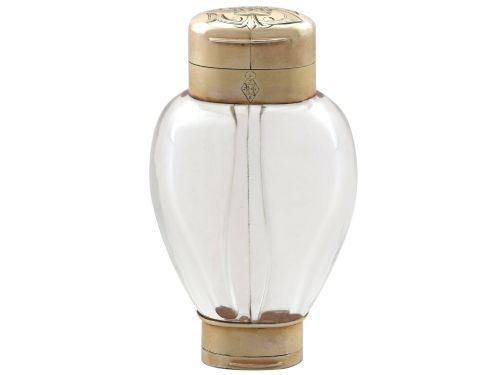
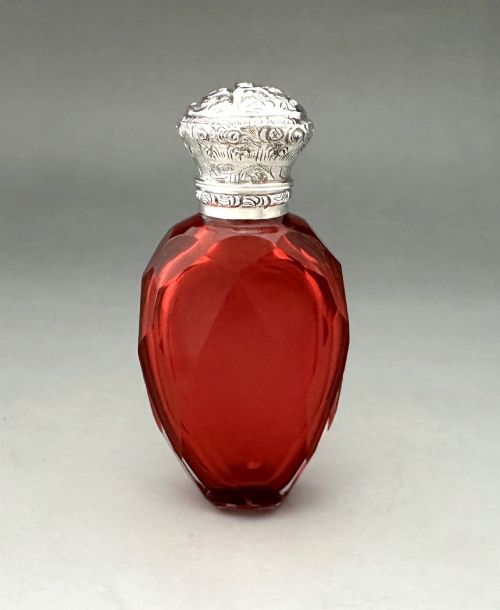
An engraved glass vanity bottle sits on the dressing table to hold scent, catching the light through cut crystal and ruby glass.
Engraved Glass Vanity Bottle
When you search for an engraved glass vanity bottle, you are looking at small dressing table vessels designed for perfume, spirits or toiletries. These pieces appear mostly from the nineteenth century, including Victorian and Edwardian examples alongside French nineteenth century work.
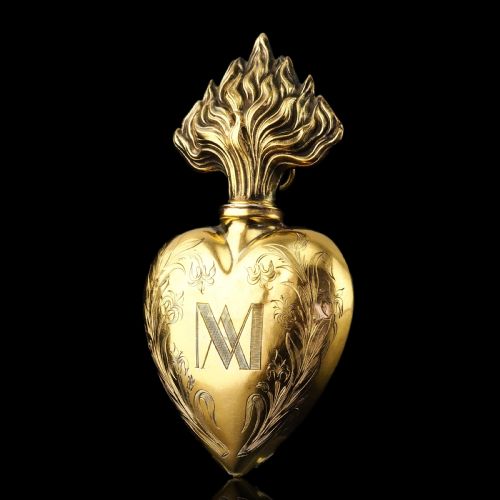
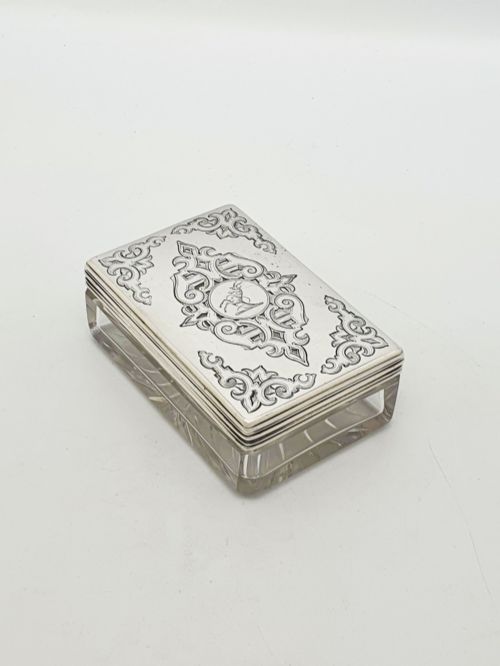
The forms on this page include scent bottles, perfume flasks, trinket boxes, dressing cases and vanity jars. Ruby glass, amethyst glass and cut crystal body the vessels, often fitted with silver collars or silver gilt caps.
How they were made
Makers shaped the vessels from glass, lead crystal, ruby glass and amethyst glass, employing cutting and engraving techniques to pattern the surface. Silversmiths then added sterling silver, silver gilt, vermeil and solid silver for collars, caps and cases.
Workshops combined wheel-engraved glass with hallmarked silver mounts, creating functional dressing table accessories that united glass-blowing with metal-smithing traditions.
Listings feature nineteenth century periods, including Victorian, Edwardian, 1800, 1860, 1870, 1880, 1890 and 1910.
What varies in quality
Quality rests in the crispness of the glass cutting and the depth of the engraving, alongside the weight and finish of the silver mounts. Fine examples display sharp facets on cut crystal and well-defined work on silver collars.
The distinction between standard vessels and superior pieces lies in the integration of materials, such as heavy silver gilt work or unusual coloured glass like ruby and amethyst.
S. Morden and Co London·Kate Greenaway
The Engraved Glass Vanity Bottle Glossary
- Silver gilt
- Silver that has been covered with a thin layer of gold. This finish gives a warm golden tone to metal collars and caps.
- Ruby glass
- Deep red glass created by adding gold chloride to the molten mixture. It forms a striking background for engraved patterns on dressing table bottles.
- Cut crystal
- High-clarity glass shaped by cutting facets onto the surface. This technique creates brilliance and reflects light across vanity bottles.
- Vermeil
- Sterling silver plated with gold. The technique provides the appearance of solid gold while utilising silver underneath.
- Sterling silver
- An alloy of silver containing specific purity standards used for English and Victorian bottle mounts. It ensures durability for functional lids and collars.
Engraved Glass Vanity Bottle: Frequently Asked Questions
What is an engraved glass vanity bottle used for?
These vessels held perfume, scented spirits or toiletries on a lady's dressing table. They served as both functional containers and decorative items.
Their small scale allowed them to sit neatly within dressing cases or upon vanity trays alongside matching jars and trinket boxes.
How do I date a Victorian glass scent bottle?
Dating relies on the hallmarks found on the silver collars, combined with the style of the glass cutting and the shade of the material. Victorian pieces often show registration marks or specific maker stamps.
Periods span from the mid-nineteenth century through to the Edwardian era, indicated by mounting styles and engraving depth.
What materials make up these vanity bottles?
The bodies consist of glass, cut lead crystal, ruby glass or amethyst glass. Mounts, collars and caps are typically fashioned from sterling silver, solid silver or silver gilt.
Colours range from clear crystal to deep red and purple tones, paired with polished metal.
Are these bottles English or French?
The evidence shows examples from both English and French workshops. English pieces frequently feature regional silver hallmarks and collars.
French pieces often showcase distinct nineteenth-century styling with silver gilt and elaborate flask shapes.