




Victorian Engraved Perfume Bottle
These Victorian engraved perfume bottle pieces are portable vessels of silver and glass, offering a tangible glimpse into nineteenth-century personal grooming.
Victorian Engraved Perfume Bottle
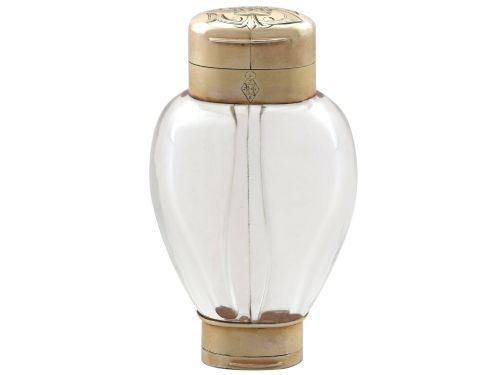
A victorian engraved perfume bottle is a small personal container designed for holding scent or smelling salts, housed within vanity sets, dressing cases, or carried independently. The selection on this page centres primarily on nineteenth-century examples, spanning the Victorian and Edwardian eras.
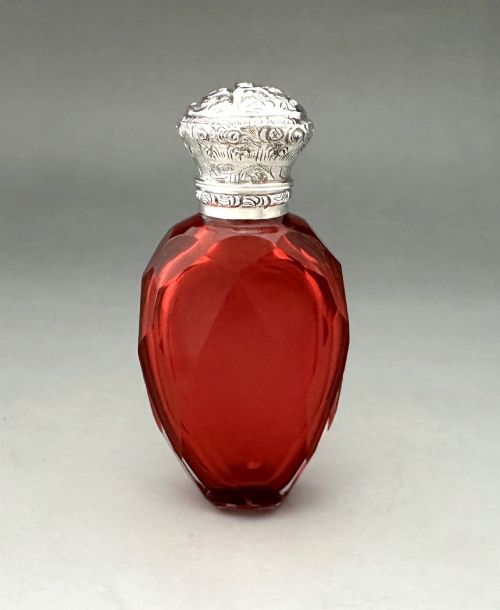
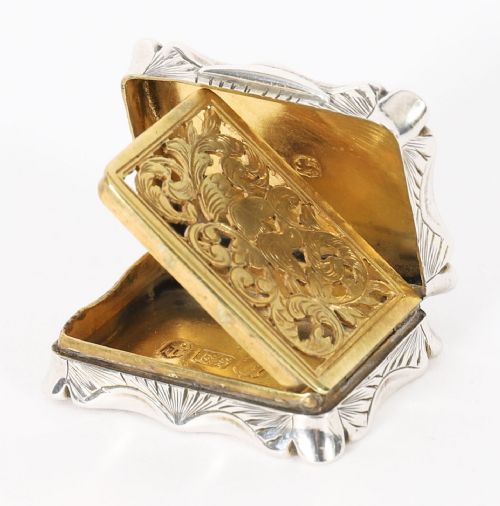
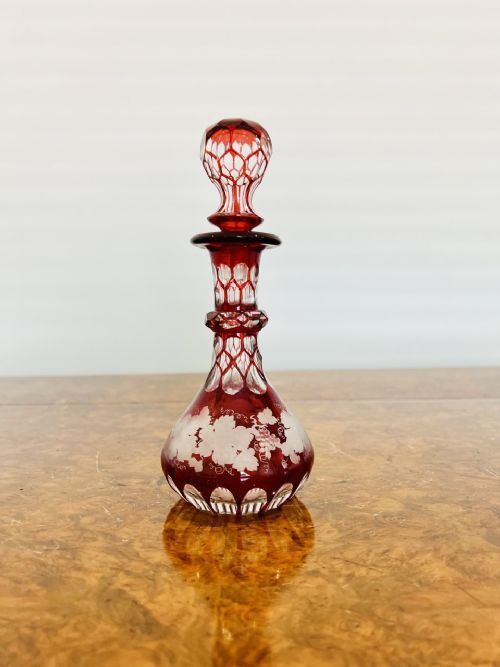
Forms vary from single-ended vessels to double-ended designs, alongside novelty shapes like miniatures and vinaigrettes. Materials range from clear cut crystal and glass to rich ruby and amethyst glass, complemented by silver collars and caps.
Origins include English workshops alongside Dutch silver pieces, reflecting diverse manufacturing centres of the period. Buyers meet both standalone scent bottles and fitted components from larger dressing and vanity cases.
How they were made
Makers shaped glass through cutting, etching, and faceting, creating lead crystal and coloured vessels designed to catch the light. The glass bodies often feature deep geometric cuts or delicate surface etching.
Metal components utilise sterling silver and silver gilt, fashioned into hinged caps, collars, and elaborate casings. Silversmiths applied hand engraving to these metal mounts, adding floral or scrollwork ornamentation.
What varies in quality
The distinction between standard items and superior examples lies in the depth and crispness of both the glass cutting and the silver engraving. Sharply defined facets and deeply chased metalwork indicate skilled hand labour.
Completeness also dictates standing, particularly in double-ended bottles retaining original stoppers and caps at both terminals, or vanity cases preserving their full complement of fitted crystal bottles.
Horton & Allday·Edward Smith·Asprey·S. Morden & Co
The Victorian Engraved Perfume Bottle Glossary
- Vinaigrette
- A small ornamental box or bottle with an internal perforated grille, used to hold a sponge soaked in aromatic vinegar. These pieces date predominantly to the nineteenth century.
- Sterling silver
- An alloy containing a high proportion of silver by mass, widely utilised for the collars, caps, and outer cases of scent containers. It carries hallmarks indicating its assay office and standard.
- Double-ended
- A bottle design featuring openings at both extremities, commonly allowing two different liquids or a scent and smelling salts to be carried simultaneously. These often utilise contrasting glass colours or symmetrical cut designs.
- Silver gilt
- Silver that has been coated with a thin layer of gold on its surface, providing a rich yellow tone to interior mounts or decorative exterior elements. This technique protects the underlying metal from tarnishing.
- Cut crystal
- High-clarity glass containing lead oxide, shaped through wheel-cutting to produce sharp geometric facets. This material adds significant weight and brilliance to the finished vessel.
Victorian Engraved Perfume Bottle: Frequently Asked Questions
How do I clean an antique scent bottle?
Cleaning requires gentle warm water and mild soap, avoiding harsh abrasives that might damage delicate silver engraving or glass surfaces.
Silver components benefit from occasional polishing with a soft cloth to maintain their metal finish.
What is the difference between a vinaigrette and a perfume bottle?
A perfume bottle holds liquid scent with a stopper or screw cap, while a vinaigrette contains a perforated internal grille.
The grille in a vinaigrette covers a sponge soaked in pungent aromatics rather than liquid perfume.
Are these bottles safe for modern perfume?
Most antique bottles function adequately for display or occasional application, though historical stoppers may not form an airtight seal.
Precious metal mounts and older glass adhesives require careful handling during use.