


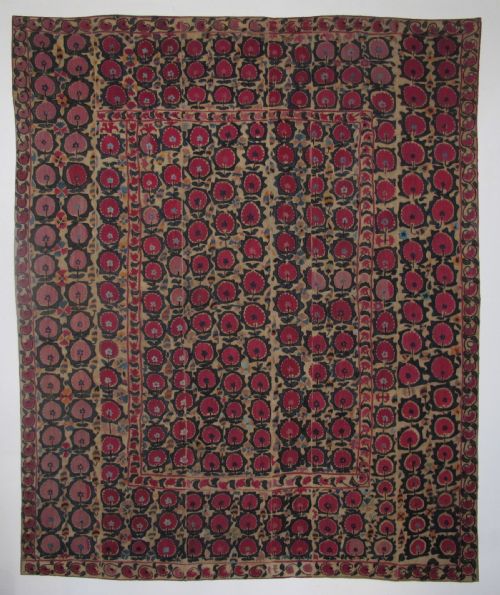


Red Cotton Suzani
These red cotton suzani textiles are Central Asian wall hangings and decorative pieces worked in rich silk embroidery.
Red Cotton Suzani
A red cotton suzani is a traditional Central Asian embroidered textile, most frequently originating from Uzbekistan and produced across the nineteenth and early twentieth centuries. These decorative wall hangings and textiles appear in regional variations including Bokhara, Nurata, Tashkent, Ura Tube, and Shahrisabz designs.
The pieces on this page span from mid nineteenth century examples to vintage twentieth century works. They showcase distinct regional styles such as Nim suzanis, Palak full work embroidery, and tribal Lakai or Tajik pieces.
Assessing Quality and Execution
Quality rests on the density of the embroidery and the complexity of the design, with full work palak pieces demonstrating exceptional handwork. The fineness of the silk thread and the precision of the needlework distinguish regional workshops from one another.
The vibrancy of the red ground cloth and the preservation of the silk embroidery determine the overall visual impact. Early nineteenth century examples often display superior saturation and harmonious colour palettes.
Red Cotton Suzani Retail Price Guide 2026
Typical asking prices for red cotton suzani among the pieces listed under this phrase on Sellingantiques today, from the lower quarter to the upper quarter. They describe what is for sale here now, not the wider market.
Brides historically embroidered these enormous panels with secret wishes stitched directly into the swirling floral vines.
The Red Cotton Suzani Glossary
- Suzani
- An embroidered textile from Central Asia. These wall hangings were traditionally made by brides as part of their dowry.
- Adras
- A traditional fabric woven from a mixture of silk and cotton yarns. This material frequently serves as the foundation ground for embroidery.
- Nim Suzani
- A smaller or half size embroidered hanging. These pieces typically feature less dense composition layouts than full scale examples.
- Palak
- A fully embroidered suzani design style. These works usually incorporate a large central star motif surrounded by floral elements.
Red Cotton Suzani: Frequently Asked Questions
What is a suzani used for?
These embroidered textiles function primarily as decorative wall hangings and interior furnishings. Historically, they served as dowry items and household coverings in Central Asian homes.
Today, collectors mount them on walls or display them as textile art to add rich colour and traditional pattern to modern interiors.
How do I care for a textile?
Protect antique embroidered pieces from direct sunlight to prevent the silk threads and red ground from fading. Gentle vacuuming through a mesh screen helps remove surface dust without disturbing the stitches.
Avoid washing or chemical cleaning unless handled by a professional textile conservator. Proper mounting on a supportive backing relieves tension on the historical fabric.
How do I date a suzani?
Dating relies on examining the materials, natural dye usage, and regional embroidery styles. Pieces from the mid nineteenth century generally show different colour palettes and thread characteristics compared to twentieth century examples.
Structural evidence within the cotton or adras ground cloth also provides clues to the era of production.
Where do these pieces come from?
These textiles originate from Central Asian regions including Uzbekistan and Tajikistan. Specific urban centres and rural areas like Bokhara, Tashkent, Nurata, and Shahrisabz developed distinct regional design schools.
Tribal groups such as the Lakai also produced distinctive embroidered works with unique motifs.