





Traditional Floral Suzani
A traditional floral suzani is an embroidered Central Asian textile made to adorn domestic interiors, prized for its vivid needlework and grand scale.
Traditional Floral Suzani
A traditional floral suzani is a decorative textile panel originating from Central Asia, principally Uzbekistan, created as part of traditional dowry furnishings. These large embroidered wall hangings and covers feature botanical motifs that reflect regional design traditions from across the nineteenth and early twentieth centuries.
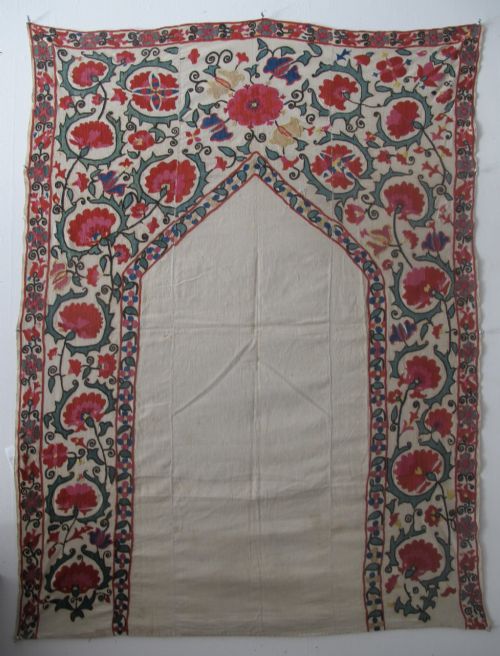
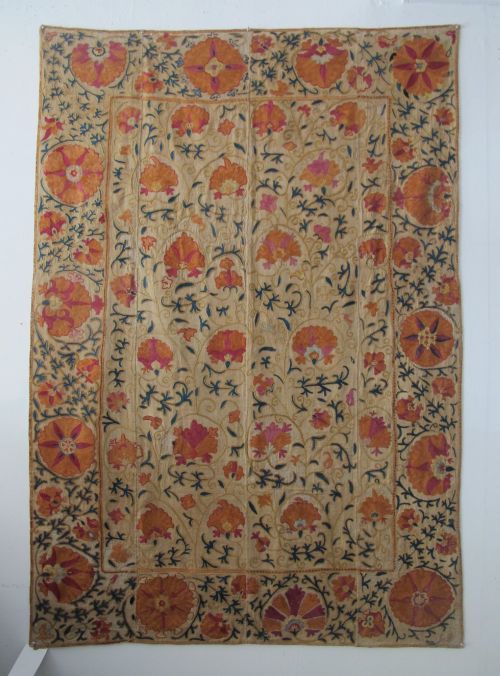
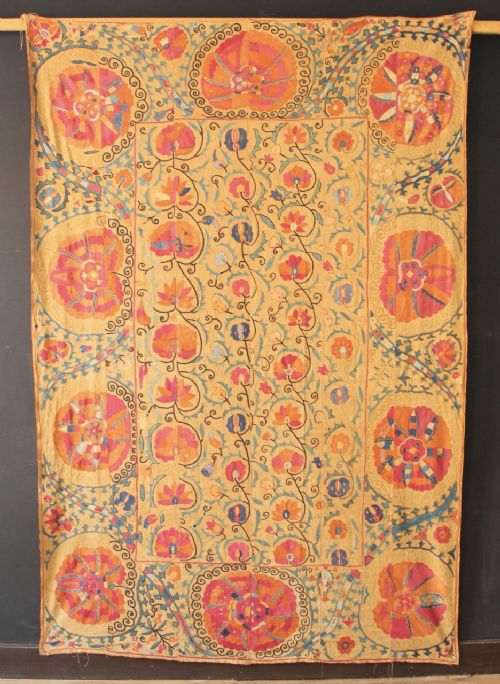
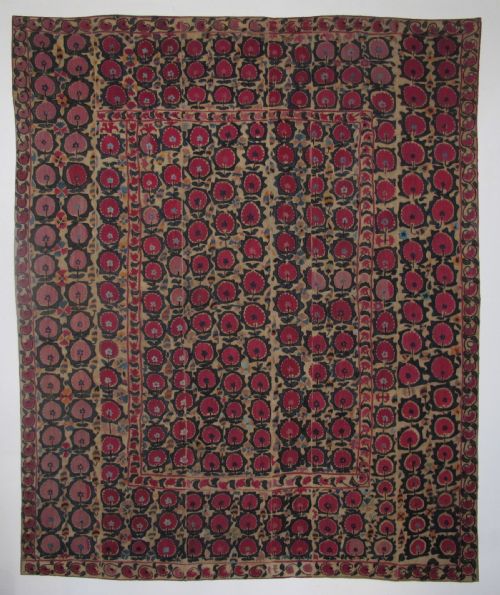
The pieces available here encompass various regional formats, including full-size examples and smaller nim suzani panels. Buyers will encounter works from specific centres such as Bokhara, Nurata, and Shakhrisabz, alongside pieces attributed to Tajik and Lakai makers.
Most examples take the form of wall hangings or textiles designed for domestic interiors, spanning the period from the early nineteenth century through to the 1930s. They provide a direct tangible link to the textile arts of Central Asian tribal and folk traditions.
How they were made
These textiles rely on a foundation fabric of woven cotton or linen, providing a stable ground for dense needlework. Artisans embroidered these surfaces using vibrant silk threads, often worked in specialised tambour or surface stitches.
Many examples utilise coloured cotton grounds, such as red or yellow, which contrast sharply with the polychrome silk embroidery. The construction frequently combines panels joined together to achieve the substantial dimensions required for wall hangings and covers.
Traditional Floral Suzani Retail Price Guide 2026
Typical asking prices for traditional floral suzani among the pieces listed under this phrase on Sellingantiques today, from the lower quarter to the upper quarter. They describe what is for sale here now, not the wider market.
A few nomadic embroiderers snuck tiny hidden asymmetry into their repeating flowers just to keep the evil eye from settling on the housework.
What varies in quality
The visual impact of a traditional floral suzani depends heavily on the density and precision of the silk embroidery across the ground. Finer examples display meticulous stitch work that fully realises complex botanical and architectural compositions.
Purity of design and regional character also define the upper tier of these textiles, where balanced proportions in medallion variants or prayer formats demonstrate superior artisan skill. The visual harmony between the dyed cotton ground and the surrounding silk threads dictates the overall success of the piece.
The Traditional Floral Suzani Glossary
- Suzani
- A large embroidered Central Asian textile panel traditionally created as part of a bride's dowry. The word derives from the Persian term for needle.
- Nim suzani
- A half-size version of the standard suzani textile, typically measuring smaller in overall dimensions while retaining the same dense embroidery.
- Ground
- The underlying fabric foundation, usually cotton or linen, upon which the silk embroidery is worked. This background colour often defines the visual palette of the piece.
- Medallion variant
- A specific layout featuring central circular or polygonal ornamental motifs surrounded by secondary floral and geometric elements. These designs structure the visual field of the embroidery.
- Prayer format
- A textile design incorporating an arched mihrab shape, referencing architectural prayer niches found in Islamic art.
Traditional Floral Suzani: Frequently Asked Questions
How were traditional floral suzani textiles used originally?
These embroidered panels were created primarily as ceremonial furnishings for a bride's dowry, functioning as wall hangings, bed covers, or decorative wall partitions within Central Asian homes.
Over time, families displayed them on special occasions to demonstrate social standing and domestic artistry before eventually transitioning into collectible decorative items.
How do I care for an antique suzani?
Keep textile panels out of direct sunlight to prevent the silk threads and dyed cotton grounds from fading over time. Mount them professionally with proper weight distribution if hanging them on a wall.
Avoid folding antique embroideries for long periods to protect the textile fibres and stitches from undue stress. Gentle vacuuming through a mesh screen can help remove surface dust when necessary.
What is the difference between a full suzani and a nim suzani?
A standard suzani is a large format textile panel designed to cover significant wall areas or domestic furniture. These require extensive time and collaborative embroidery work.
A nim suzani represents a smaller version, translating the same intricate floral and geometric motifs onto more compact dimensions suited for narrower display spaces.
How can I identify different regional suzani styles?
Regional variations appear in the choice of ground colours, floral motifs, and compositional structures unique to centres like Bokhara, Nurata, or Shakhrisabz. Certain tribal groups such as the Lakai also imparted distinct stylistic traits to their needlework.
Examining the specific arrangement of medallions, architectural elements, or prayer formats helps attribute pieces to their particular Central Asian origin.