
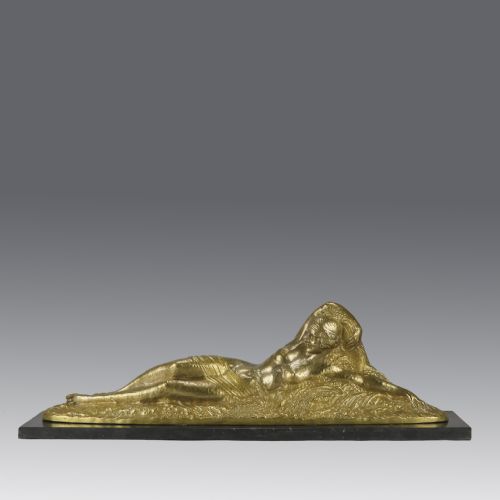





Reclining Nude Statue
A reclining nude statue captures the human form at rest, offering sculptural grace through metal and stone.
Reclining Nude Statue
A reclining nude statue brings classical and modern forms into domestic spaces, taking the shape of sculptures, figures, and bookends. The selection here spans the nineteenth century through the Art Deco period of the 1920s and 1930s.
Buyers will encounter French works alongside pieces from the Belle Epoque and Neoclassical styles. Subjects range from classical figures like Ariadne and Cleopatra to stylised modernist interpretations.
Materials vary from cast metals to carved stones, reflecting the changing tastes of collectors across different eras. These pieces function as desk ornaments, shelf displays, and cabinet centerpieces.
Materials and methods
Foundry methods allowed sculptors to cast figures in bronze, patinated bronze, gilt bronze, and spelter. These metal works often incorporate bases carved from marble, onyx, slate, and alabaster.
Artists shaped the human figure through traditional modelling and casting before finishing surfaces with patination or gilding. Softer stones like alabaster were hand-carved to capture the smooth contours of the reclining body.
Materials recorded across the inventory include bronze, gilt bronze, patinated bronze, spelter, marble, onyx, alabaster, and slate.
Judging quality
The refinement of the casting and the crispness of the chisel work distinguish finer sculptures from simpler production pieces. A well-executed casting retains subtle anatomical details in the limbs and face without soft edges.
The choice of base material contributes significantly to the presence of the sculpture, with dense variegated marbles and onyx elevating the work. The harmony between the reclining figure and its mount defines the overall success of the piece.
Demetre Chiparus·Josef Lorenzl·Sibylle May·Edmond Leveque·James Pradier·Susse Freres·Ugo Cipriani
The Reclining Nude Statue Glossary
- Spelter
- An alloy of zinc and lead used as a cost-effective alternative to bronze in decorative figures. It takes patination well to simulate heavier metals.
- Patinated bronze
- Bronze treated with chemicals to produce a specific surface colour and tone. This process protects the metal while enhancing visual depth.
- Alabaster
- A fine-grained, translucent stone favoured for carving figures. Its softness allows for delicate modelling of the human form.
- Gilt bronze
- Bronze coated with a thin layer of gold to give a brilliant metallic sheen. It appears frequently in decorative arts of the nineteenth and early twentieth centuries.
Reclining Nude Statue: Frequently Asked Questions
What is a reclining nude statue?
A reclining nude statue is a sculptural depiction of a human figure lying down, produced in media such as bronze, spelter, and marble.
These works range from classical nineteenth-century interpretations to stylised Art Deco figures designed for domestic display.
How were these statues displayed?
Many figures serve as standalone sculptures on desks, mantels, and tables, while heavier pairs often function as bookends.
Their integrated bases of marble or onyx provide stability and elevate the piece for viewing from multiple angles.
How do I identify Art Deco pieces?
Art Deco pieces from the 1920s and 1930s typically feature stylised anatomical lines and geometric bases. Makers like Demetre Chiparus and Josef Lorenzl embraced sleek silhouettes distinct from nineteenth-century realism.
Materials during this period often combined patinated metals with contrasting marble or onyx plinths.
What is the difference between bronze and spelter?
Bronze is a durable copper alloy that takes fine detail and patination exceptionally well. Spelter is a softer zinc-based metal used as an economical alternative for decorative figurines.
Bronze generally commands greater longevity and finer casting definition than spelter.