
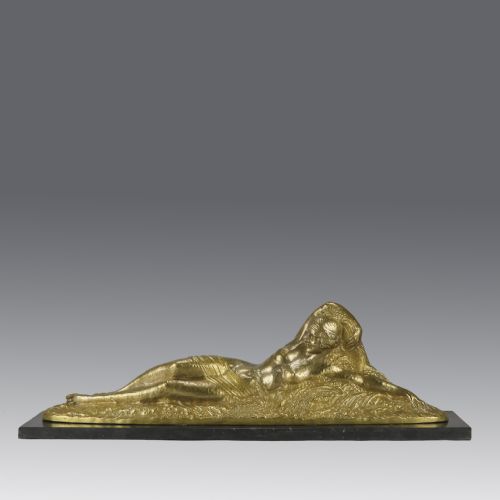


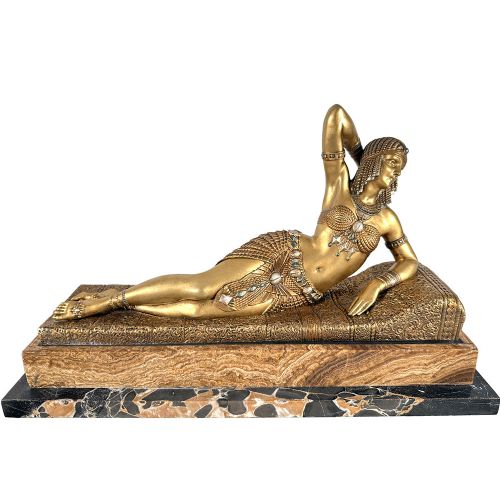


Reclining Nude Bronze Figure
A reclining nude bronze figure brings the poise and weight of classical and modernist sculpture directly into a room.
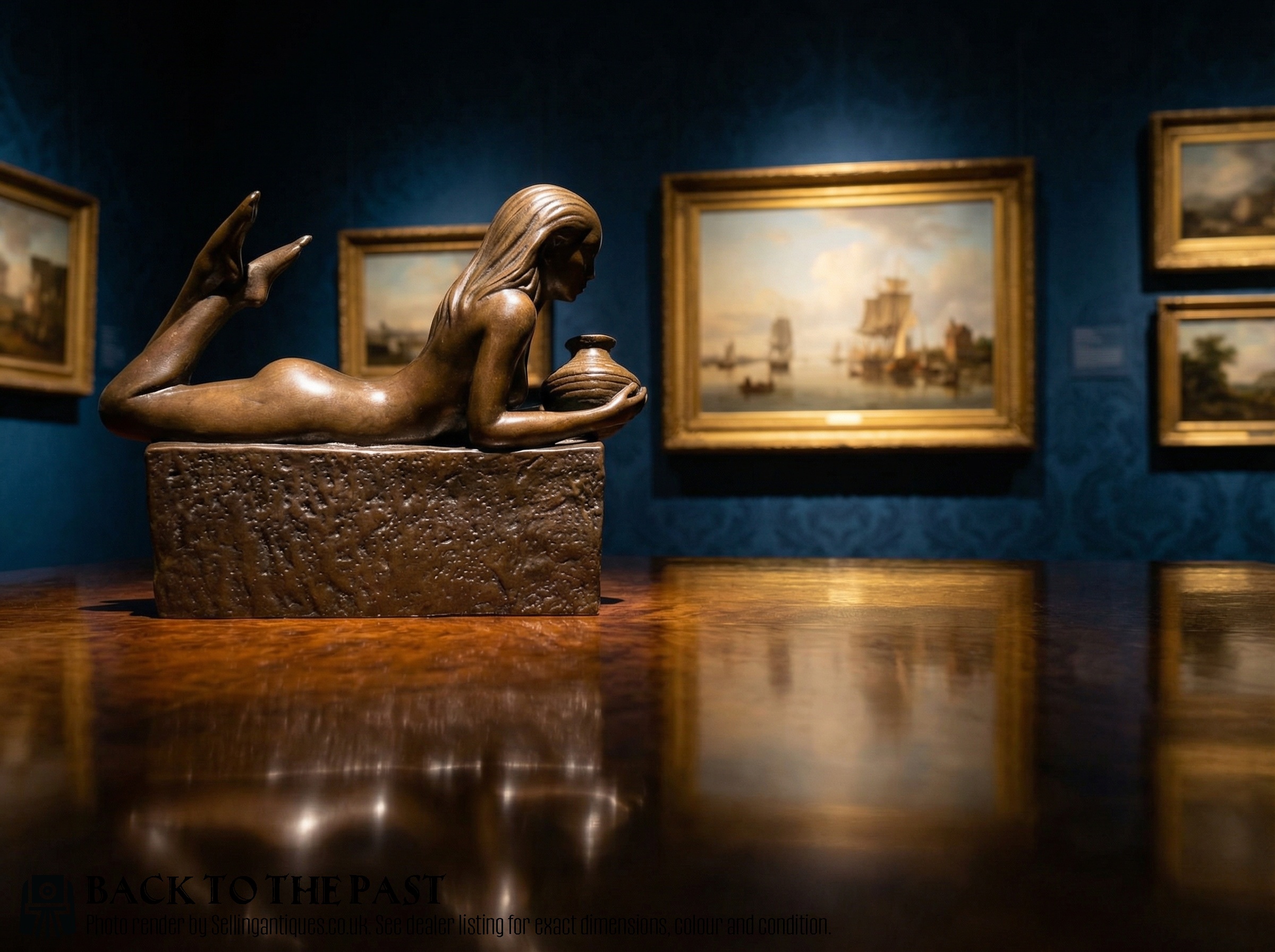
Reclining Nude Bronze Figure
A reclining nude bronze figure captures the human form at rest, drawn from nineteenth-century classical traditions and the clean geometries of the Art Deco period. These sculptures take the form of freestanding works or functional pieces such as bookends, often resting upon bases of marble, onyx, or slate.
The versions most commonly met on this page date from the nineteenth century through the 1920s and 1930s. They range from French academic subjects like Ariadne and Cleopatra to stylised modernist figures created by European artists.
How they were made
These works rely on the traditional casting of metal, using bronze or spelter to shape the human form with patinated or gilt finishes. Foundries such as Susse Freres applied patination or gilding to bring out the contours of the figures.
Many sculptures are mounted on heavy stone plinths, utilising marble, onyx, or slate to anchor the metal work. This combination of cast metal and polished stone gives the pieces their characteristic balance and weight.
Listings span from 1880 through the 1930s, featuring materials such as bronze, spelter, marble, onyx, and slate.
What varies in quality
The distinction between standard works and finer examples lies in the crispness of the casting and the sensitivity of the finishing. Superior pieces show precise anatomical detail and careful hand-chasing in the metal.
The choice and preparation of the mounting also set pieces apart, with dense marbles and well-fitted stone bases indicating finer craftsmanship. The quality of the patination, whether dark patinated bronze or bright gilt, determines the visual depth of the surface.
Demetre Chiparus·Josef Lorenzl·Sibylle May·Edmond Leveque·James Pradier·Susse Freres·Ugo Cipriani
The Reclining Nude Bronze Figure Glossary
- Patinated bronze
- Bronze that has been treated chemically to produce a specific surface colour or tone. This finish protects the metal and enhances the sculptural contours.
- Spelter
- A zinc-based alloy often used as a substitute for bronze in decorative figures. It is lighter than bronze and typically takes a painted or patinated finish.
- Gilt bronze
- Bronze that has been coated with a thin layer of gold or gold-coloured metal. This technique adds a luminous finish to the surface of the sculpture.
- Art Deco
- A design style of the 1920s and 1930s characterised by stylised forms and geometric simplicity. It moved away from nineteenth-century academic realism towards streamlined elegance.
- Foundry mark
- A stamp or signature left by the workshop that cast the metal. These marks identify the commercial origin of the piece.
Reclining Nude Bronze Figure: Frequently Asked Questions
How do I identify Art Deco pieces?
Art Deco reclining figures display stylised anatomical lines and sleek geometric compositions rather than nineteenth-century academic realism. They frequently date from around 1920 to 1930.
These pieces often incorporate materials like marble or onyx bases to complement the metalwork of the figure.
What is the difference between bronze and spelter?
Bronze is a heavy, durable copper alloy that takes a deep patina and holds fine chisel work. Spelter is a softer zinc-based alloy used for more accessible decorative figures.
Spelter figures are lighter in weight and rely on surface paint or patination to mimic the appearance of solid bronze.
How were these sculptures displayed?
Sculptures of this type were designed to sit on desks, mantelpieces, or dedicated pedestals within domestic interiors. Some heavier examples were also engineered to function as bookends.
The stone bases provided stability for the reclining metal figures while adding a contrasting textural element to the room.
How do I date a nineteenth-century bronze?
Nineteenth-century works typically rely on classical subjects such as mythology or historical figures like Ariadne and Cleopatra. They show softer modelling and traditional foundry practises.
Stylistic cues and foundry stamps help separate these earlier academic works from later twentieth-century modernist designs.