
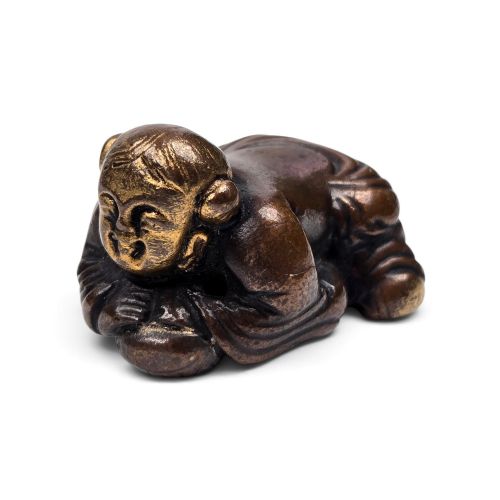
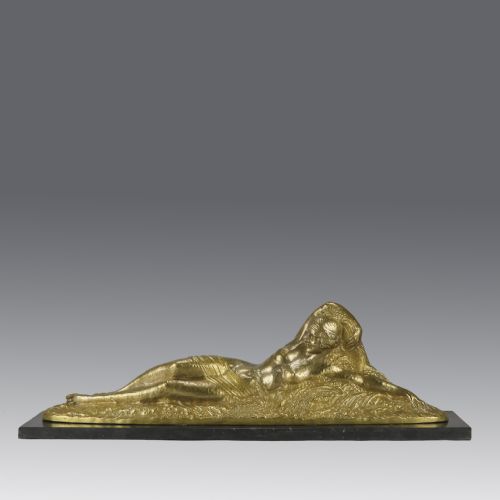


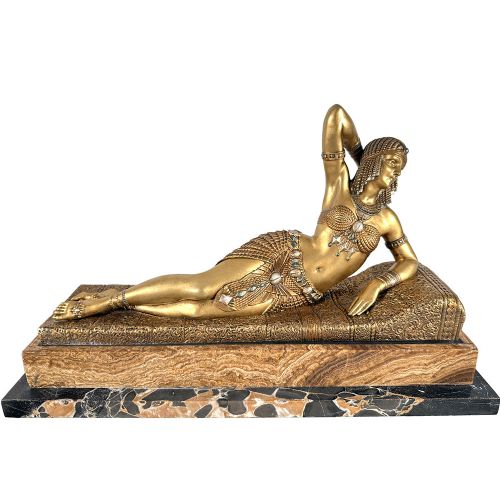


Bronze Reclined Figure
A bronze reclined figure captures the human or animal form at rest, offering a sculptural study in repose for a desk or mantel.
Bronze Reclined Figure
A bronze reclined figure represents subjects in recumbent postures, spanning classical mythological characters, animals, and human studies. These pieces function as independent sculptures, mantel clock embellishments, bookends, and desk paperweights.
The pieces on this page range from sixteenth-century scholar's desk items to nineteenth-century Animalier studies and twentieth-century Art Deco figures. The most frequent encounters include twentieth-century Art Deco stylised women and animals cast in bronze or spelter.
Origins stretch from France and America to Ming Dynasty China, reflecting diverse stylistic movements such as Neoclassical, Animalier, and Art Nouveau. Collectors find both cabinet-sized figures and larger mantel sculptures among the selection.
How they were made
Makers utilised solid casting methods for smaller desk objects, alongside hollow casting for larger sculptures. Molten metal poured into moulds captured intricate details of drapery, hair, and musculature.
Surfaces received various treatments including patination to darken the metal, selective fire-gilding, gold leaf application, and cold painting. Many figures incorporate stone elements, mounting bronze casts onto marble, onyx, or slate bases.
Listings span multiple centuries, uniting sixteenth-century Ming Dynasty scholar objects with nineteenth-century French bronzes and twentieth-century Art Deco works.
What varies in quality
The integrity of the material combination also dictates standard, particularly where bronze meets marble, onyx, or slate. Finer works integrate the metal and stone harmoniously, showing secure mounting and refined subsidiary bases.
Demetre Chiparus·Josef Lorenzl·Sibylle May·A L Barye·Edmond Leveque·James Pradier·Susse Freres·Ugo Cipriani·Jennings Brothers
The Bronze Reclined Figure Glossary
- Spelter
- A zinc-based alloy utilised as a less costly alternative to bronze, frequently seen in twentieth-century decorative figures. It accepts patination and metallic paint finishes well to resemble heavier metals.
- Animalier
- A nineteenth-century artistic movement dedicated to the realistic portrayal of animals. Sculptors in this tradition studied anatomy closely, often depicting creatures in resting or reclining natural poses.
- Patinated Bronze
- Bronze treated with chemical solutions to produce a controlled surface colouration. This process enhances sculptural depth and protects the metal from oxidation.
- Fire-Gilded
- A technique where an amalgam of gold and mercury is applied to bronze and heated until the mercury vaporises, leaving a permanent gold layer. It creates a brilliant surface finish seen on finer desk ornaments.
- Cold Painted
- Pigment applied to a metal surface without subsequent kiln firing. This decoration method appears frequently on twentieth-century cabinet bronzes.
Bronze Reclined Figure: Frequently Asked Questions
Where were these figures placed originally?
These figures sat upon scholar desks, library tables, and mantelpieces as decorative ornaments or functional items like paperweights and bookends.
Larger versions stood independently on pedestals or furniture tops to display artistic taste and classical learning.
How do I identify an Art Deco piece?
Art Deco pieces display streamlined geometries, stylised human forms, and materials such as spelter alongside patinated bronze.
They often incorporate marble or onyx bases and reflect design sensibilities from the early twentieth century.
What is an Animalier bronze?
An Animalier bronze focuses on realistic depictions of animals, capturing creatures such as deer or panthers in natural reclining postures.
This genre emerged strongly during the nineteenth century through the work of specialist sculptors.
How do bronze and spelter differ?
Bronze is a durable alloy of copper and tin that takes fine detail and patination exceptionally well.
Spelter is a softer, zinc-based metal that was utilised for decorative figures and can be distinguished by its lighter weight and different fracture characteristics.