




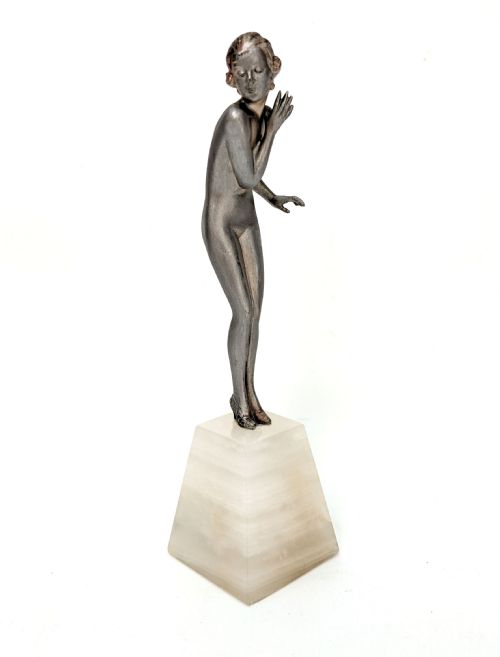

1930s Bronze Female Nude
A 1930s bronze female nude brings the sharp geometry and confident grace of the interwar period directly onto a mantelpiece or desk.
1930s Bronze Female Nude
When you search for a 1930s bronze female nude, you encounter sculptures, figurines, and table lamps capturing the distinct aesthetic of the Art Deco era. The forms range from dynamic dancers to stylised sitting figures, often mounted on heavy stone bases.
You are most likely to meet pieces produced around 1930, alongside select examples from the 1920s. These works originate from workshops in England and France, reflecting the widespread European embrace of modernism in domestic decoration.
How they were made
Foundries cast these figures in bronze or alternative metals, frequently applying a cold-painted finish or patination to accentuate the contours of the body. Gilt bronze and spelter also appear as primary media for these interwar figurines.
Makers anchored the metal sculptures to sturdy plinths of marble or onyx, providing visual contrast and physical stability. Selected items incorporate components like enamel or frosted glass to complete the composition.
A delicate glass swan occasionally joins the female nude on the mantelpiece, bringing a touch of avian elegance to the tableau.
What varies in quality
The sophistication of the casting and the crispness of the chisel work define the upper tier of these figures. Master modellers achieved fluid anatomical lines and expressive gestures that lesser productions missed.
The choice and preparation of the mounting stone signal the ambition of the piece. Dense, well-polished marble and onyx bases provide a heavier and more balanced foundation than substitute cast metals.
Ferdinand Preiss·Josef Lorenzl·Sibylle May·Ugo Cipriani·C Neuhaus
The 1930s Bronze Female Nude Glossary
- Bronze
- An alloy of copper and tin utilised for durable metal casting. It accepts patination and cold painting exceptionally well.
- Spelter
- A zinc alloy frequently employed as a substitute for bronze during the period. It offers a lighter alternative for decorative figurines.
- Patinated metal
- Metal treated with chemicals to alter its surface colour and tone. This process highlights the sculptural details of the figure.
- Cold painted
- A technique where paint is applied to a metal object without subsequent firing. This finish appears frequently on early twentieth-century sculptures.
1930s Bronze Female Nude: Frequently Asked Questions
Are these figures solid bronze?
Makers utilised several metals during this period, including genuine bronze, cast metal, and spelter. Each material has distinct weight and surface characteristics.
Examining the underside or base often reveals the underlying metal composition and helps distinguish solid bronze castings from plated alternatives.
How do I identify a lamp conversion?
Interwar lighting often integrated original figural sculptures with electrical fittings. Wiring paths and lamp fittings were adapted to suit domestic interiors.
Reviewing the mounting and internal fixings clarifies whether the lamp configuration is original to the piece.
What distinguishes spelter from bronze?
Spelter is a softer, lighter zinc alloy that was frequently used for economical decorative figures. Bronze offers greater density and structural durability.
Closer inspection of the surface wear and metal tone typically separates the two mediums.
Where were these sculptures produced?
Production centred largely in France and England, drawing upon established foundry networks. These workshops fed a strong domestic demand for modern decorative art.
Stylistic markers and base materials often point to the likely country of origin.