
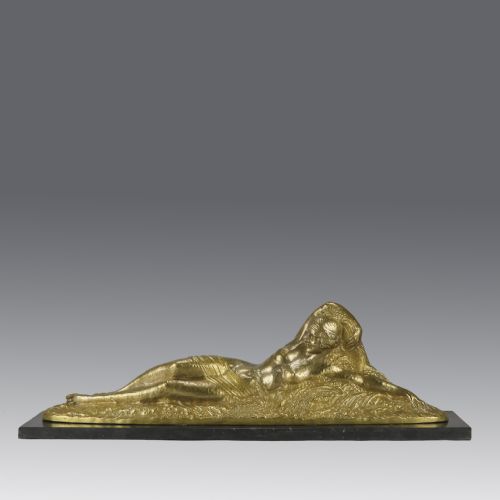


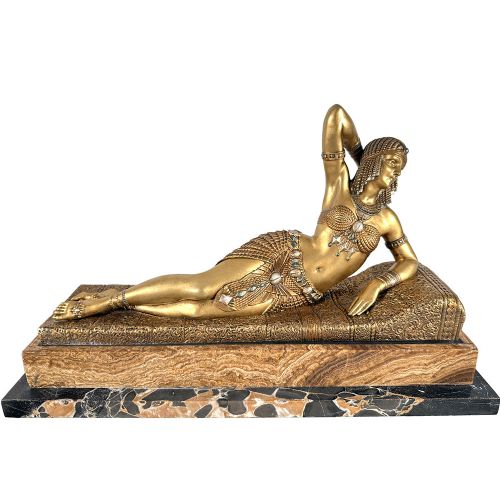


Bronze Reclining Figure Statue
These bronze reclining figure statue pieces combine classical repose with the distinct geometry of the early twentieth century.
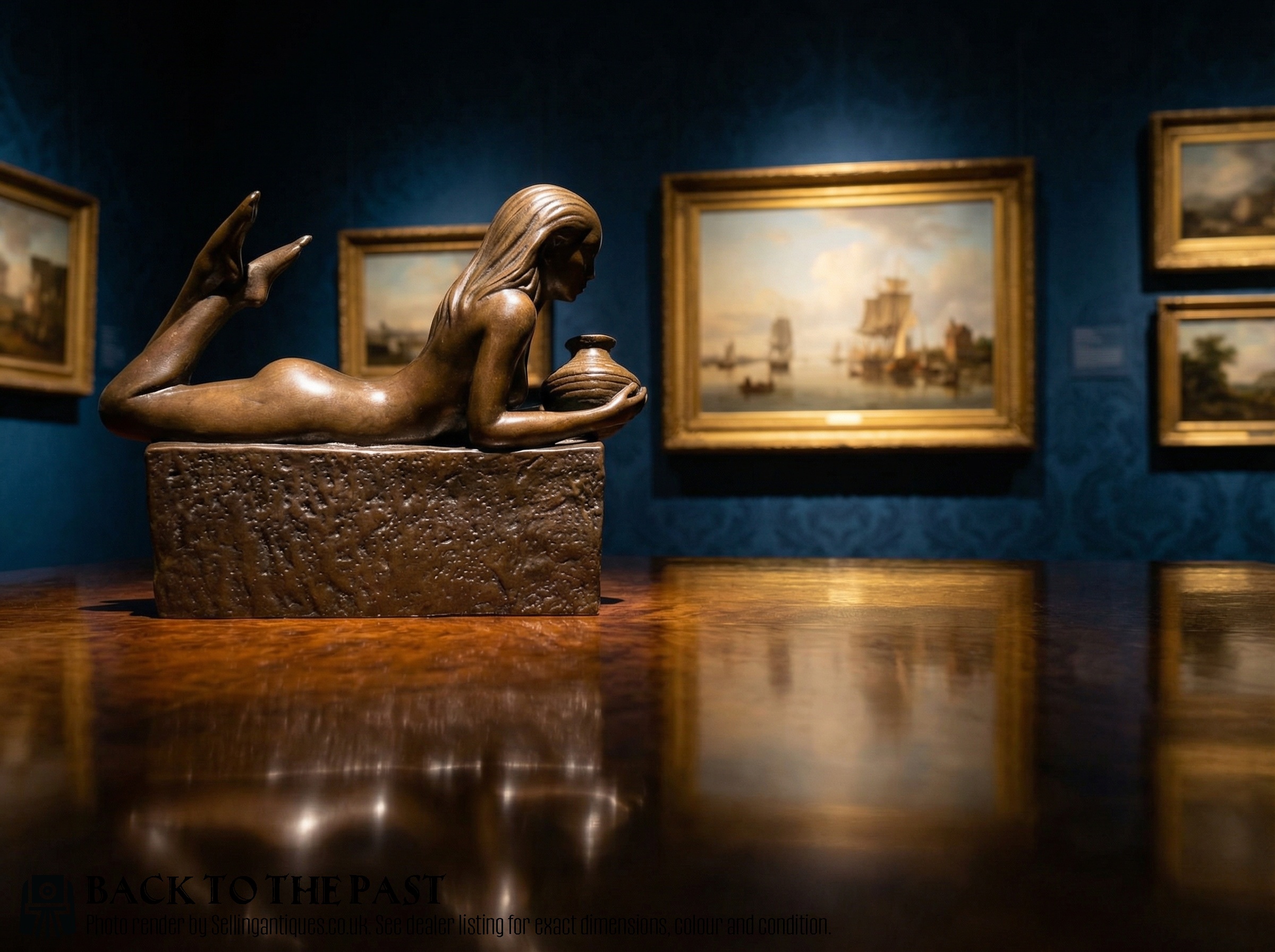
Bronze Reclining Figure Statue
A bronze reclining figure statue presents human and animal forms in horizontal postures, drawing on nineteenth-century academic traditions and twentieth-century decorative arts. When you search for this phrase, you encounter interpretations ranging from classical nudes to stylised Art Deco figures.
The versions most frequently met on this page include Art Deco depictions of women and animals created during the 1920 and 1930 decades. These pieces often incorporate mixed media bases, pairing metal figures with marble or onyx plinths.
Beyond the modern works, the selection encompasses nineteenth-century animalier studies and classical subjects like Ariadne or Cleopatra. Sculptors of the earlier period favoured romantic and mythological narratives, whereas later makers focused on stylisation and sleek silhouettes.
Materials and Casting Techniques
Foundries produced these sculptures primarily using traditional metal casting methods, pouring molten bronze or spelter into moulds. Patination and gilding were applied subsequently to achieve varied surface tones and metallic sheens.
Many figures rest on fitted bases of marble, onyx, or slate, anchoring the horizontal composition. Cold-painted metal finishes appear on select works, adding polychrome surface details directly onto the metal substrate.
Listings feature works in bronze, spelter, marble, onyx, and slate across the 1850 to 1930 period range.
Factors Determining Quality
The clarity of the chasing work and the precision of the casting define the fidelity of the final form. Finer examples retain sharp facial expressions and well-defined drapery folds, whereas lesser pieces exhibit smoothed details from worn moulds.
The choice of base material and the depth of the patination contribute significantly to the overall presence of the object. High-grade marbles and carefully applied multi-layered patinas separate standard decorative castings from works by recognised sculptors.
Demetre Chiparus·Josef Lorenzl·Sibylle May·A L Barye·Edmond Leveque·Jennings Brothers·James Pradier·Susse Freres·Ugo Cipriani
The Bronze Reclining Figure Statue Glossary
- Animalier
- A nineteenth-century artistic movement dedicated to the realistic portrayal of animals. Sculptors in this tradition focused on the anatomical accuracy of creatures in motion or repose.
- Spelter
- A zinc-based alloy utilised as a cost-effective alternative to bronze for decorative figures. It accepts metallic paints readily to simulate genuine bronze patination.
- Patination
- The chemical or natural surface colouring applied to metal sculptures. It protects the bronze and creates distinctive brown, green, or dark tones.
- Cold Painted
- A technique where enamel or oil paint is applied to an unheated metal surface. This finish is common on decorative metalware from the early twentieth century.
- Grand Tour
- A nineteenth-century travel phenomenon where collectors acquired bronze reductions of classical antiquities. These souvenirs replicated famous sculptures found in European museums.
Bronze Reclining Figure Statue: Frequently Asked Questions
What periods do these sculptures cover?
The pieces span from the mid-nineteenth century through the Art Deco period of the 1920 and 1930 decades. Nineteenth-century works lean towards classical and animalier subjects.
Later pieces reflect modern decorative styles with stylised human and animal forms mounted on marble bases.
How do I distinguish bronze from spelter?
Bronze is heavier, denser, and develops a natural oxidation over time without revealing a grey metal underneath. Spelter is a softer zinc alloy that feels lighter and often shows grey metal beneath chips in the finish.
Magnification can also reveal casting seams that are sharper or more brittle on zinc-based figures compared to traditional bronze.
Where were these figures displayed?
Original owners placed these sculptures on mantelpieces, desks, and library tables as decorative art objects. Bookends also served a functional role while displaying figural bronze work.
They were intended for interior display in domestic drawing rooms and studies during the nineteenth and twentieth centuries.
How should I clean a patinated bronze?
Dust the surface gently with a soft, dry brush to prevent particle buildup. Avoid chemical cleaners and polishes that strip the original patination.
Microcrystalline wax can be applied sparingly by professionals to protect the metal from atmospheric moisture.