
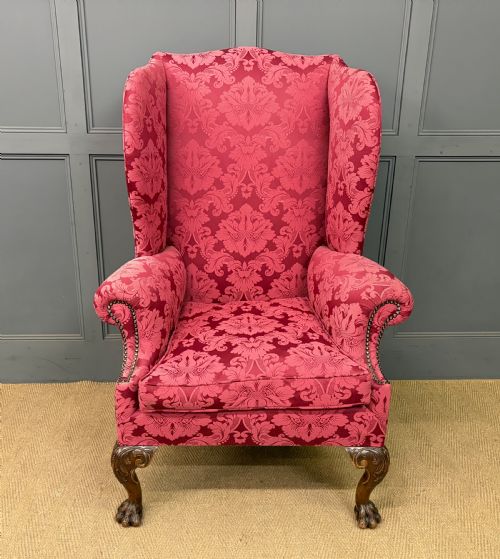


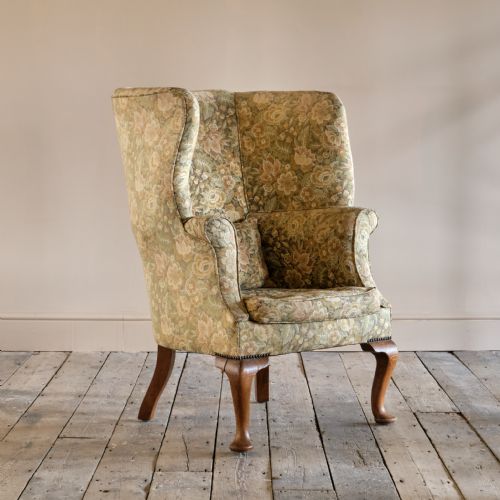


Queen Anne Wingback
A queen anne wingback is an upholstered fireside seat designed to keep out draughts, offering deep comfort alongside historic form.
Queen Anne Wingback
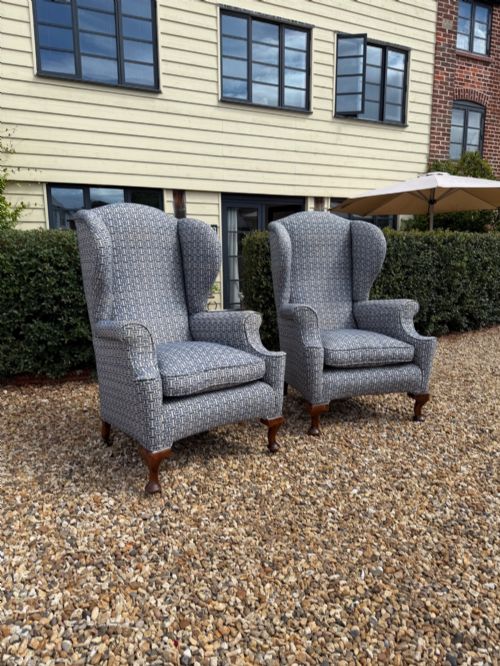
A queen anne wingback provides deep seating enclosed by protective side panels designed to block fireside draughts. These large upholstered chairs and sofas appear in forms spanning the eighteenth century through to later revival periods of the nineteenth and twentieth centuries.
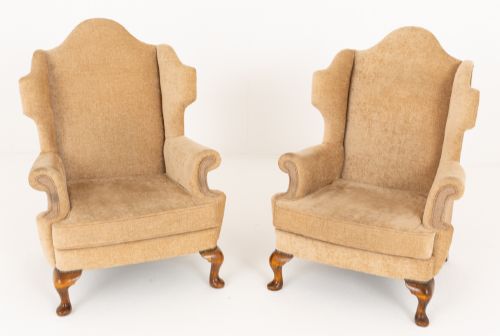
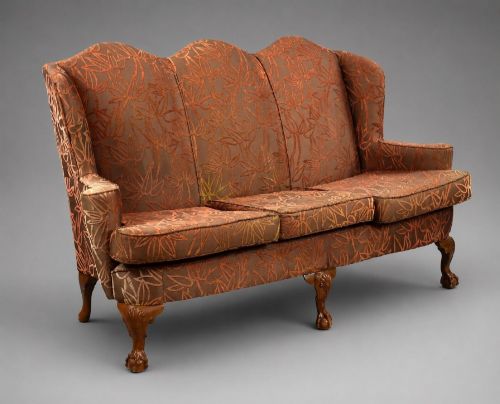
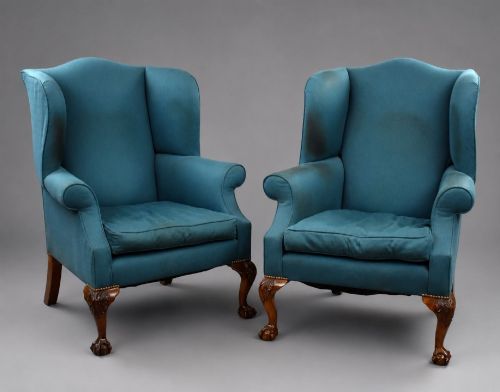
The most common examples met here follow the Queen Anne style and its subsequent revivals, constructed with characteristic high backs and outward-curving wings. Pieces range from single armchairs to pairs and longer multi-seat sofas.
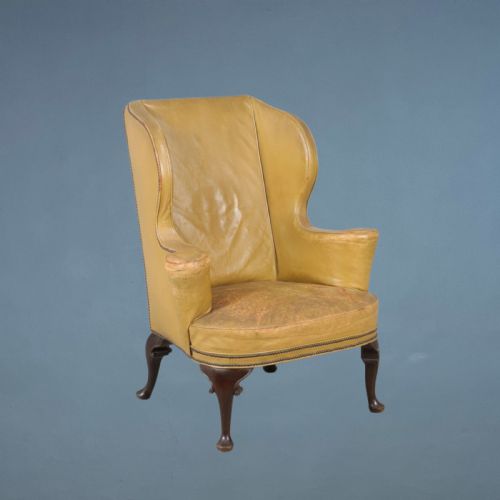
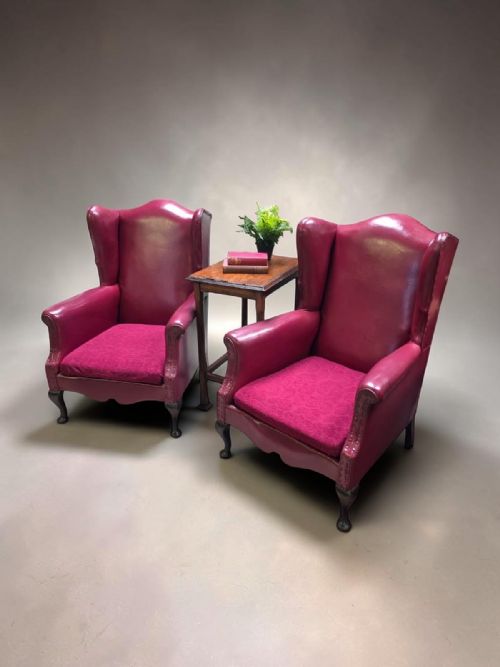
Origins stretch from genuine early pieces down through Victorian, Edwardian, and later revival interpretations. Buyers frequently encounter walnut-framed armchairs and hide-upholstered fireside seats created in the nineteenth and early twentieth centuries.
How They Were Made
Construction relies heavily on timber frames fashioned from hardwoods such as walnut and mahogany. These strong structural skeletons support the internal padding and fabric or leather coverings.
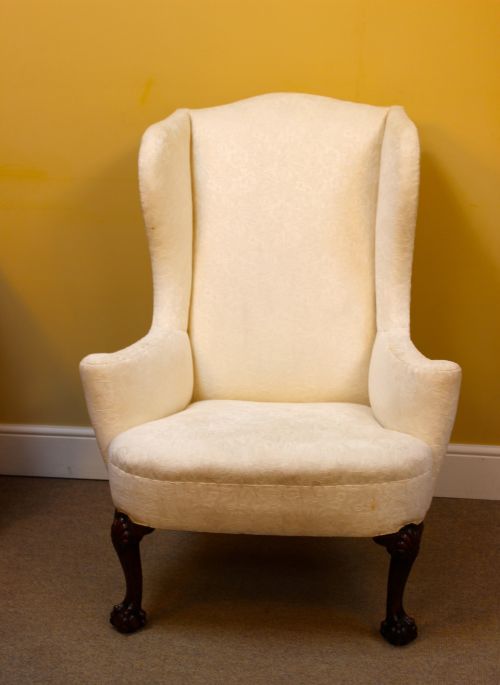
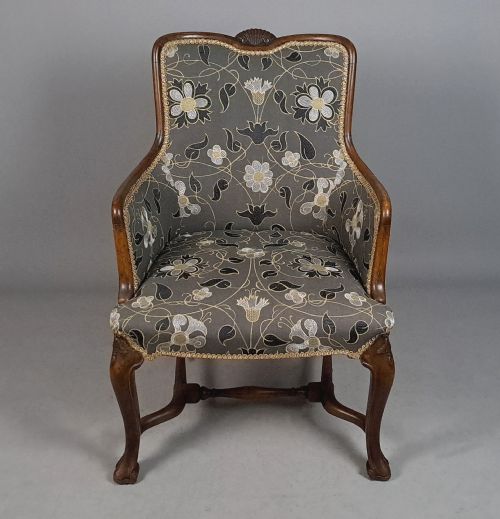
Upholstery techniques utilise traditional textiles, hide, and leather fixed across the frame. Exposed wooden elements often feature carved details such as cabriole legs terminating in pad or claw-and-ball feet, paired occasionally with brass accents.
The furniture spans multiple eras, including eighteenth-century pieces alongside Victorian, Edwardian, and nineteen-twenties revivals.
What Varies in Quality
The degree of refinement in the timber framing and the elegance of the cabriole leg proportions distinguish better examples. Subtlety in the carving and the grace of the wing curves mark the distinction between standard revival pieces and superior outputs.
The integrity of the upholstery materials, whether hand-coloured leather, hide, or traditional fabric, dictates the tactile character of the seat. Longevity depends upon the original strength of the hardwood frame and the fidelity of the period stylistic execution.
Whytock and Reid
The Queen Anne Wingback Glossary
- Cabriole leg
- A furniture leg that bends outward in a convex curve and tapers inward below to a foot, typical of the Queen Anne style. This form mimics the natural shape of an animal's leg.
- Wingback
- An upholstered chair featuring side panels attached to the backrest to shield the occupant from draughts. The wings also trap heat generated by an open fire.
- Revival
- A style that consciously copies or adapts the aesthetic of an earlier historical period. Many pieces on this page date from later revival eras rather than the original reign.
- Hide
- Heavy animal skin used for durable upholstery. This material appears frequently on nineteenth and twentieth-century armchairs.
- Fireside armchair
- A low-seated chair designed for placement near a hearth. These forms often incorporate high backs and wings to maximise warmth.
Queen Anne Wingback: Frequently Asked Questions
How do I spot a true period piece?
Examine the timber construction methods, the wear patterns on the walnut or mahogany frame, and the joinery hidden beneath the upholstery. Original eighteenth-century examples display construction methods and material ageing distinct from later nineteenth and twentieth-century revivals.
Compare the proportions of the cabriole legs and the specific curve of the wings against documented examples from the same era. Subtle variations in styling often reveal whether a chair originates from the early seventeen hundreds or a subsequent revival period.
Were these chairs used only by the fire?
These seats were originally designed to sit close to hearths where draughts posed a significant discomfort. The enclosed wings trapped radiant heat from the fire around the head and shoulders.
Over time, their protective design made them popular general seating in parlours, libraries, and drawing rooms. They gradually transitioned from utilitarian warmth providers to statement seating.
What is the difference between revival and original pieces?
Original pieces date from the early eighteenth century during the reign of Queen Anne and carry centuries of material evolution. They are exceptionally scarce and constructed with period-specific cabinet-making techniques.
Revival pieces reproduce these classic aesthetic forms during later eras such as the Victorian, Edwardian, and early twentieth-century periods. These later interpretations utilise historic styles while employing the manufacturing methods of their own time.
How do I care for leather upholstery?
Maintain leather and hide surfaces by keeping them away from direct heat sources and strong sunlight which dry out the material. Regular gentle dusting prevents abrasive particles from embedding into the grain.
Condition the hide periodically using appropriate treatments to preserve suppleness. Avoid harsh cleaning chemicals that can strip natural colouration from hand-coloured leather.