

1930s Leather Chairs
These 1930s leather chairs combine bold modernist lines with robust hides, offering both comfort and strong decorative presence.
1930s Leather Chairs
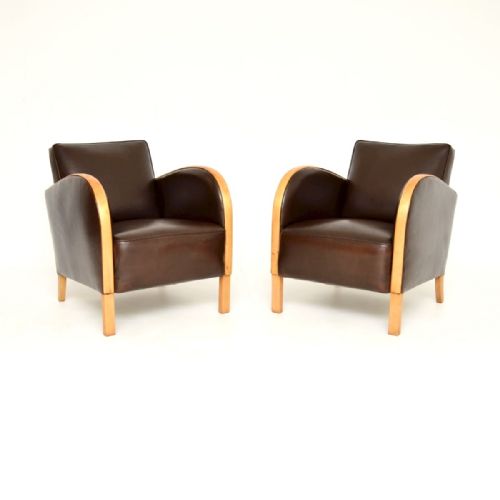
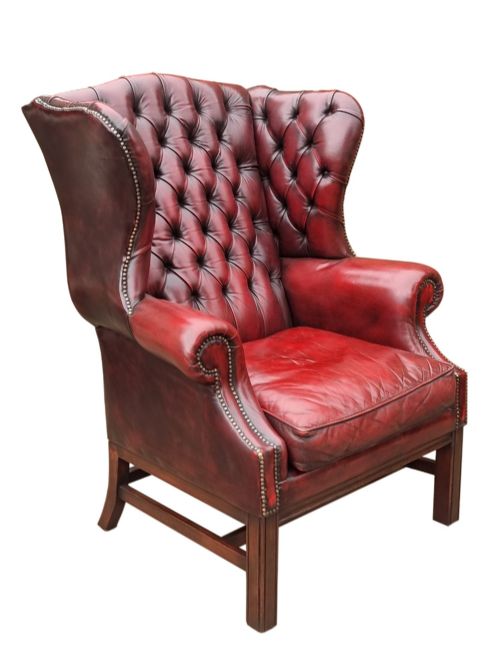
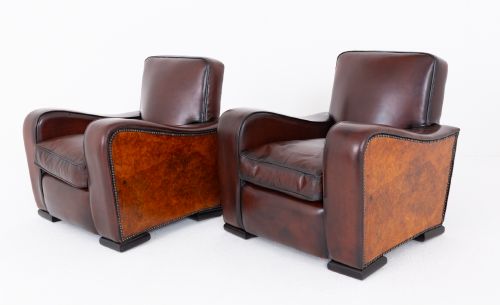
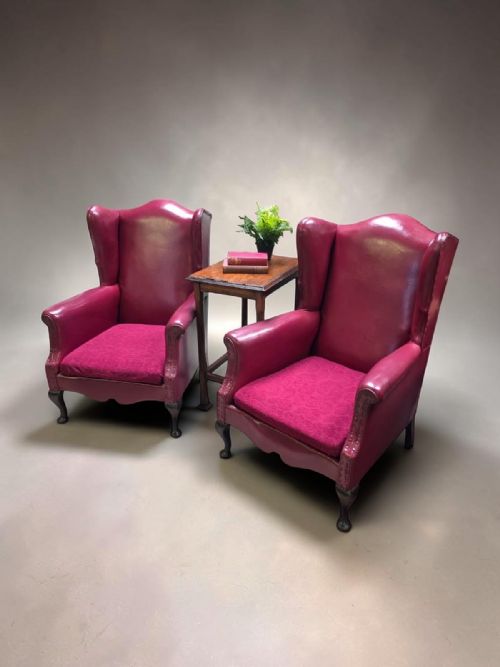
When searching for 1930s leather chairs, buyers encounter a distinct mix of low-slung club seats, padded armchairs, and dining sets tied to the Art Deco movement. These seating forms span French club chairs, Scandinavian birch designs, and English revival wingbacks produced during the interwar decades.
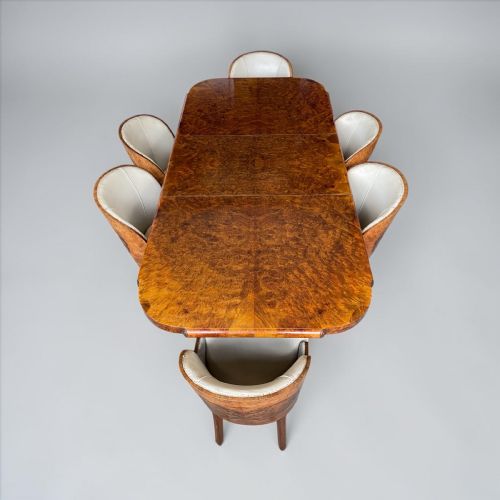
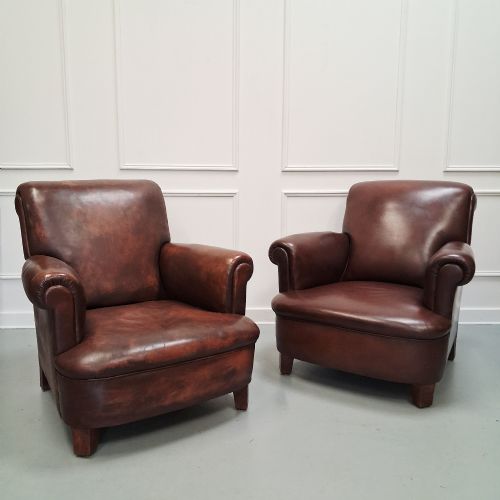
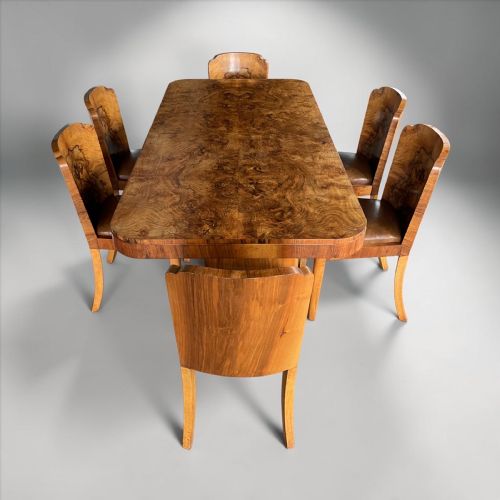
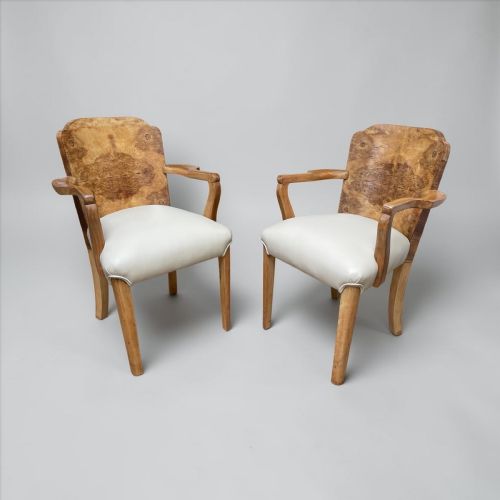
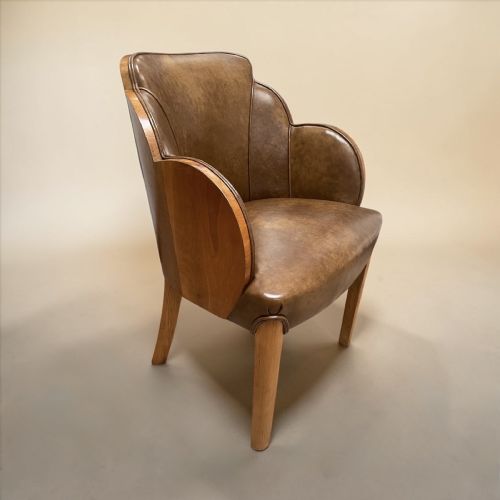
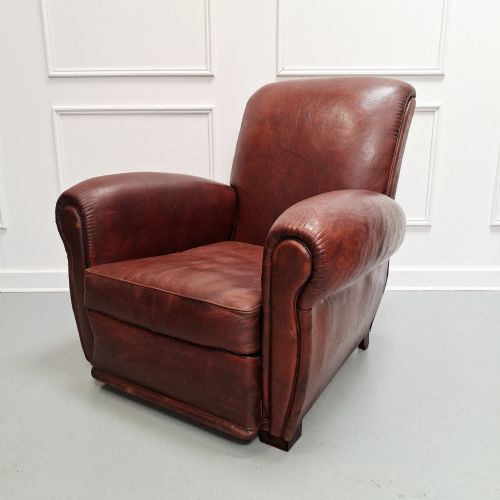
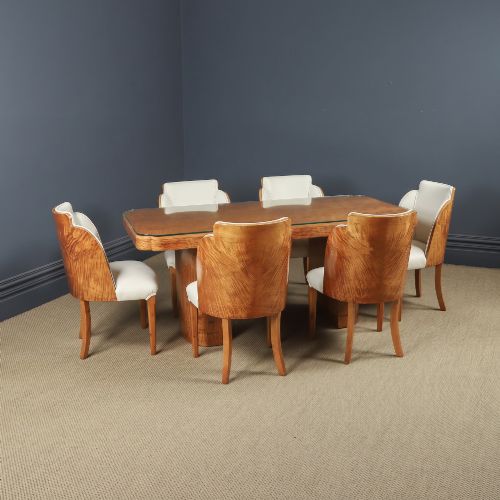
The most common variants on this page are French leather club chairs and distinct Art Deco cloud chairs upholstered in hide. Alongside these, dining chairs and occasional seats appear frequently, often paired with walnut, birch, or burr walnut frames.
Materials and construction
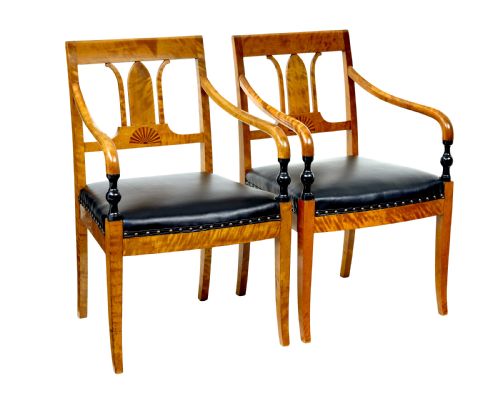
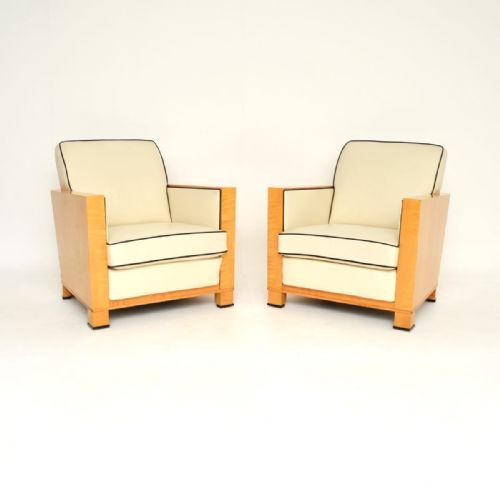
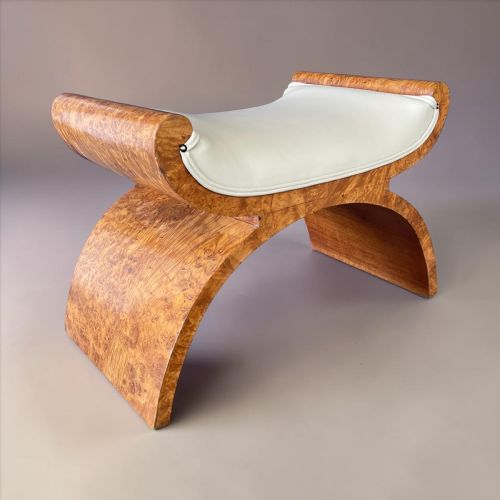
Makers built these frames using solid hardwoods like oak and beech, or faced them with decorative veneers such as burr walnut, satin birch, and bird's eye maple. Leather upholstery was then stretched over supportive internal webbing and coil springs, secured with brass tacks or piped seams.
French workshops favoured thick, supple hides for deep club chairs, while cabinetmakers in England and Scandinavia applied tighter leather upholstery to geometric armchairs and dining suites.
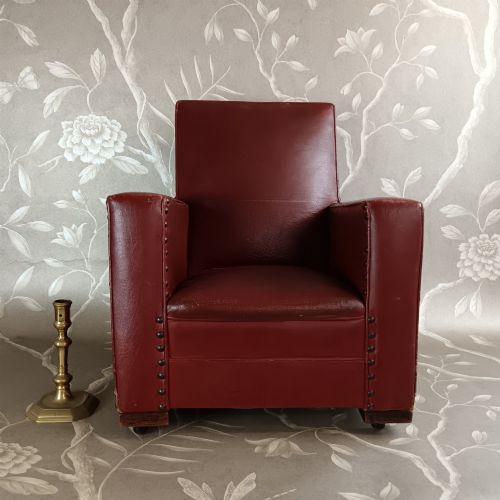
Compact child's club chairs appear alongside full-sized lounge suites, proving that tiny toddlers also required proper modernist seating.
What separates the best from the rest
Quality rests primarily on the grain and original condition of the leather, alongside the crispness of the surrounding wood veneers. Superior pieces display deep patination on the hide without excessive cracking, matched with solid frame joinery that avoids looseness in the arms and legs.
The sculptural ambition of the woodwork also sets examples apart, distinguishing simple production models from pieces featuring complex curved cloud backs or matched exotic wood veneers.
Maurice Adams·Hille·Harry and Lou Epstein
The 1930s Leather Chairs Glossary
- Art Deco
- A design style dominant in the 1920s and 1930s characterised by streamlined geometric forms, symmetry, and modern industrial materials. It influenced architecture, furniture, and decorative arts globally.
- Club chair
- A deep, comfortable armchair with upholstered arms, traditionally covered in leather. The form originated in French clubs and salons during the early twentieth century.
- Cloud chair
- An upholstered armchair with bulbous, rounded padded backs and arms that resemble rolling clouds. This silhouette is closely associated with prominent London cabinetmakers of the period.
- Burr walnut
- A prized wood veneer harvested from the burl growth of a walnut tree. It produces intricate, swirling grain patterns highly valued in luxury cabinet work.
- Wingback
- An armchair with high back panels designed to shield the sitter from draughts. Period revivals adapted this traditional shape into padded seating formats.
1930s Leather Chairs: Frequently Asked Questions
What defines a 1930s club chair?
These chairs feature deep, low seats and rounded upholstered arms designed for heavy relaxation. They are wrapped in thick leather and often show French manufacture.
Their proportions prioritize comfort over rigid posture, separating them from earlier Victorian parlour seating.
How do I identify Art Deco chairs?
Look for symmetrical geometric silhouettes, curved armrests, and polished wood frames in walnut or birch. The lines remain clean and streamlined rather than ornate.
Many examples incorporate rounded cloud backs or contrasting wood veneers that reflect modernist design principles.
Which woods appear on these frames?
Cabinetmakers utilised a variety of timbers including oak, walnut, and hardwood. Decorative surfaces frequently featured exotic veneers.
Satin birch, bird's eye maple, and burr walnut provided contrasting textures against the plain leather upholstery.