
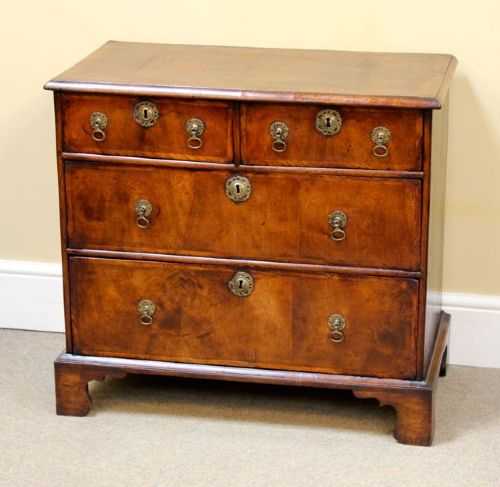
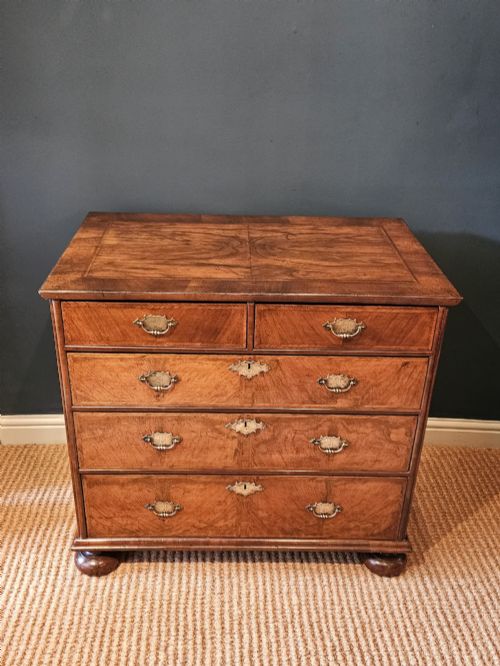
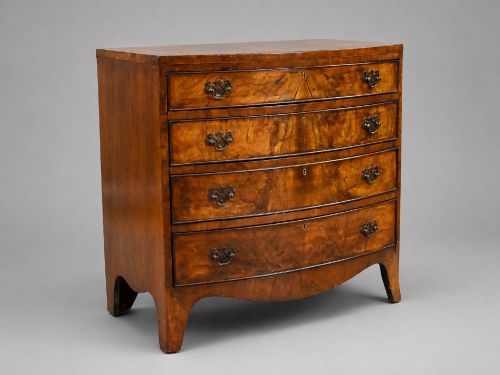
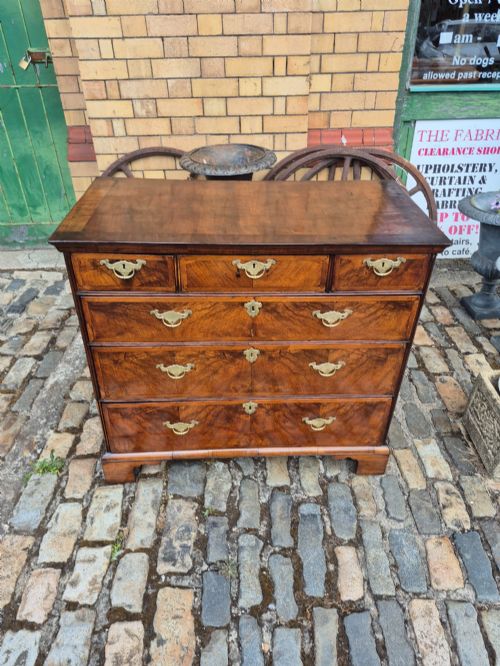
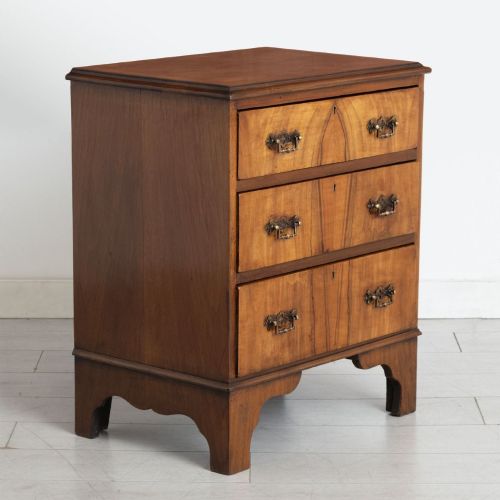
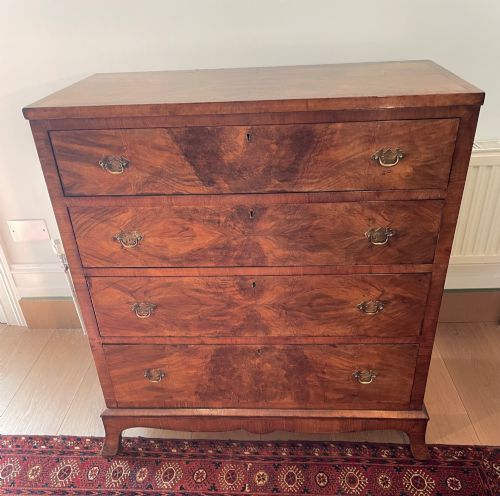
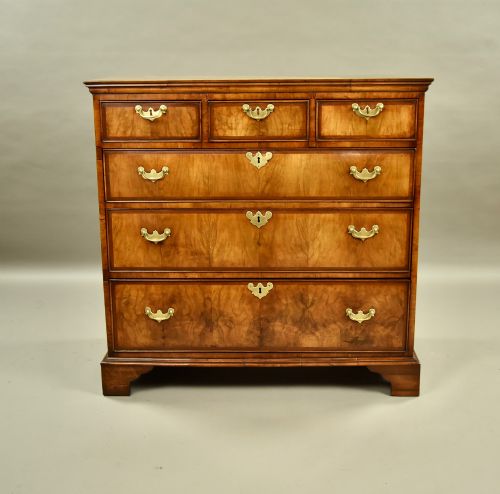
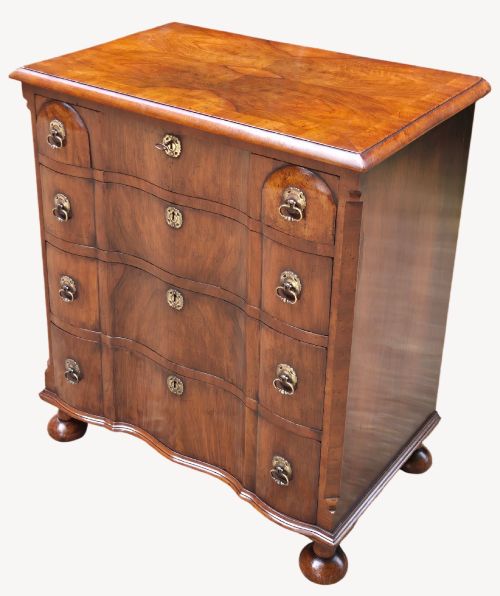
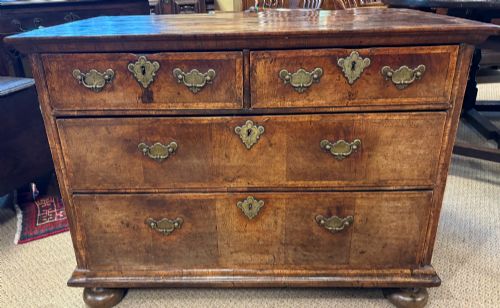
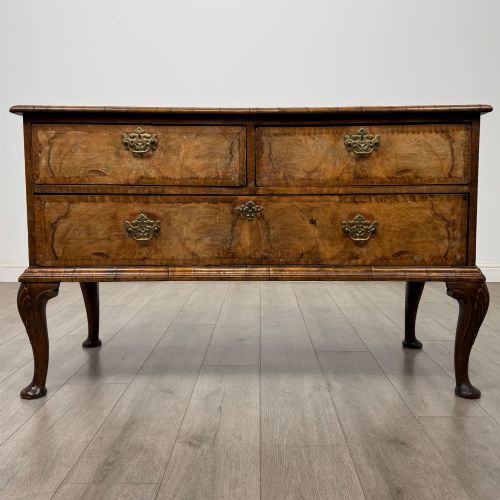
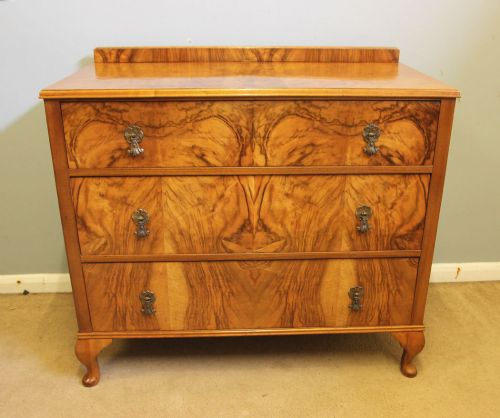
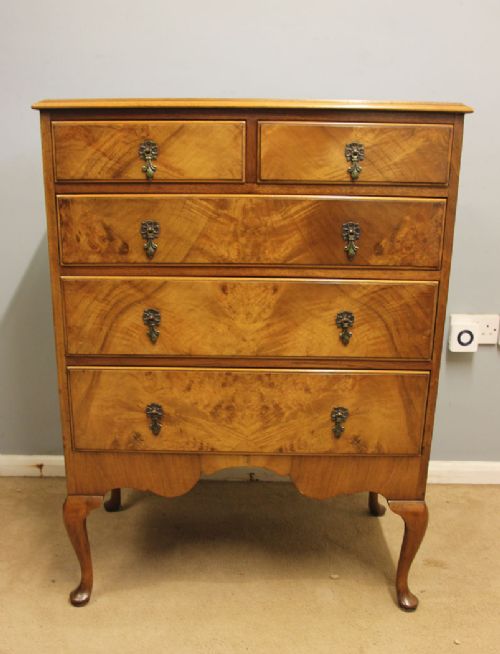
Queen Anne Walnut Commode
A queen anne walnut commode or chest of drawers brings rich grain and understated proportion to a room.

Queen Anne Walnut Commode
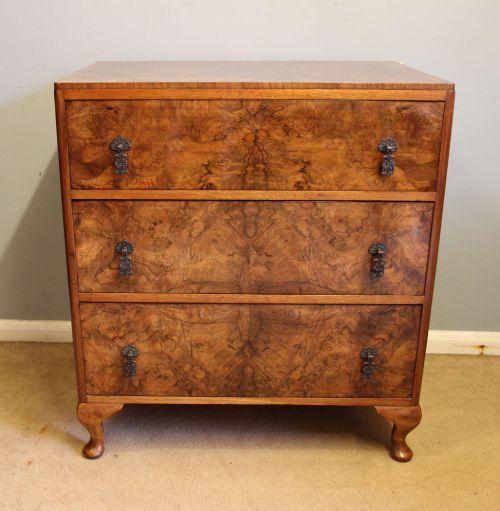
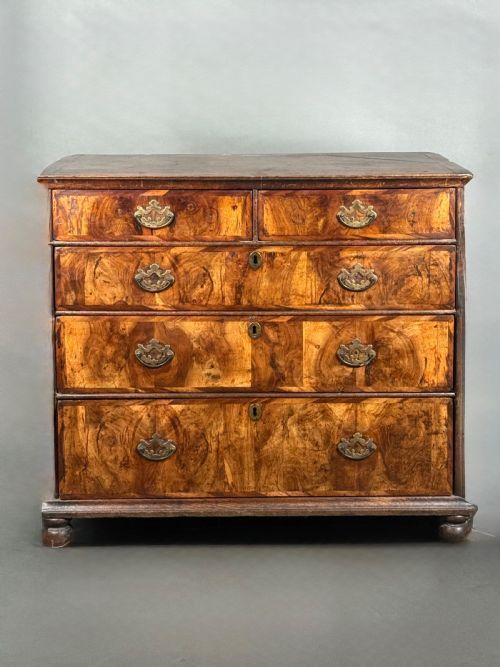
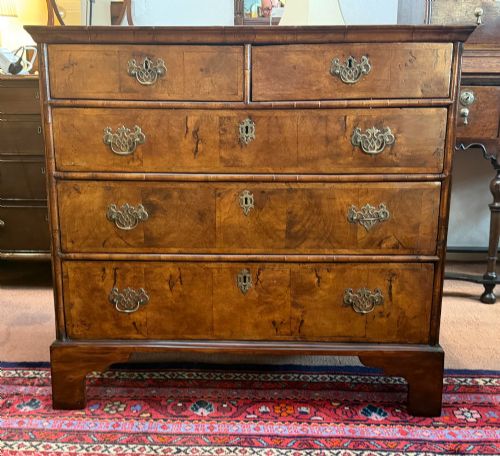
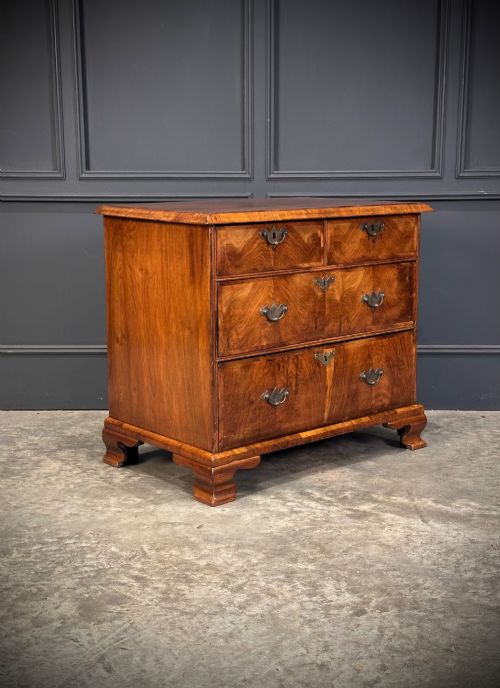
A queen anne walnut commode typically takes the form of a chest of drawers or small cabinet, designed with clean lines and subtle curves rather than heavy carving. These pieces serve as functional storage while adding warmth to a bedroom or living space through rich timber tones.
How they were made
Cabinet makers constructed the carcases of these pieces using sturdy secondary timbers like oak and pine, providing a stable foundation for decorative surfaces. Walnut veneer, burr walnut, and figured walnut were then meticulously applied to the exterior to create striking grain patterns.
Detailed finishing often involved intricate inlay, herringbone banding, and brass hardware such as drop handles and escutcheons. Drawer construction relied on traditional joinery, occasionally incorporating specialised elements like sliding top panels.
The listings on this site encompass pieces from the eighteenth century alongside early and mid-twentieth-century revival examples constructed in walnut, oak, and pine.
What varies in quality
The standard of a queen anne walnut commode depends heavily on the selection and matching of the veneer across the drawer fronts and top. Superior examples display symmetrical grain patterns that flow naturally across the piece rather than mismatched sections of timber.
Carcase integrity and the preservation of original secondary woods also distinguish finer pieces from more heavily restored or later revival equivalents. The crispness of inlay work and the retention of period brasses further elevate the standing of an individual chest.
The Queen Anne Walnut Commode Glossary
- Burr walnut
- A prized veneer taken from the gnarled growths of a walnut tree, yielding complex, swirling grain patterns. It adds distinct visual texture to drawer fronts and tabletops.
- Herringbone banding
- A narrow inlay pattern made of small wood veneers laid diagonally in alternating directions, resembling fish bones. Makers used this technique to frame drawer perimeters.
- Commode
- A term historically applied to low chests of drawers or cabinets standing on legs. In this context, it refers to case furniture designed for domestic storage.
- Featherbanding
- A decorative wood inlay where veneers are cut and arranged to resemble the barbs of a feather. This delicate detailing frequently outlines the edges of principal panels.
Queen Anne Walnut Commode: Frequently Asked Questions
What is a queen anne walnut commode?
A queen anne walnut commode is a low chest of drawers or cabinet characterised by figured walnut veneers and restrained proportions. These pieces emerged around the turn of the eighteenth century and focus on clean lines.
They provide practical drawer storage while serving as decorative focal points within traditional and contemporary interiors alike.
How do I date a walnut chest?
Dating relies on examining construction methods, secondary timbers like oak or pine, and the style of the hardware. Eighteenth-century examples display hand-cut joinery and period-specific banding.
Twentieth-century revival pieces imitate these earlier silhouettes but utilise modern manufacturing traces and different internal woods.
Where should I place a commode?
These compact chests suit entryways, living rooms, and bedrooms where surface space and storage are both required. Their warm timber tones pair well with neutral walls and diverse furnishings.
Placing them away from direct sunlight and heat sources protects the delicate walnut veneers from drying out.
What is the difference between revival and period pieces?
Period pieces date from the original reigns and eras, showing authentic eighteenth-century construction and wear. Revival pieces were manufactured during the twentieth century in emulation of those earlier aesthetics.
Both categories utilise figured walnut and traditional forms, but they differ in age and internal timber composition.