


English Walnut Chest of Drawers
An english walnut chest of drawers brings deep grain and quiet warmth to a room, offering centuries of storage utility.
English Walnut Chest of Drawers
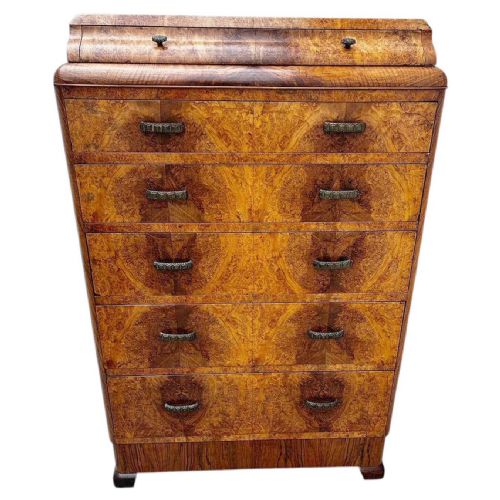
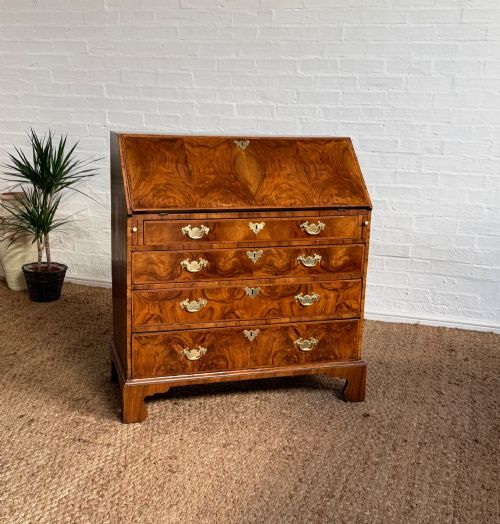
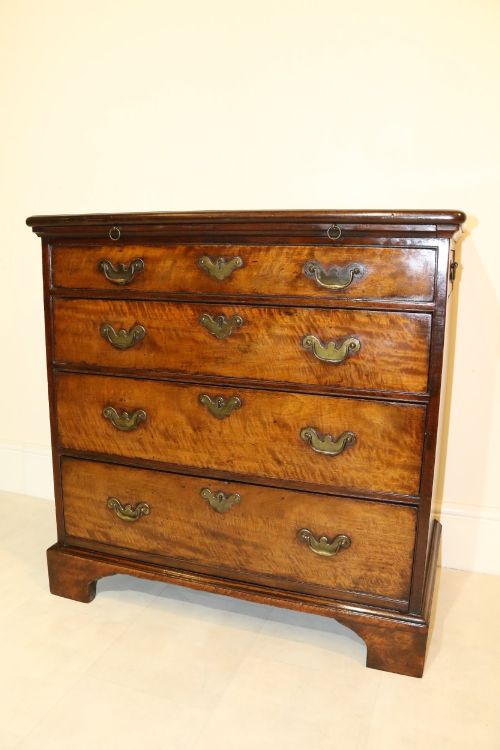
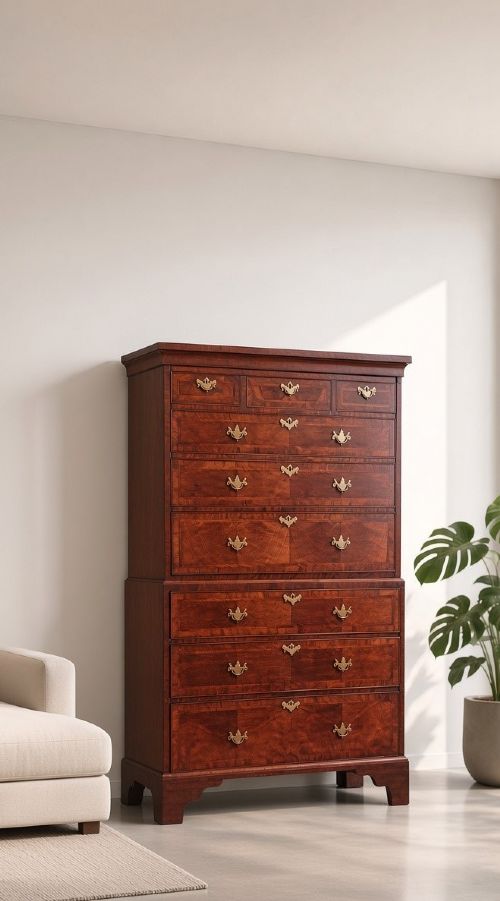
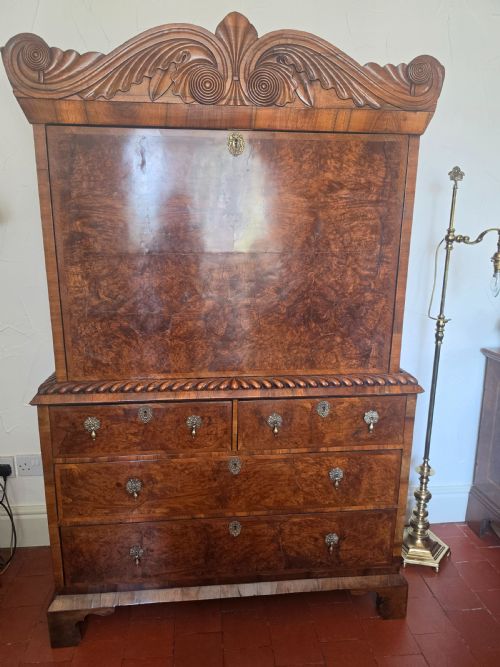
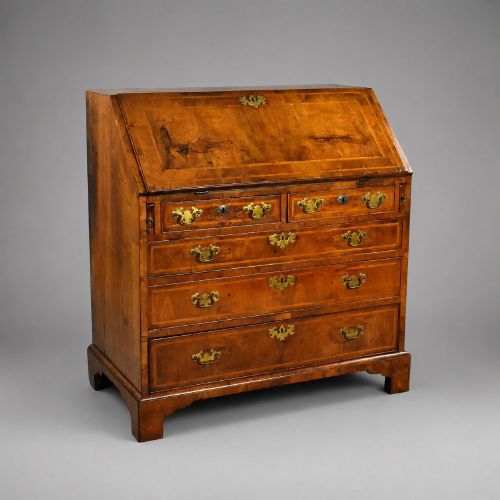
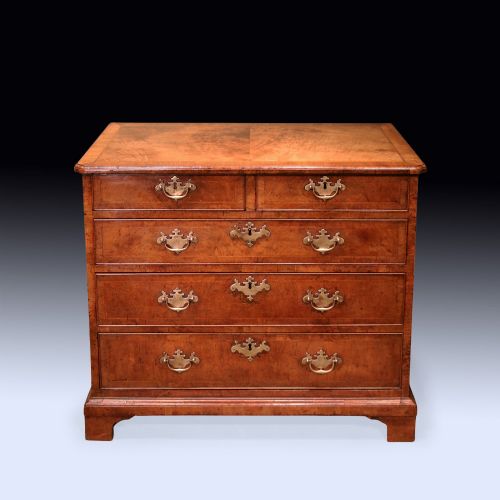
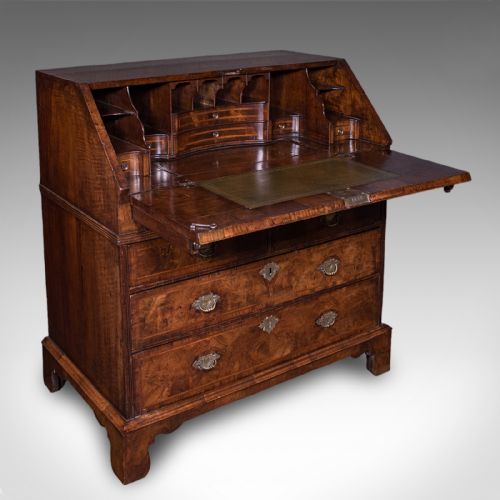
An english walnut chest of drawers encompasses centuries of domestic storage, ranging from compact bachelor chests to towering tallboys and bureaus. These pieces serve as functional storage while displaying rich timber figures across their drawer fronts.
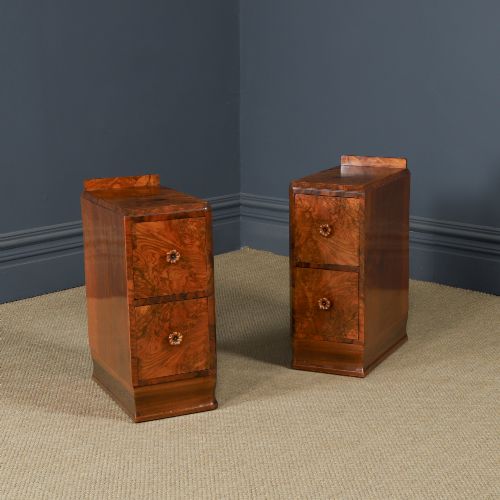
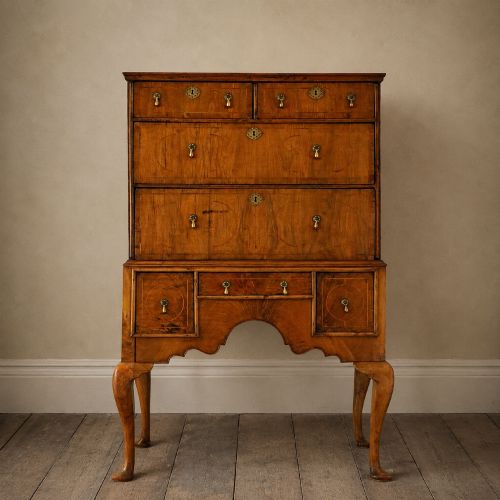
The pieces on this page span the seventeenth, eighteenth, nineteenth, and twentieth centuries, including Georgian masterpieces and later Art Deco interpretations. Buyers encounter standard drawer configurations alongside specialised variants such as chests on stands, escritoires, and bedside cabinets.
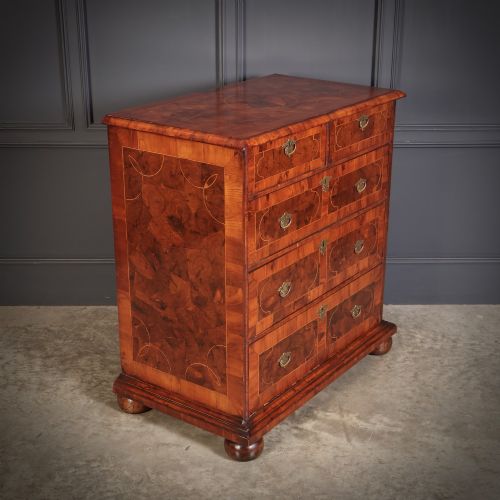
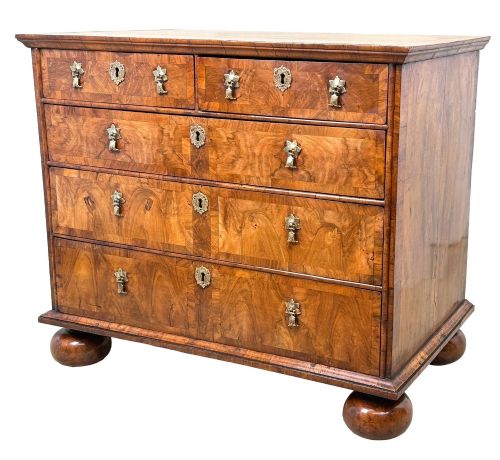
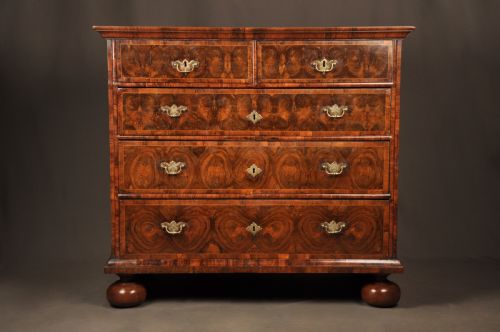
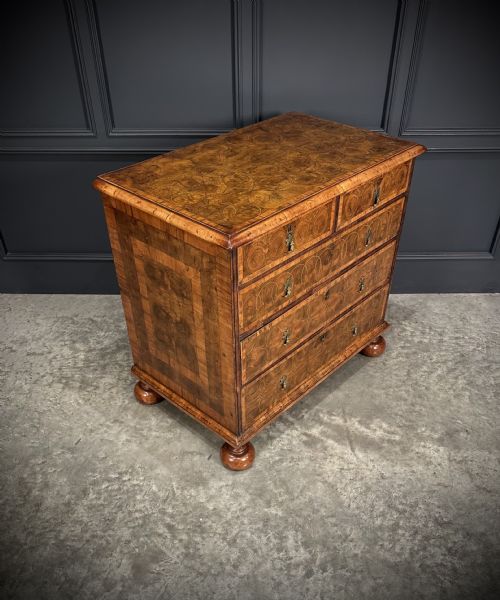
Early examples from the William and Mary or Queen Anne periods often feature marquetry or oyster veneers on walnut and fruitwood carcasses. Later nineteenth-century Victorian designs tend toward heavier proportions in flame walnut, while nineteen-thirties pieces embrace streamlined burr walnut forms.
How they were made
Cabinetmakers utilised solid walnut, oak, and pine for structural frames while applying highly figured veneers to primary surfaces. Burr walnut, olivewood, and fruitwood sections were chosen for their striking natural patterns.
Craftsmen enhanced surfaces with intricate cross-banding, feather-banded borders, and floral marquetry inlay. Brass drawer pulls, drop handles, and escutcheons completed the construction alongside dovetailed drawer boxes.
Listings feature walnut alongside oak, fruitwood, and olivewood across periods spanning from the seventeenth century to Art Deco.
What varies in quality
The selection of veneer grain pattern dictates much of the visual appeal, with symmetrical burr walnut or matched oyster cuts representing superior craftsmanship. Expert alignment of grain across drawer tiers separates master-built items from standard production.
Originality of brass hardware, drawer linings, and structural timber integrity heavily influence the standing of any piece. Retaining period finishes and secondary woods like oak without extensive modern intervention preserves the historical integrity of the cabinet.
The English Walnut Chest of Drawers Glossary
- Oyster veneering
- Cutting small branch wood transversely to produce circular or oval motifs resembling oyster shells, popular in the seventeenth century.
- Cross-banding
- Applying narrow strips of veneer perpendicular to the grain of the main surface to create a framed border effect.
- Feather-banding
- Laying two strips of veneer diagonally to meet at a central line resembling a bird feather, common in early eighteenth-century pieces.
- Tallboy
- A tall chest of drawers standing upon another chest or a dedicated base, maximising vertical storage capacity.
- Marquetry
- Inlaying various woods and organic materials into a veneer background to form decorative floral or geometric pictures.
- Lowboy
- A small dressing or side table featuring one or more tiers of drawers, typically raised on slender legs.
English Walnut Chest of Drawers: Frequently Asked Questions
How do I date an english walnut chest of drawers?
Dating relies on observing construction methods, handle hardware types, and timber choice. Earlier pieces from the seventeenth and early eighteenth centuries often display walnut on oak frames with hand-cut dovetails.
Later Victorian and Art Deco examples adopt machine assistance, different internal secondary woods, and distinct hardware styles that align with nineteen-thirties or nineteenth-century manufacturing standards.
Where should I place an english walnut chest of drawers?
These cabinets suit bedrooms, hallways, and living spaces where their rich timber grain acts as a focal point. They provide practical storage while fitting comfortably against flat walls.
Keep them away from direct sunlight and sudden radiator heat to protect the delicate walnut veneers from drying and splitting over time.
What is the difference between a tallboy and a chest on chest?
A chest on chest comprises two distinct stacked carcases where a narrower upper section sits directly upon a wider lower set of drawers. This term often overlaps with tallboys, though tallboys can also refer to single tall upright drawer cabinets from the Victorian or Art Deco eras.
Both forms offer exceptional vertical storage while utilising relatively small floor footprints in domestic settings.
How do I care for antique walnut furniture?
Maintenance involves dusting with a soft, dry cloth and occasionally applying traditional beeswax to nourish the timber surface. Avoid modern silicone sprays that build up and attract dust over the years.
Maintaining stable room humidity prevents the natural wood and veneer layers from expanding or contracting too rapidly.