

Queen Anne Cabinet Chest
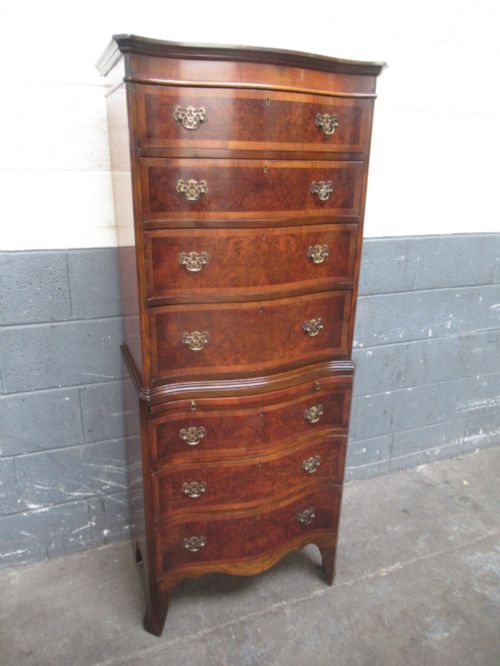
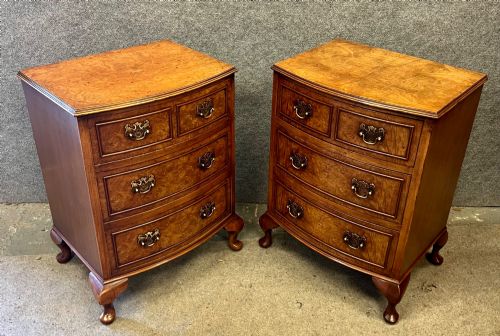
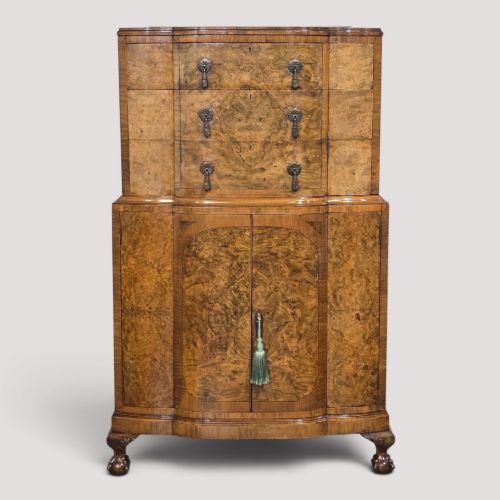
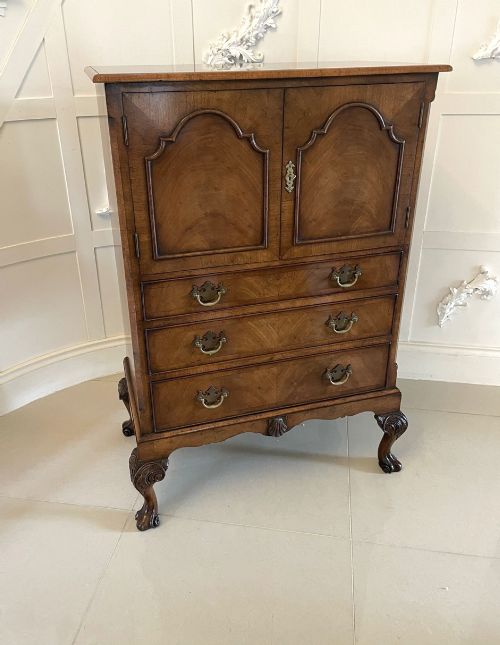
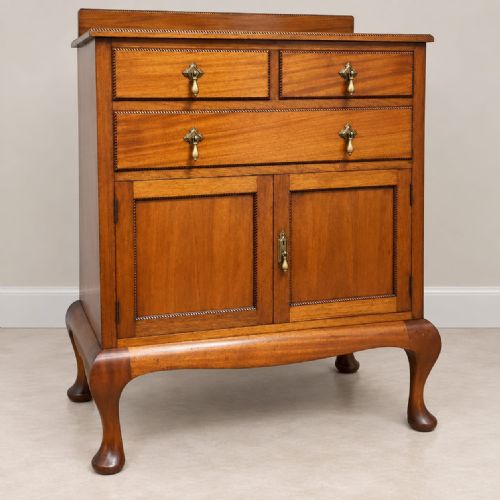
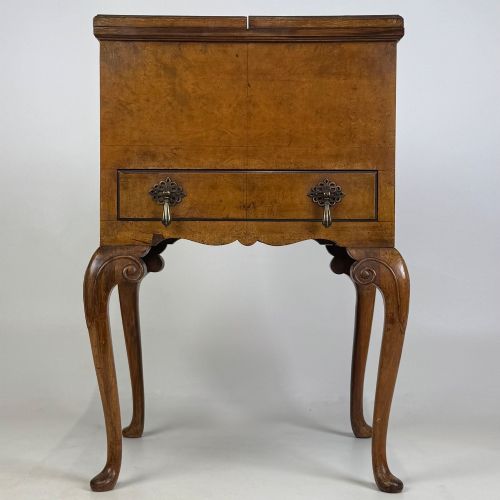
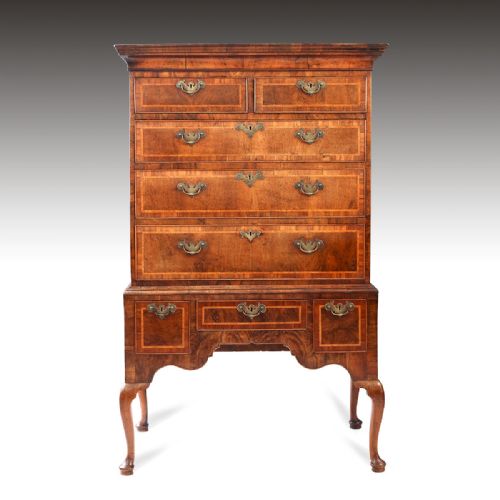
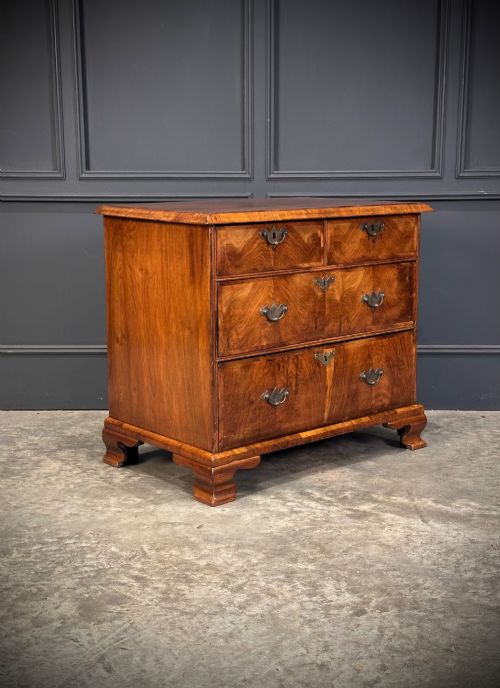
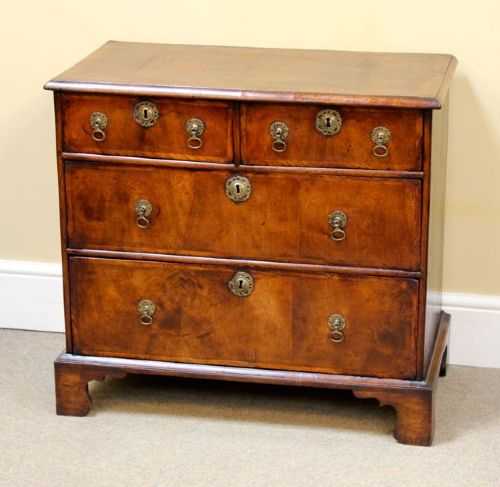
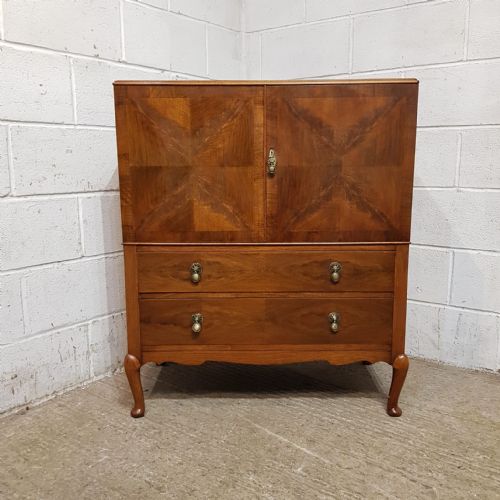
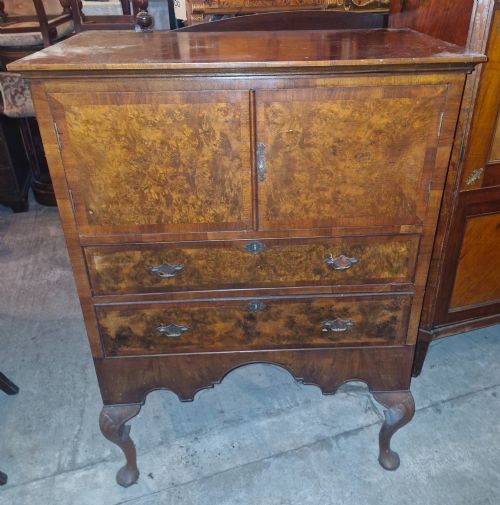
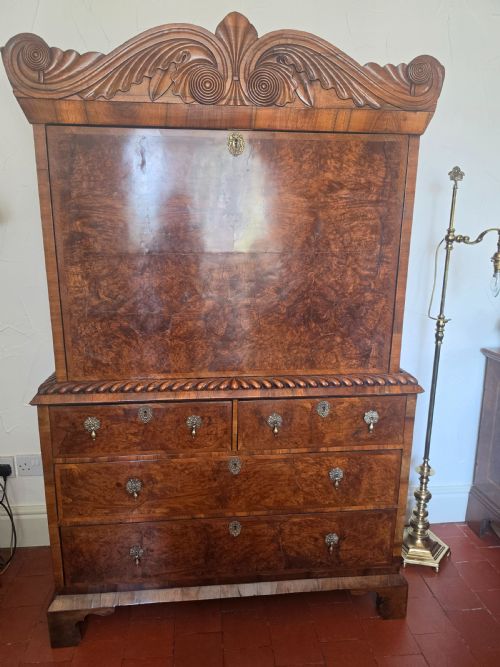
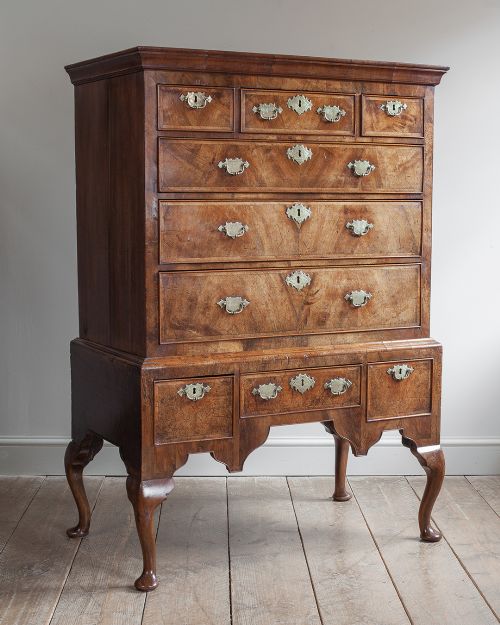
These pieces combine the high grain figures of walnut with raised stands or double domed upper sections to create a queen anne cabinet chest.
Queen Anne Cabinet Chest
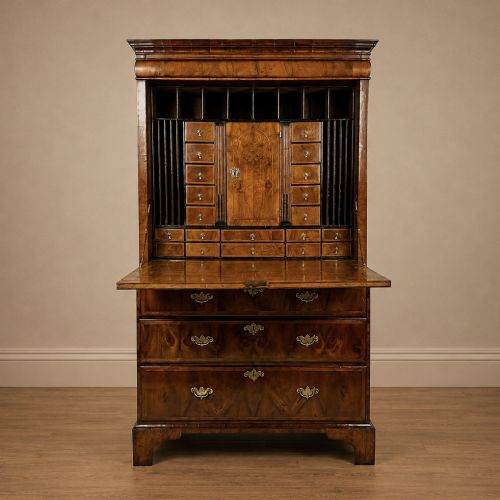
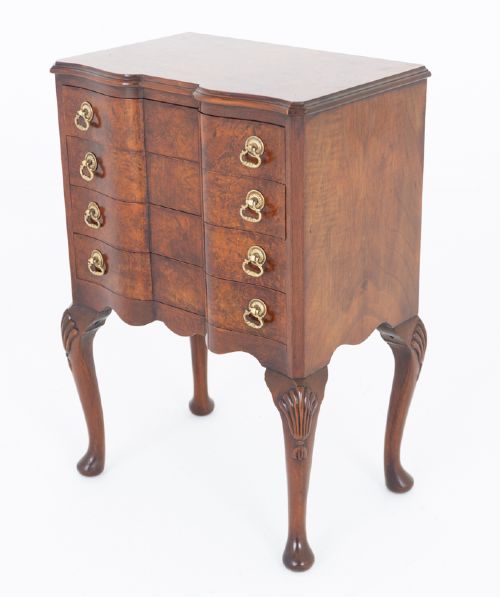
A queen anne cabinet chest bridges the storage needs of a bedroom and the display requirements of a principal reception room. The pieces found here span genuine 18th century examples from the reigns of William and Mary through George I, alongside later revivals from the Edwardian era and the 1920s and 1930s. Forms vary from chests on stands and tallboys to escritoires and press cupboards, all sharing a domestic scale.
The layout typically pairs a set of graduated drawers with an enclosed upper cabinet, a bureau flap, or a raised stand featuring cabriole legs. Walnut dominates the forms, appearing as solid timber, veneers, and burr figuring across both the 18th century originals and the early 20th century revival pieces.
How they were made
Cabinet makers utilised walnut veneers laid over secondary carcasing woods, selecting burr and figured sections to create symmetrical grain patterns across drawer fronts and doors. Crossbanding and inlay work define the borders of panels, while brass handles and escutcheons secure the drawer fronts.
Stands and lower sections incorporate shaped aprons and cabriole legs, occasionally joined by stretchers. Interior fittings range from small pigeonholes and secret compartments behind bureau drops to tiered shelving within upper cabinet doors.
Listings for this phrase include examples from the 1700s, Georgian period, Edwardian era, and the 1920s and 1930s revival decades.
What varies in quality
The depth and uniformity of the walnut grain figuring set individual pieces apart, particularly where bookmatched veneers cover large surfaces. Timber selection on secondary woods and the crispness of crossbanding further distinguish standard workshop production from finer cabinet work.
Proportion remains central to evaluation, especially on pieces comprising a cabinet resting upon an associated or integral stand. The retention of original brass hardware, locks, and surface patination contributes directly to the integrity of the piece.
The Queen Anne Cabinet Chest Glossary
- Cabinet on chest
- A two-part storage form featuring an upper enclosed cabinet or cupboard resting directly upon a lower chest of drawers. This configuration provides deep compartment storage alongside smaller drawer spaces.
- Chest on stand
- A form comprising a drawer chest elevated on a separate or integrated stand with legs. The lower structure typically utilises cabriole legs linked by stretchers.
- Escritoire
- A writing cabinet featuring a drop-front flap that conceals an arrangement of small drawers and pigeonholes. These pieces combine desk functionality with enclosed upper storage.
- Burr walnut
- Timber harvested from walnut tree growths, yielding intricate swirling grain patterns highly prized for cabinet veneers. Craftsmen slice this wood thinly to apply across primary display surfaces.
- Crossbanding
- A decorative border technique where narrow strips of veneer are laid with the grain running perpendicular to the surrounding panel. This frames drawer fronts and cabinet doors.
Queen Anne Cabinet Chest: Frequently Asked Questions
How do I date a cabinet chest?
Dating relies on construction methods, timber choice, and hardware configuration rather than dates alone. Early 18th century examples show hand-cut dovetails and native oak or pine carcases.
Twentieth century revival pieces utilise machine tooling and standardised timber preparation while copying earlier Queen Anne proportions.
Where should I place this furniture?
These pieces suit reception rooms, studies, and hallways where their height and grain patterns function as focal points. Avoid placing walnut furniture in direct sunlight or near heat sources to prevent veneer lifting.
Ensure the floor is level, particularly for tallboys and cabinets on stands, to maintain door and drawer alignment.
What distinguishes an escritoire?
An escritoire incorporates a hinged writing flap that pulls down to reveal an internal arrangement of small drawers and document slots. Unlike a standard chest of drawers, the interior functions as a fitted desk.
Many examples feature secret compartments concealed behind removable pigeonhole blocks.