



Qing Dynasty Tea Table
A qing dynasty tea table brings centuries of traditional craftsmanship and rich timber into a modern interior.
Qing Dynasty Tea Table
A qing dynasty tea table encompasses a wide variety of low tables, opium tables, and nesting sets originating from China during the eighteenth and nineteenth centuries. These pieces reflect the traditional domestic furniture of the period, often adapted into coffee tables or side tables for contemporary spaces.
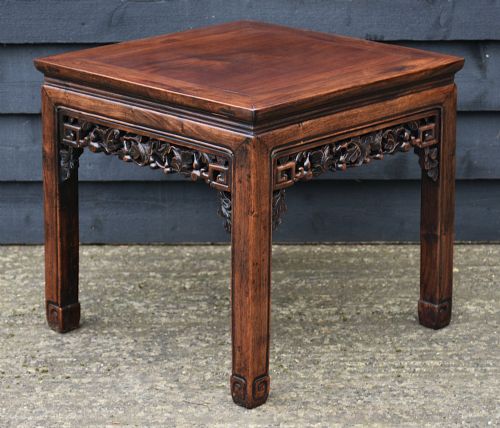
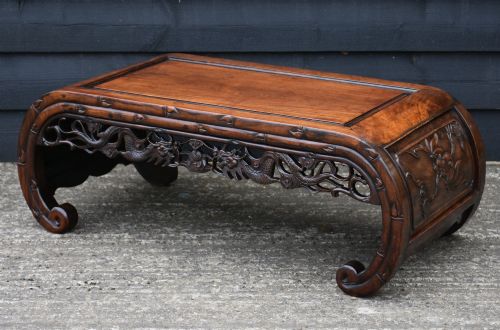
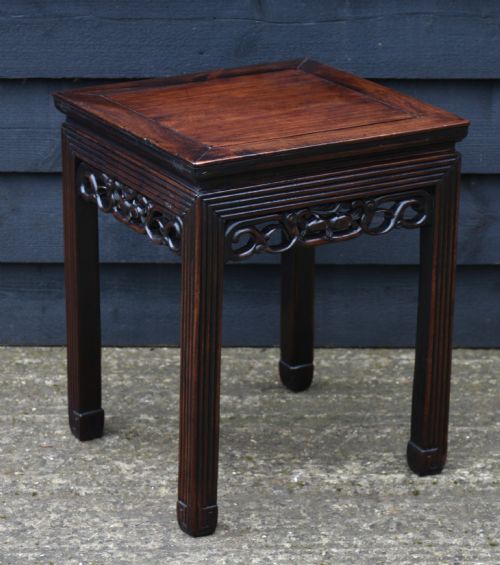
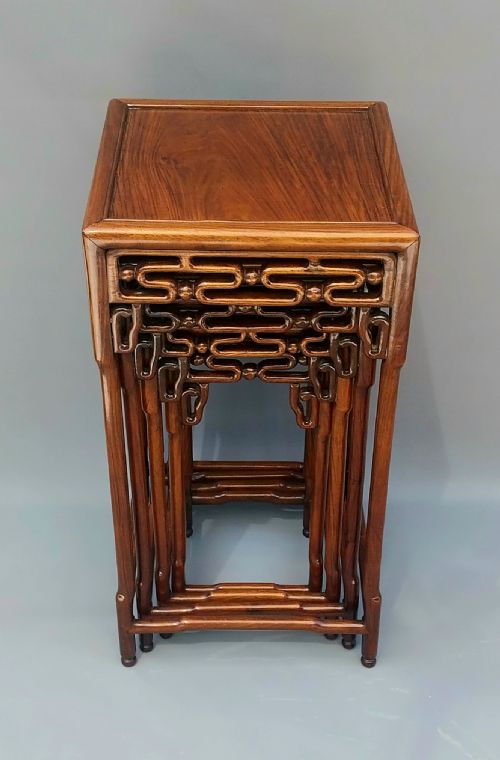
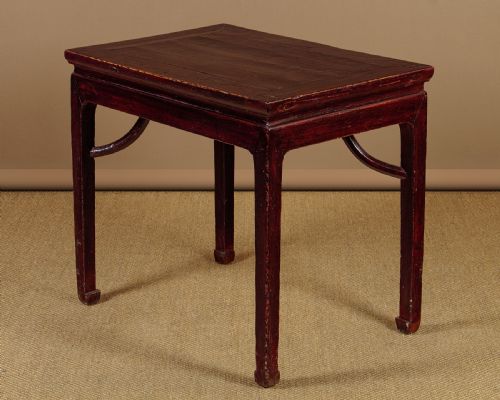
The most common examples encountered on this page are nineteenth-century rosewood, hongmu, and elm low tables featuring carved details, scroll ends, and rectangular or square tops. Alongside these low forms, buyers will find occasional tables, centre tables with marble inserts, and multi-tier stacking sets.
Materials and Techniques
Makers utilised dense timbers such as rosewood, hongmu, huanghuali, and elm, relying on traditional joinery methods that often avoided nails or metal fasteners. These hardwoods provided the structural integrity needed for low tables, kang tables, and folding tray bases.
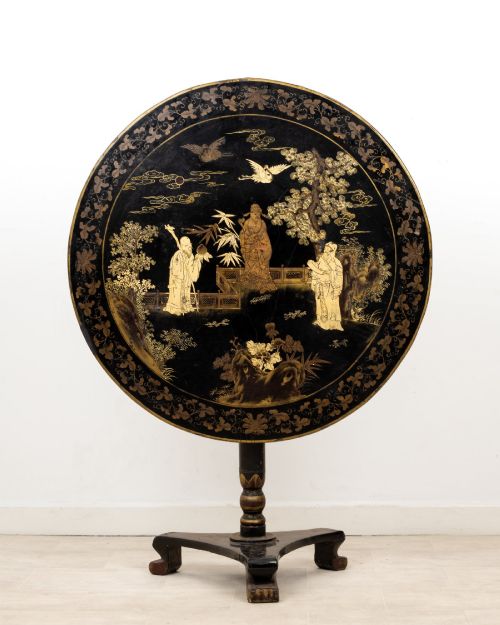
Surface decoration frequently involved intricate carving depicting dragons and scroll ends, alongside red lacquer finishes and inlaid mother-of-pearl or marble panels. The application of gilt highlights further distinguished finer decorative items from simpler utilitarian furniture.
A nineteenth-century carved coconut bowl bearing gilt Chou symbols joins the timber tables on this page.
Evaluating Craftsmanship
Quality rests upon the density and selection of the timber, distinguishing heavy rosewood and hongmu frames from simpler elm constructions. The crispness and depth of the hand carving on scroll ends and apron panels set superior examples apart.
Construction methods determine durability, visible in the precision of the joinery and the integration of inset panels like marble or lacquer. Pieces displaying well-balanced proportions and retained original finishes command greater regard.
The Qing Dynasty Tea Table Glossary
- Hongmu
- A category of dense, heavy Asian hardwoods translated literally as red wood. It encompasses several species prized for furniture making during the Qing period.
- Kang
- A heated brick platform used in northern Chinese homes for sleeping and sitting. Low tables placed upon these platforms gave rise to the term kang table.
- Huali
- A fragrant hardwood from the rosewood family utilised in traditional Chinese cabinet making. It possesses a distinctive grain and warm tone.
- Chou symbols
- Traditional Chinese longevity emblems frequently found rendered in gilt decoration on period items. They carry cultural significance tied to auspicious blessings.
- Scroll-end
- A furniture design feature where the ends of a table top or stretcher curve outward in a scroll motif. This profile is typical of traditional scholar furniture.
Qing Dynasty Tea Table: Frequently Asked Questions
What is a qing dynasty tea table used for?
These pieces served originally as low tables for serving tea, resting items, or sitting upon heated platforms in traditional homes. Today they function effectively as low coffee tables or decorative side tables in living spaces.
Their sturdy timber construction and modest height suit them to holding books, lamps, and decorative objects while maintaining an uncluttered room layout.
How do I identify a qing dynasty tea table?
Identification relies on observing traditional Chinese joinery, timber types such as rosewood, hongmu, and elm, and characteristic forms like scroll-end aprons. Details such as carved dragon motifs and red lacquer finishes point directly to this era.
Dating is supported by the patination of the wood and construction methods consistent with nineteenth-century and earlier workshop practices.
Are these tables suitable for modern homes?
Their low profile and versatile proportions allow these tables to integrate smoothly into contemporary sitting rooms as coffee tables or accent pieces. Nests of tables and folding tray variants offer practical flexibility for smaller spaces.
Placing them alongside modern seating creates a striking contrast that highlights the rich grain and intricate carving of the antique timber.
What woods were used for these tables?
Craftsmen utilised a range of regional hardwoods including dense rosewood, hongmu, huanghuali, and sturdy elm. Each timber offered specific structural qualities and deep natural grain patterns that responded well to hand polishing.
Some pieces also incorporated contrasting materials such as marble inserts and mother-of-pearl inlay to enhance the decorative surface.