









Qing Carved Urn Table
A qing carved urn table brings heavy timber and cool stone together to elevate plants and vessels in a room.
Qing Carved Urn Table
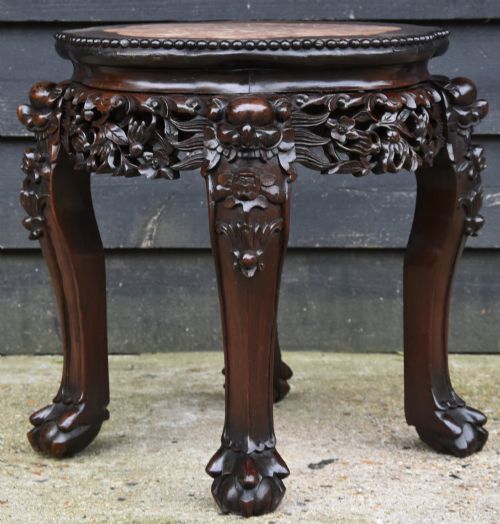
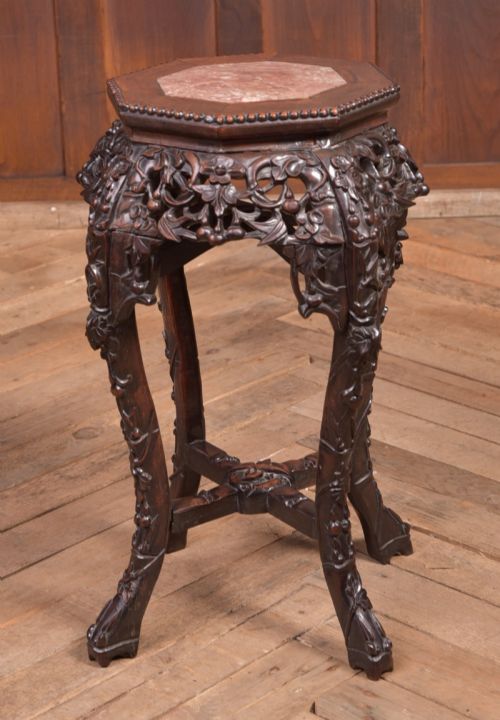
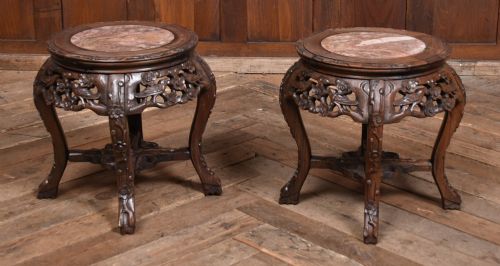
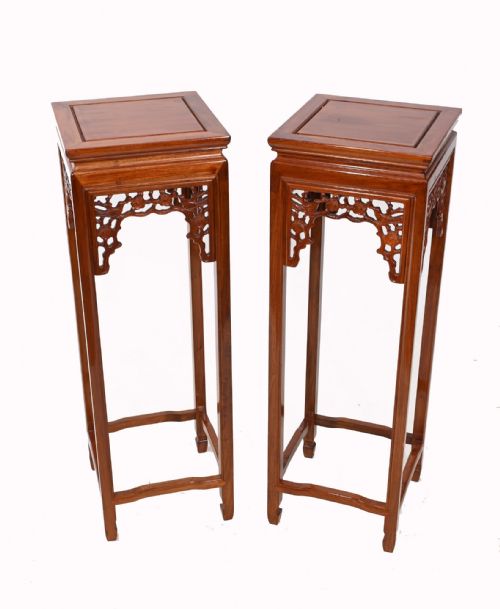
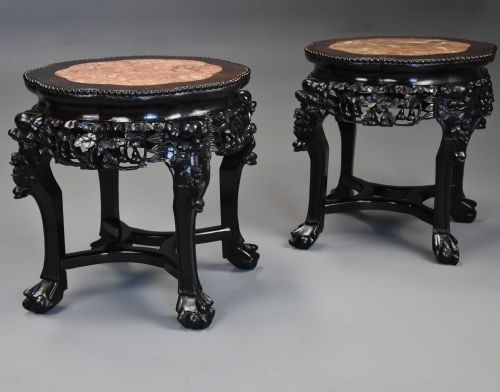
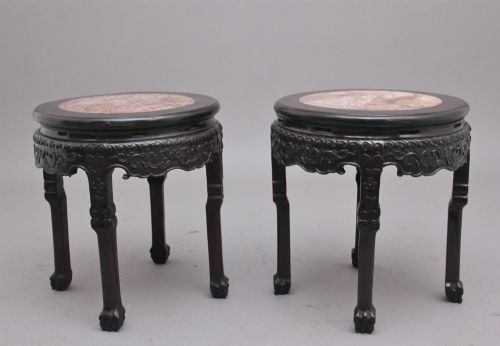
When you search for a qing carved urn table, you encounter low tables, pot stands, and pedestal stands created during the nineteenth century and the Edwardian era. These pieces generally serve as surfaces for vases, planters, and lamps rather than for dining or writing.
The objects appear under various regional and period descriptions, including Chinese Export, Late Qing Dynasty, and Victorian import pieces. The primary forms function as plant stands, occasional tables, and jardiniere stands designed with distinct oriental carving.
Most examples originate from the nineteenth century, spanning from the eighteen-eighties to nineteen-hundred, alongside some Edwardian interpretations. Buyers select these stands to integrate compact display surfaces into traditional or eclectic interiors.
Timbers and Stone Inserts
Cabinetmakers construct the frames using dense oriental timbers such as rosewood, padouk, hongmu, and ebonised hardwood. These heavy woods support the considerable weight of inset marble tops without warping.
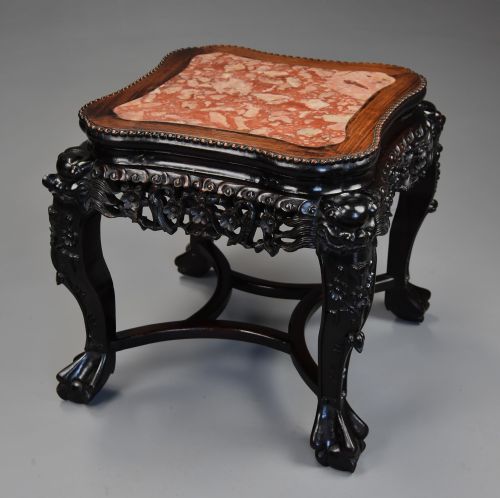
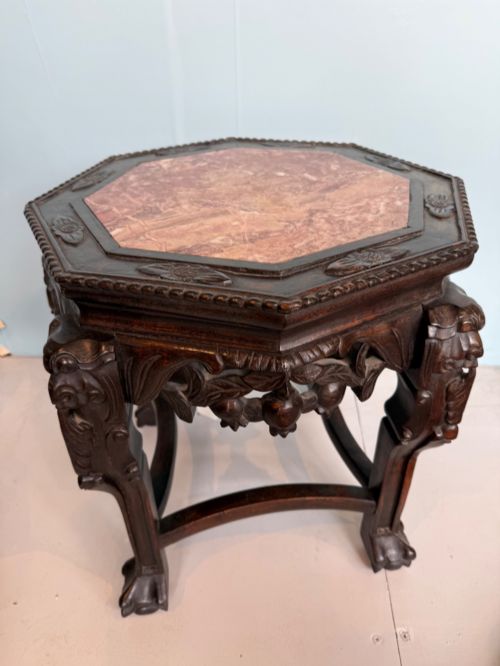
Makers inset shaped variegated rouge marble or pale stone directly into the wooden top to provide a cool, smooth surface for damp pots and vases. Artisans also apply mother-of-pearl inlay to decorate select rosewood and hardwood surfaces.
Joinery and relief carving define the structure, incorporating pierced aprons, cabriole legs, and shaped platforms. The timber is polished to a deep sheen that highlights the grain of the dense tropical hardwoods.
Qing Carved Urn Table Retail Price Guide 2026
Typical asking prices for qing carved urn table among the pieces listed under this phrase on Sellingantiques today, from the lower quarter to the upper quarter. They describe what is for sale here now, not the wider market.
Listings feature items dated from the Victorian and Edwardian eras, alongside pieces attributed to the nineteenth century and nineteen-hundred.
Distinctions in Carving and Weight
The depth and crispness of the wood carving separate standard utility stands from finer decorative pieces. Superior examples display undercut floral motifs and crisply rendered borders rather than shallow, mechanical incisions.
The selection of the inset marble influences the character of the stand, with lively natural veining commanding more attention than flat, grey stone. Heavier, denser timbers like padouk and hongmu also indicate a higher grade of construction than lighter secondary woods.
The Qing Carved Urn Table Glossary
- Jardiniere stand
- A tall or low occasional table specifically built to support a ceramic plant container or flower bowl. These stands frequently feature water-resistant stone tops.
- Hongmu
- A traditional Chinese term denoting dense, red-brown hardwoods used in fine furniture manufacture. The wood polishes to a rich dark finish and accepts intricate carving.
- Padouk
- A heavy tropical timber with a distinct reddish hue used for durable nineteenth-century stands. It provides exceptional stability for tall pedestal forms.
- Rouge marble
- A reddish decorative stone imported and cut to fit the circular or rectangular top of a vase stand. It offers a contrasting surface to the dark surrounding timber.
- Plant stand
- A freestanding vertical support designed to elevate greenery or urns off the floor. They appear in square, rectangular, and shaped multi-sided configurations.
Qing Carved Urn Table: Frequently Asked Questions
What is a qing carved urn table used for?
These pieces serve primarily as elevated platforms for heavy decorative items, including ceramic vases, bronze urns, and potted plants. Their sturdy timber frames and cool stone tops protect underlying furniture from dampness and soil.
In domestic settings, they occupy corners, hallways, and window spaces where a narrow footprint is required. Their decorative carving allows them to function as sculptural objects in their own right.
How do I identify a nineteenth-century piece?
Nineteenth-century examples rely on dense tropical hardwoods like rosewood and hongmu, combined with traditional mortise and tenon joinery. The weight of the timber and the hand-carved relief work indicate a period origin prior to mass production.
Matched pairs from the late nineteenth century often show slight individual variations in the grain and carving due to manual production methods. The presence of heavy variegated rouge marble is also typical of this manufacturing era.
Can these tables support heavy plants?
The dense construction of rosewood, padouk, and hardwood frames provides significant structural strength for substantial planters. The inset marble top distributes weight evenly across the supportive wooden aprons.
When positioning large urns, ensure the base sits squarely on the stone insert rather than overhanging the wooden rim. This prevents tipping and protects the delicate carved edges of the frame.
How do I care for the marble top?
Wipe the stone surface with a soft, damp cloth to remove dust and moisture, avoiding harsh chemical cleaners that can etch the polish. Dry the marble promptly after watering plants to prevent mineral rings from forming.
Condition the surrounding hardwood frame occasionally with appropriate wax to maintain the moisture balance of the timber. Keeping the table away from direct heat sources prevents shrinkage in the antique joints.