




Hardwood Marble Bonsai Stand
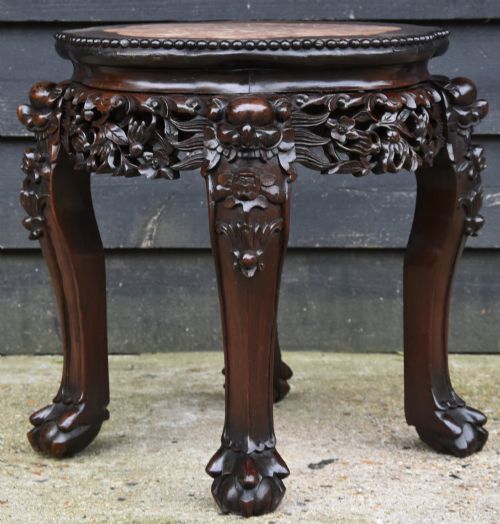
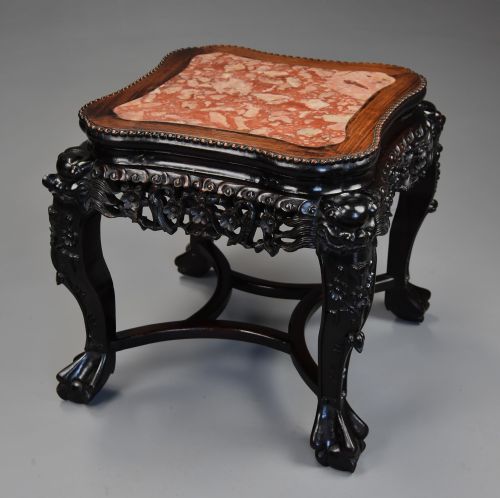
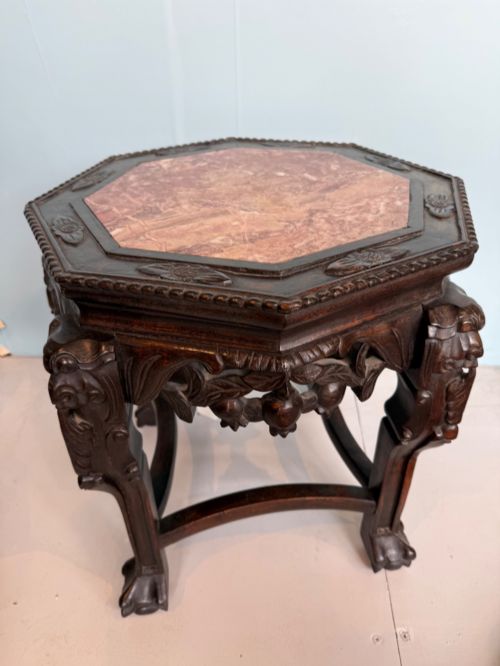
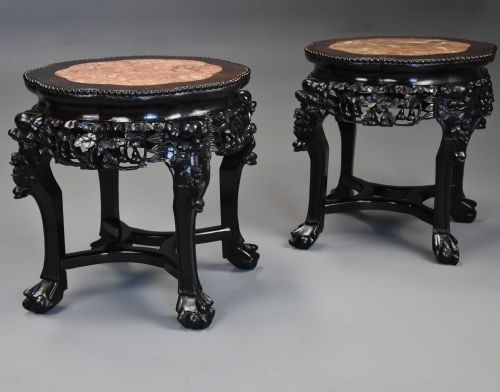
A hardwood marble bonsai stand is a carved display piece designed to elevate plants and decorative objects, combining dense timber with stone.
Hardwood Marble Bonsai Stand
A hardwood marble bonsai stand brings together dense exotic timbers and cool stone in low-profile forms suited to table surfaces or floor placement. When you explore a hardwood marble bonsai stand, you encounter pieces originating primarily from the nineteenth century, including Victorian imports and items made during the Qing Dynasty or the Meiji period.
The primary shapes include plant stands, jardiniere stands, urn stands, and occasional tables with shaped or circular marble inset tops. These items serve to elevate plants, vases, and lamps, functioning both as utilitarian supports and as decorative elements within a room.
Originating largely from Chinese export workshops alongside Japanese production, these pieces reflect traditional craftsmanship adapted for international markets. Buyers often find matched pairs or individual low tables designed to hold heavy decorative objects securely.
How they were made
Makers utilised dense timbers such as rosewood, padouk, and hongmu, which provide the structural strength needed for heavy stone inserts. These dark hardwoods are selected for their tight grain and deep natural colour, allowing intricate carving without splitting.
A polished marble inset is fitted precisely into the timber frame, often bordered by raised wooden lips or carved aprons. Joinery relies on traditional interlocking methods rather than visible metal fasteners, maintaining stability across three or four legs.
Hardwood Marble Bonsai Stand Retail Price Guide 2026
Typical asking prices for hardwood marble bonsai stand among the pieces listed under this phrase on Sellingantiques today, from the lower quarter to the upper quarter. They describe what is for sale here now, not the wider market.
Some nineteenth-century makers evidently assumed every plant owner owned a lamp and a wine glass too.
What varies in quality
Depth and precision in the wood carving separate standard utility items from finer examples, with superior pieces showing crisp undercut foliage and balanced symmetry. The weight and figuring of the marble inset also influence the overall character, as does the natural chatoyancy of the underlying rosewood or padouk.
Structural integrity depends on the tightness of the timber joints and the correct seating of the stone top within its wooden channel. Stands that retain their original dark polish without extensive modern refinishing command closer attention from collectors.
The Hardwood Marble Bonsai Stand Glossary
- Hardwood
- Dense, slow-growing timber such as rosewood, padouk, or hongmu used to construct durable furniture frames. These woods resist warping and take a fine carved finish.
- Marble
- Metamorphic rock cut into thin slabs and polished smooth for use as a cool, stable tabletop inset. It provides a contrasting texture to the dark timber surround.
- Jardiniere stand
- A tall or low table specifically intended to support a ceramic flower pot or plant container. These stands often feature elevated rims to keep the vessel secure.
- Padouk
- A heavy tropical hardwood known for its reddish-brown colour and excellent stability. It appears frequently in carved nineteenth-century stands.
- Qing Dynasty
- The final imperial dynasty of China, spanning from the seventeenth to the early twentieth century. Pieces from this era often display traditional carving motifs and exported styles.
Hardwood Marble Bonsai Stand: Frequently Asked Questions
What is a hardwood marble bonsai stand used for?
These stands are traditionally used to elevate miniature trees, heavy ceramic planters, vases, and decorative urns. By raising the object, the stand protects tabletops and creates a distinct focal point.
They also function effectively as small occasional tables for lamps or wine glasses in domestic interiors.
How do I clean the marble top?
Wipe the stone surface gently with a soft, damp cloth using plain water or a mild, pH-neutral soap. Avoid acidic cleaners, vinegar, or harsh abrasives that can etch or dull the polished finish.
Dry the marble thoroughly afterwards with a clean microfibre cloth to prevent water spots.
Are these stands strong enough for heavy pots?
The dense hardwoods used in these pieces, such as rosewood and padouk, provide substantial structural strength. The internal frame and heavy marble insert are engineered to bear considerable weight without flexing.
Even so, check that the joints remain tight before placing exceptionally heavy stone or ceramic vessels on top.
How can I tell the age of a stand?
Age is indicated by the construction methods, tool marks on the underside, and the type of timber or marble used. Nineteenth-century pieces often exhibit hand-carved joinery and patinated wood surfaces developed over decades of handling.
Comparing the decorative motifs to known Qing Dynasty or Meiji period styles helps narrow down the production era.