




Chinese Wooden Vase Stand
A Chinese wooden vase stand elevates a fine vessel off the floor or table, bringing traditional balance and proportion to an interior.
Chinese Wooden Vase Stand
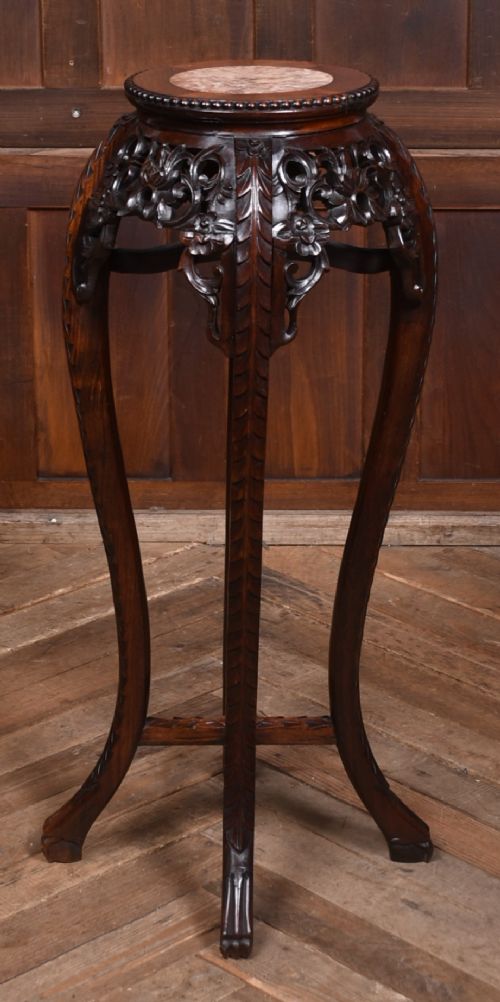
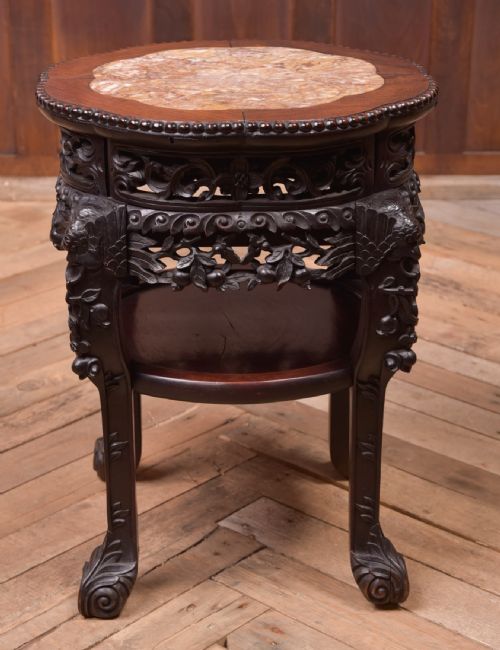
A Chinese wooden vase stand is typically encountered as a low circular or multi-sided platform designed to support vases, urns, and jardinieres. These pieces originate from periods spanning the nineteenth century through the early twentieth century, incorporating traditional Chinese and Victorian influences.
Many examples integrate inset marble tops within carved wooden frames, providing a stable, cool surface for heavy ceramic vessels. Simpler low stands rely entirely on shaped hardwood aprons and cabriole legs to hold smaller items.
Materials and Construction
Makers utilised dense hardwoods such as rosewood and hongmu, alongside ebonised wood and lacquered timber, to build durable platforms that could bear significant weight. These heavy timbers permitted intricate pierced carving along the aprons and legs without compromising structural integrity.
Stone inserts, specifically marble, were frequently dropped into the centre of the wooden top to contrast with the dark grain of the frame and provide a moisture-resistant surface for plants and water containers. Joinery relied on traditional mortise and tenon techniques, allowing the wood to expand and contract naturally over decades.
Chinese Wooden Vase Stand Retail Price Guide 2026
Typical asking prices for chinese wooden vase stand among the pieces listed under this phrase on Sellingantiques today, from the lower quarter to the upper quarter. They describe what is for sale here now, not the wider market.
Many a Victorian parlour once kept a humble plant stand working overtime as an impromptu smoking table.
Craftsmanship and Material Depth
The distinction between ordinary and superior stands lies in the crispness of the hand-carved relief and the selection of the timber. Dense, heavily figured rosewood or properly seasoned hongmu commands greater attention than plain, softer timber finished with dark stain.
Execution of the joinery and the snugness of any inset marble top dictate the overall stability and refinement of the piece. Well-executed stands display seamless joints and deeply undercut carving that maintains clean lines from every viewing angle.
The Chinese Wooden Vase Stand Glossary
- Hongmu
- A dense, durable Asian hardwood prized for its deep reddish-brown colour and heavy weight. It was frequently selected by makers for high-status furniture and display stands.
- Jardiniere
- A large ornamental pot or container for holding plants or flowers. These heavy vessels required sturdy wooden stands to prevent tipping.
- Qing Dynasty
- The final imperial dynasty of China, lasting from the mid-seventeenth century until the early twentieth century. Pieces from this era often display traditional carving motifs and formal symmetry.
- Ebonised Wood
- Timber treated with a chemical process or dark finish to simulate the appearance of solid ebony. This technique provided a uniform black surface for carved display pieces.
Chinese Wooden Vase Stand: Frequently Asked Questions
What is a Chinese wooden vase stand used for?
These stands are traditionally used to elevate and frame decorative vessels, urns, and plant pots. By raising the object, the stand draws the eye and protects household surfaces from moisture and heavy weight.
Collectors also utilise smaller stands to display tabletop items such as scholar's rocks or small bronzes, creating a deliberate focal point within a room.
How do I identify nineteenth-century examples?
Nineteenth-century stands typically show the dense weight of untreated rosewood or hongmu, combined with hand-carved details that reflect traditional joinery. Tool marks and natural timber oxidation visible on the underside help confirm age.
Later twentieth-century pieces often display lighter woods, different lacquer formulations, or machine-assisted carving along the aprons.
Can these stands support heavy ceramic vessels?
Most antique stands were engineered specifically to bear the substantial weight of large porcelain jardinieres, bronze urns, and potted plants. The dense hardwoods and solid joinery provide the necessary load-bearing strength.
Stands featuring inset marble tops offer a particularly stable, rigid surface that resists warping under heavy pressure.
Are marble top stands original to the piece?
In traditional manufacturing, the marble insert was fitted directly into the wooden frame during the initial construction to accommodate damp flowerpots. The stone grain and thickness should match the wear and patina found on the surrounding wood.
Replacement marble panels generally lack the accumulated surface wear and precise edge-fitting seen in period examples.
How should I care for antique hardwood stands?
Maintain these pieces by dusting them regularly with a soft, dry cloth to prevent particulate buildup in the carved recesses. Avoid commercial silicone polishes, which can penetrate dry antique wood and alter the finish.
Keep the stands away from direct heat sources and dramatic humidity fluctuations to protect the dense timbers and prevent the movement of inset marble tops.