





Putti Bronze Candelabra
Putti bronze candelabra combine cast figures of winged infants with multi-branch candle holders, offering collectors ornate focal points for mantelpieces and side tables.
Putti Bronze Candelabra
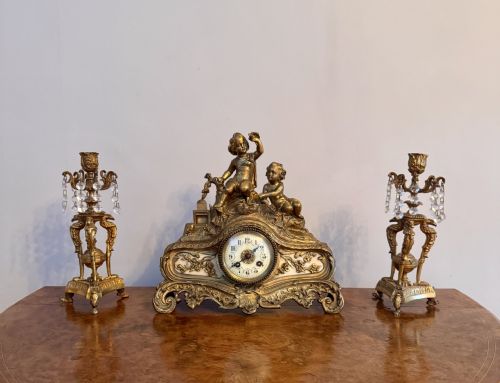
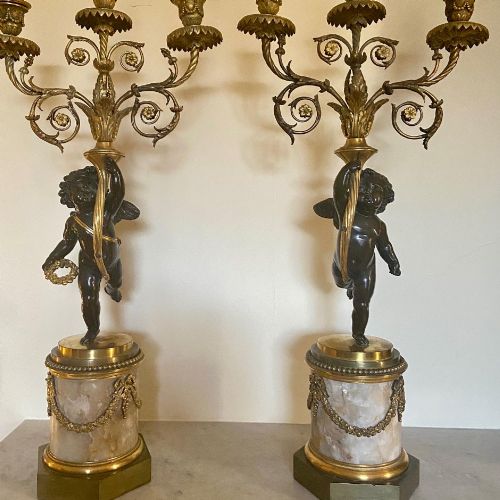
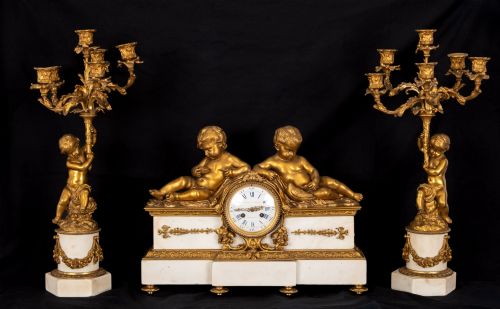
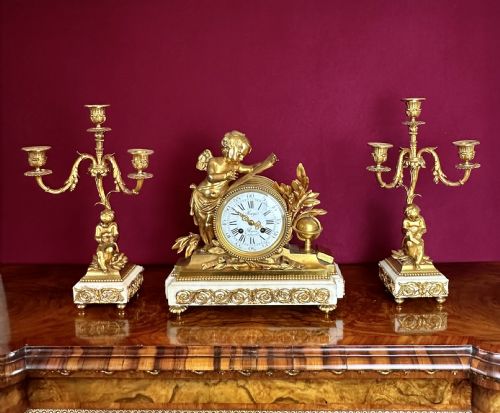
Putti bronze candelabra are figural lighting pieces featuring sculpted infant figures holding or standing beside candle arms, predominantly originating from nineteenth-century French workshops. The selection here leans heavily towards pairs designed for mantel garnitures, incorporating matching clocks or standing independently on marble bases.
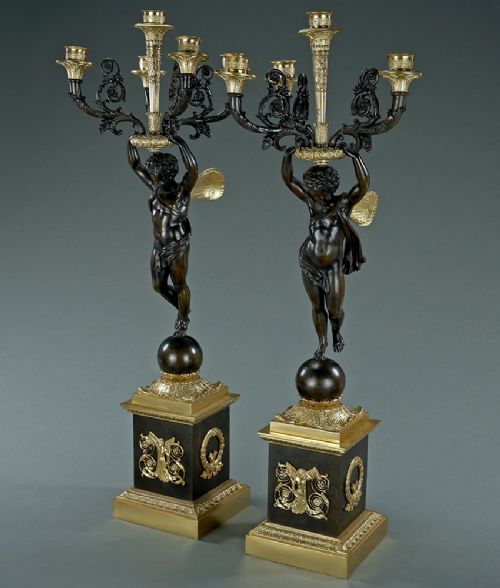
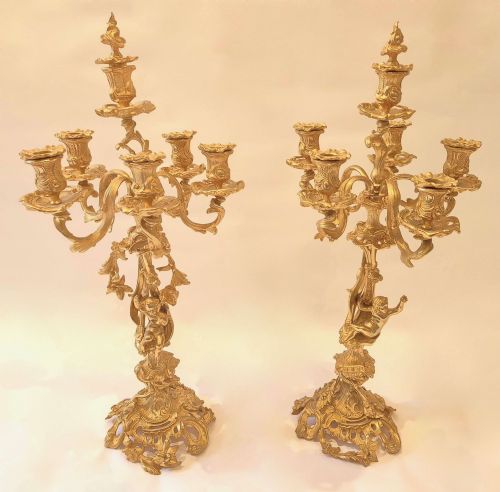
The dominant styles draw from French Rococo Revival, Louis XVI, and Empire aesthetics, reflecting nineteenth-century revivals of earlier court tastes. Many examples integrate marble pedestals, white marble, or porphyry beneath the bronze figures, creating substantial weight and classical contrast.
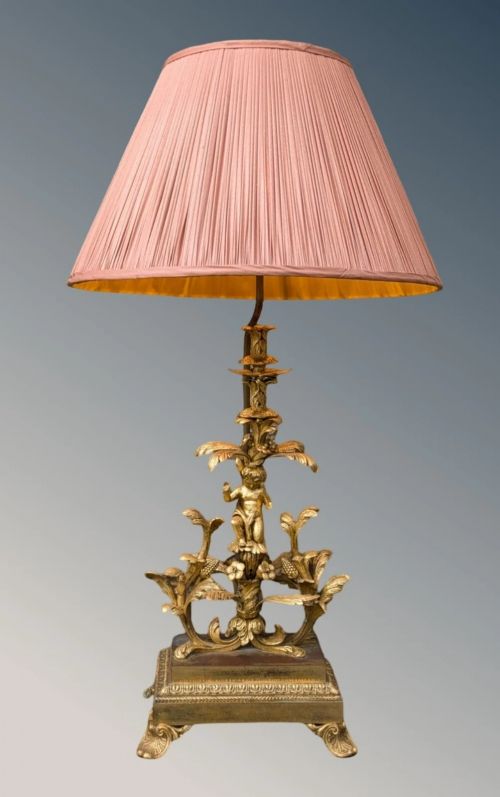
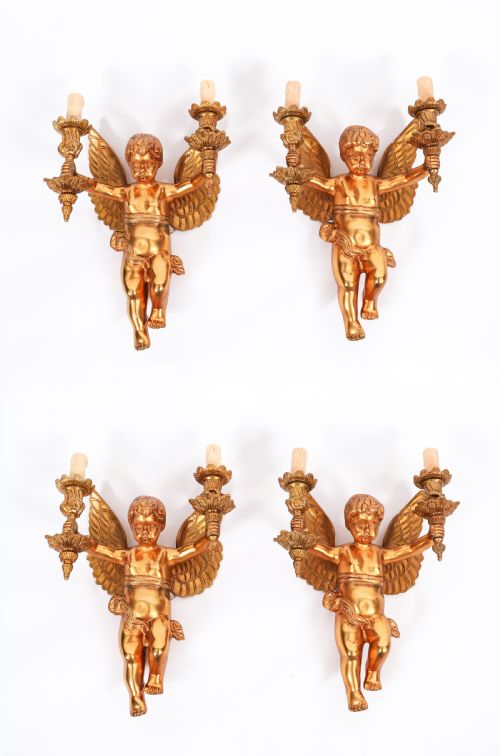
Beyond standard candelabra, the forms extend to wall sconces, chandeliers, and table lamps converted from earlier lighting formats. These pieces frequently pair putti with floral or scrollwork branches supporting two to five lights.
Assessing quality and execution
The integration of materials also dictates the standing of a piece, particularly where multi-component ormolu mounts fit tightly against carved marble or porphyry bases. Heavier, monumental pairs with complete original mercury gilding or distinct patination command stronger interest than lighter alloy substitutes like spelter.
Putti Bronze Candelabra Retail Price Guide 2026
Typical asking prices for putti bronze candelabra among the pieces listed under this phrase on Sellingantiques today, from the lower quarter to the upper quarter. They describe what is for sale here now, not the wider market.
Several putti juggle candle branches while sporting exceptionally chubby cheeks and mischievous expressions.
Francois Redmond·Claude Clodion
The Putti Bronze Candelabra Glossary
- Putti
- Winged infant figures, often male, derived from classical art and frequently utilised in Renaissance and revival decorative schemes. They populate these candelabra in various playful or supportive poses.
- Ormolu
- Finely ground high-carat gold mercury-gilded to a bronze object, producing a warm, durable finish. This technique defines the most decorative French metalwork of the eighteenth and nineteenth centuries.
- Garniture
- A set of matching decorative objects, typically a mantel clock flanked by a pair of candelabra or vases. These sets formed the visual centrepiece of nineteenth-century reception rooms.
- Torchère
- A stand or large candelabrum designed to hold a light source high, often adapted later as an electrical lamp. The term denotes pieces with elongated shafts supporting the candle branches.
- Spelter
- A zinc-based alloy used as a cheaper alternative to bronze for cast figures. It appears in several nineteenth-century pieces as a substitute substrate beneath painted or bronzed finishes.
Putti Bronze Candelabra: Frequently Asked Questions
What periods do these candelabra date from?
The listings span the eighteenth to the early twentieth century, with the vast majority produced during the nineteenth century. Victorian interpretations and revivals of Louis XVI and Rococo styles dominate the selection.
Earlier eighteenth-century examples do appear alongside later nineteenth-century revival pieces, often reflecting the ongoing influence of classical French design well into the industrial era.
How were putti candelabra used?
These pieces functioned primarily as ornamental lighting for dining tables, sideboards, and drawing-room mantelpieces. Paired with matching clocks, they formed grand garnitures that displayed wealth and taste.
Many surviving pairs have since been converted into table lamps or wired for electricity while retaining their original bronze and marble structures.
Are these pieces solid bronze?
Most pieces combine cast bronze or brass figures with marble or stone bases, though material composition varies. Gilt bronze and ormolu surface treatments are common across French nineteenth-century examples.
Alternative base metals such as bronzed spelter also appear in the record, offering a lighter and less costly construction method during the same period.
How do I distinguish Louis XVI style from Rococo?
Louis XVI style pieces emphasise symmetry, straight architectural lines, and classical motifs such as urns, swags, and fluted columns. They present a more restrained and orderly appearance.
Rococo Revival pieces rely on asymmetrical curves, shell motifs, C-scrolls, and exuberant naturalism. The putti in Rococo settings tend to interact with flowing foliate branches rather than rigid geometric structures.