
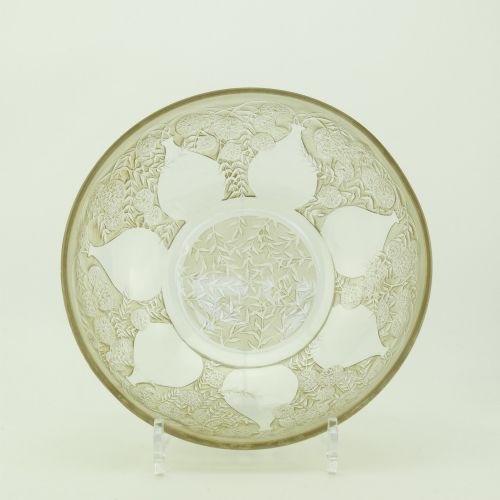
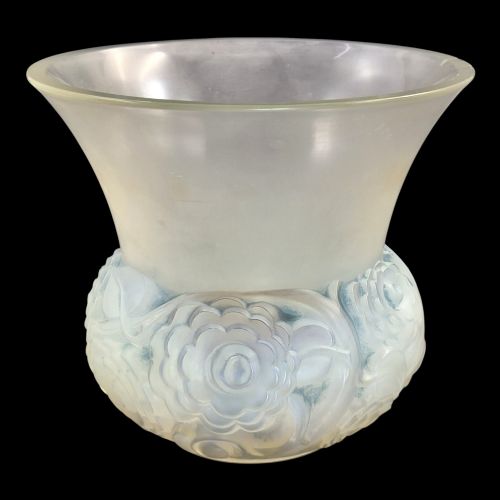


Pressed Glass Bowl
These pressed glass bowl examples bring durable pattern and weight to a table, offering form and colour shaped by industrial moulds.
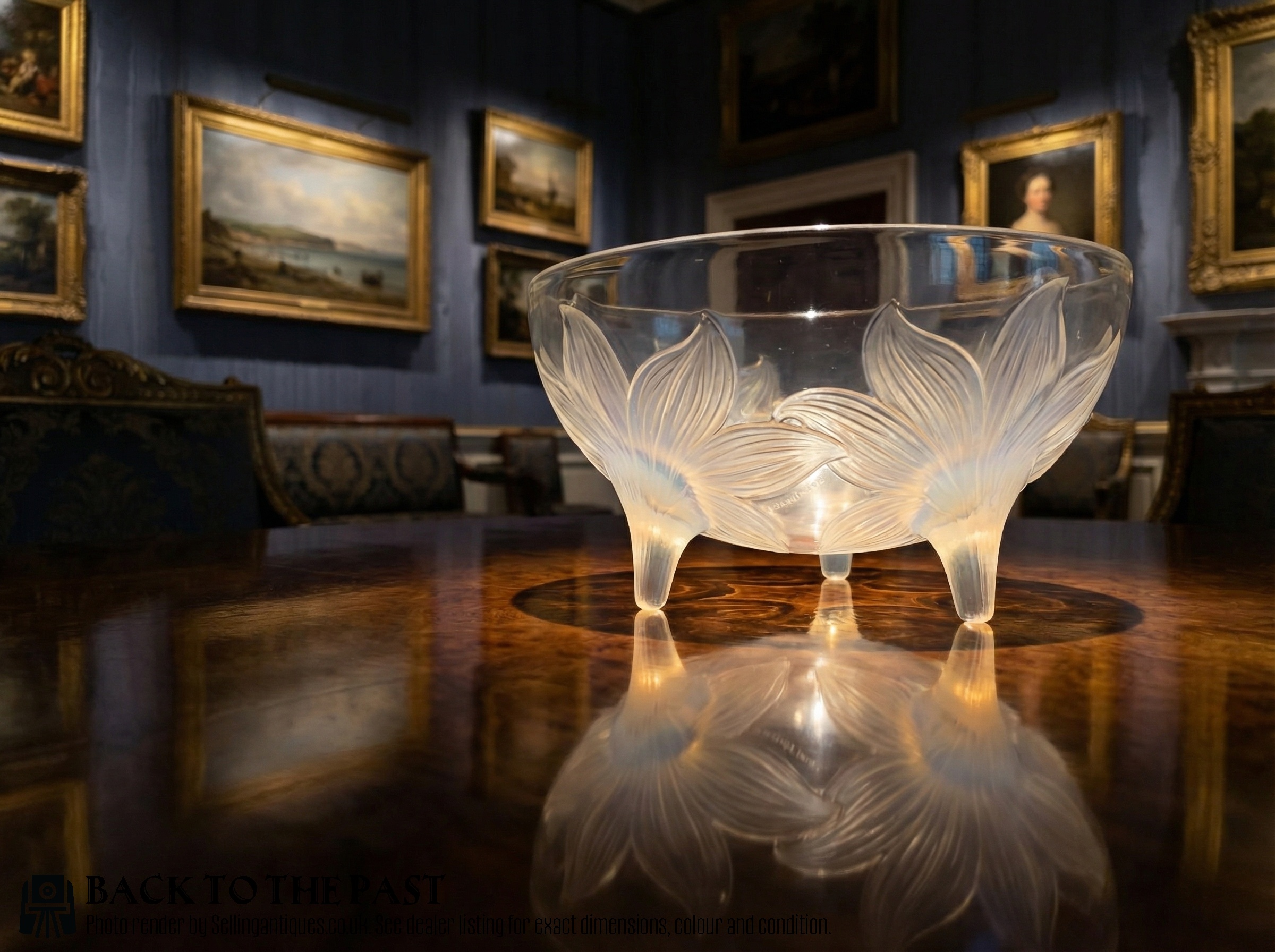
Identifying a pressed glass bowl
A pressed glass bowl is a utilitarian or decorative vessel shaped by mechanical pressing into a metal mould, appearing in forms such as decorative bowls and dishes across this selection. Buyers find these items spanning the Victorian, Edwardian, and Art Deco periods, each reflecting the design priorities of its decade.
The pieces encountered most frequently on this page combine functional shapes with ornamental surfaces, reflecting the shift from ornate nineteenth-century patterns toward streamlined modernist lines. Origins range from British makers utilising vitro-porcelain to French masters producing opalescent and clear vessels.
Materials and methods
Production relies on molten material forced into a metal mould by a plunger, capturing intricate relief designs on the outer surface while leaving the interior relatively smooth. Materials recorded in the inventory include clear glass, amber glass, and moulded glass alongside specialised treatments.
Surface finishes involve opalescent glass, iridescent glass, and applied stain to catch the light and alter the perceived depth of the material. These chemical and physical additions define the visual character of pieces from the early twentieth century.
Retail Price Guide 2026
Typical UK retail prices for pressed glass bowl, calculated from the Sellingantiques database of over a million retail prices indexed since 2003. This retail price guide relies exclusively on Sellingantiques data; no external sources or auction records are used, so the figures do not describe the wider market.
Victorian makers once pressed glass into shell and coral patterns, letting your living room double as a Victorian cabinet of curiosities.
Judging quality in moulded vessels
Distinction across the range rests on the crispness of the mould transfer and the sophistication of the optical effects achieved in the material. Master workshops achieve sharper relief and more controlled opalescence, whereas standard production shows softer lines and less nuanced colour play.
The choice of raw material and handling of surface iridescence or staining separate standard utility wares from pieces signed by prominent designers. Quality manifests in how successfully the moulded technique mimics or transcends hand-blown precedents.
René Lalique·Davidson
The Pressed Glass Bowl Glossary
- Pressed Glass
- Glass formed by pressing molten metal into a metal mould using a mechanical plunger. This technique allowed manufacturers to produce patterned tableware at scale during the Victorian era and beyond.
- Opalescent Glass
- Glass that displays a milky, bluish haze when viewed by transmitted light and a warm amber or yellowish tone by reflected light. This effect results from the controlled cooling and reheating of chemical agents within the batch.
- Iridescent Glass
- Glass treated with metallic salts while hot to create a shimmering, rainbow-like surface sheen. It is characteristic of carnival glass and certain Art Deco pieces.
- Vitro-porcelain
- An opaque, marble-like pressed glass developed during the Victorian period to imitate porcelain. It is heavy, dense, and often moulded into naturalistic forms like shells.
Frequently Asked Questions
What is a pressed glass bowl?
A pressed glass bowl is a vessel formed by forcing molten glass into an iron or steel mould using a mechanical plunger. This process allowed makers to replicate complex cut-glass patterns rapidly.
Examples on this page range from Victorian decorative table pieces to Art Deco designs produced in France and Britain.
How do I date a pressed glass bowl?
Dating relies on stylistic markers, such as the naturalistic shell motifs of the Victorian era or the geometric symmetry of Art Deco. Material variations like opalescence or carnival iridescence also point toward specific production decades.
Comparing the form and finish against documented maker output helps narrow the period of manufacture.
How should I clean a pressed glass bowl?
Cleaning requires warm water and mild soap applied with a soft cloth to protect the surface finish. Avoid harsh abrasives or soaking pieces with stained or iridescent treatments.
Gentle handling ensures the delicate surface sheens and moulded details remain undamaged over time.