


Portable Writing Table
A portable writing table is a compact timber case built for travel, offering a fitted writing surface and storage for correspondence wherever you journey.
Portable Writing Table
A portable writing table encompasses a variety of travelling desks, folding writing slopes, and table-top bureaux designed to be moved easily between rooms or carried on journeys. The listings feature examples ranging from substantial campaign pedestals to compact boxes that rest upon existing surfaces.
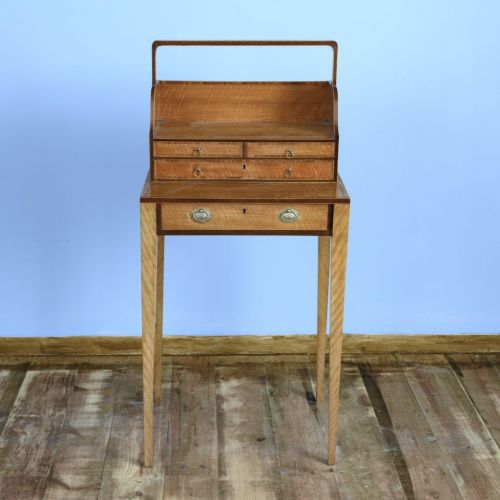
Origins stretch across multiple centuries, represented here by pieces from the seventeenth, eighteenth, nineteenth, and early twentieth centuries. Forms vary from simple oak table-top bureaux to sophisticated satinwood cheverets and brass-bound military desks.
Georgian and Victorian interpretations dominate the selection, showing both domestic refinements and robust campaign construction meant for officers on the move. Buyers encounter everything from folding coaching tables to elaborate rosewood boxes inlaid with brass and parquetry.
How they were made
Cabinetmakers utilised dense hardwoods such as mahogany, oak, rosewood, satinwood, and elm to withstand the rigours of transport and daily use. These timbers were often selected for their rich grain and finished with leather writing surfaces inside.
Metalwork played a structural role in portable pieces, with brass corner brackets, binding, and recessed carrying handles protecting edges and securing joints against the strain of travel. Folding mechanisms and internal compartments required precise joinery to ensure everything locked securely shut.
Some folding coaching tables wait patiently for a restorer's hand to bring their travel-worn timber back to life.
What varies in quality
The distinction between standard utility items and exceptional examples lies in the selection of timber veneers, the refinement of internal stationery compartments, and the subtlety of brass inlay. Finer pieces demonstrate meticulous attention to hidden joints and secondary woods.
Makers who supplied high-ranking officers or luxury London retailers incorporated clever metamorphic mechanisms, secret drawers, and superior locking systems that elevate the utility of the desk into an exercise in fine cabinetmaking.
J.C Vickery of London
The Portable Writing Table Glossary
- Cheveret
- A small writing table or stand, often featuring a removable book carrier or tiers above the writing surface. This form appeared during the eighteenth century in fine timbers like satinwood.
- Campaign desk
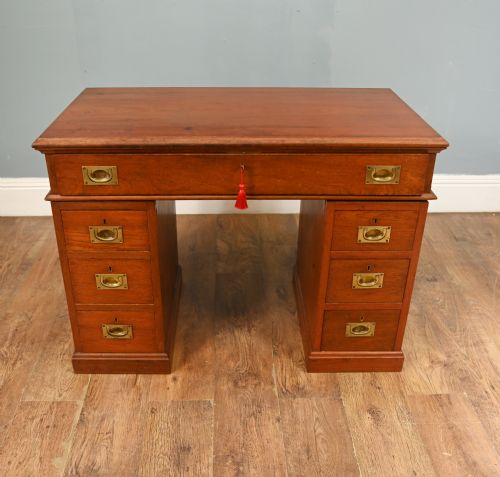
- Furniture built in sections with recessed brass fittings and carrying handles, designed to be packed down and transported by officers on military campaigns. These pieces prioritise structural resilience and modular convenience.
- Writing slope
- A box with a sloping lid that opens to reveal compartments for ink, pens, and paper, housing an inclined writing surface lined in leather or velvet. Many models fold flat for travel.
- Metamorphic desk
- An item of furniture engineered to transform from one form into another, such as a table turning into a desk or incorporating hidden reading stands. These incorporate clever mechanical linkages.
- Parquetry
- Geometric mosaic woodwork formed of small veneer tiles arranged in patterns across the surface of a box or desk. It demonstrates advanced decorative woodworking skills.
Portable Writing Table: Frequently Asked Questions
How were portable writing tables used?
These pieces provided a stable writing surface and secure storage for stationery, inkwells, and correspondence away from a permanent home study. Travellers used them in temporary lodgings, coaches, and military tents.
Officers and gentlefolk relied on them to maintain correspondence while on the move, keeping private documents locked inside a compact timber case.
Where did campaign desks travel?
Campaign desks accompanied military officers, diplomats, and colonial administrators across distant territories and domestic postings. They were built to endure rough handling in baggage trains and ship cabins.
Their robust construction and brass reinforcements protected the contents from moisture, dust, and the bumps of prolonged journeys.
How do I distinguish eighteenth-century pieces?
Eighteenth-century examples often display simpler, more elegant proportions in timbers like mahogany, elm, or satinwood, sometimes featuring delicate inlay rather than heavy brass corner mounts. Cabinetmakers focused on clean lines and fine dovetailing.
Later Victorian military pieces tend to feature more extensive brass binding, flush handles, and compartmentalised interiors designed specifically for campaign rigours.
Can I use a portable writing table daily?
Many buyers place these desks on top of larger tables or sideboards to use them as compact writing stations in modern homes. The internal compartments remain useful for storing pens, paper, and small modern items.
Care should be taken to protect antique leather surfaces from moisture and heavy pressure when writing on the historic slopes.