


Portable Writing Box
A portable writing box is a hinged wooden desk designed for travel, combining a sloped writing surface with fitted compartments for ink and paper.
Portable Writing Box
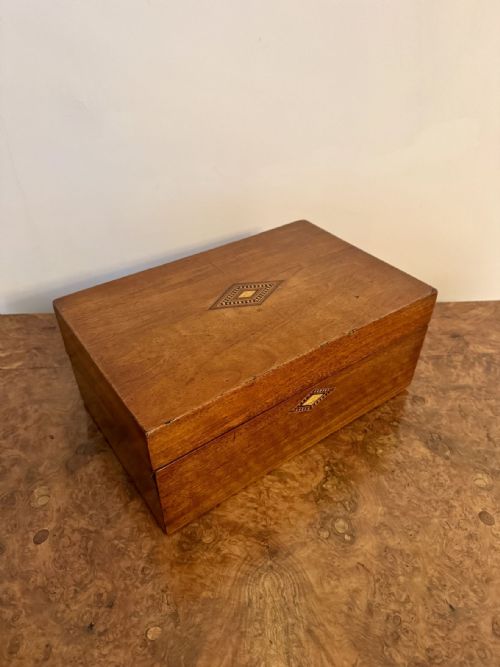
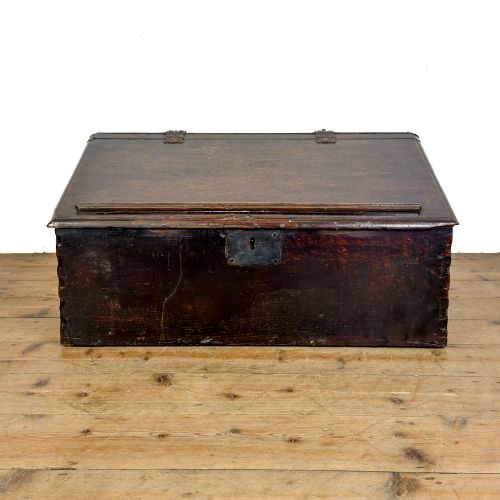
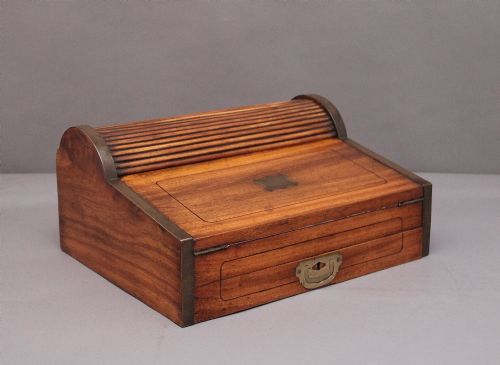
A portable writing box offers a compact writing station that folds shut to secure correspondence and papers during travel. The form ranges from simple oak bible boxes to elaborate campaign writing slopes fitted with secret drawers and brass bindings.
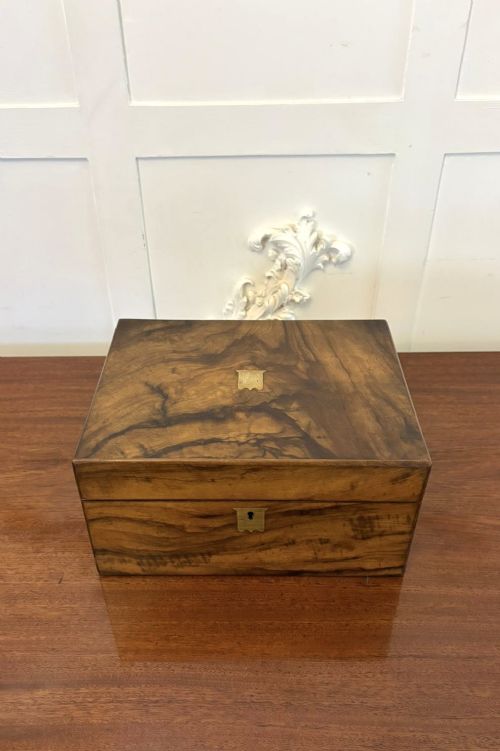
Victorian and Georgian examples dominate the selection, constructed from dense hardwoods like mahogany, rosewood and walnut. Buyers frequently encounter brass bound campaign boxes alongside Anglo-Indian ebony pieces and table top bureaux.
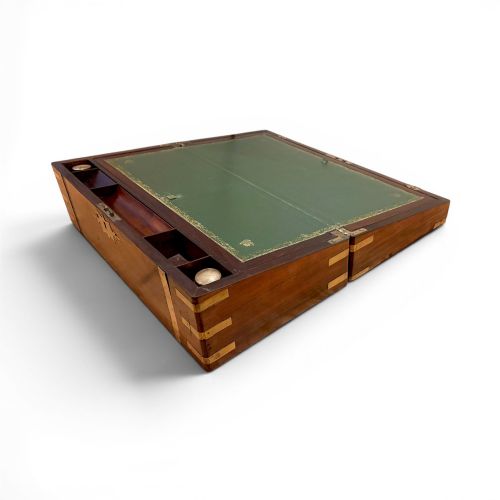
The interior typically reveals a leather-lined slope that opens to reveal compartments for stationery, nibs and inkwells. Many incorporate clever locking mechanisms or metamorphic designs that transform a flat box into a standing lectern or desk.
How they were made
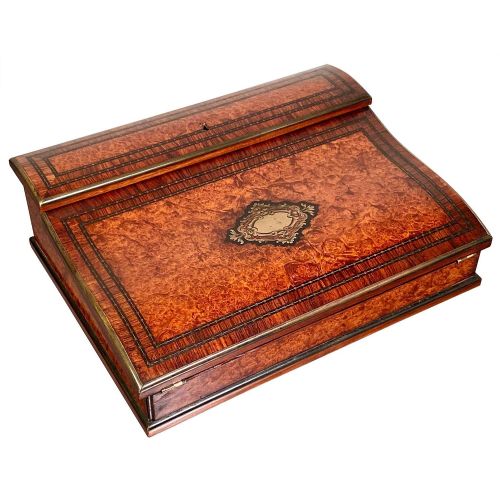
Cabinet makers utilised durable timbers such as mahogany, oak, camphor wood and walnut to withstand the rigours of travel. Exotic additions like coromandel, ebony and burr walnut veneer provided decorative enrichment for domestic settings.
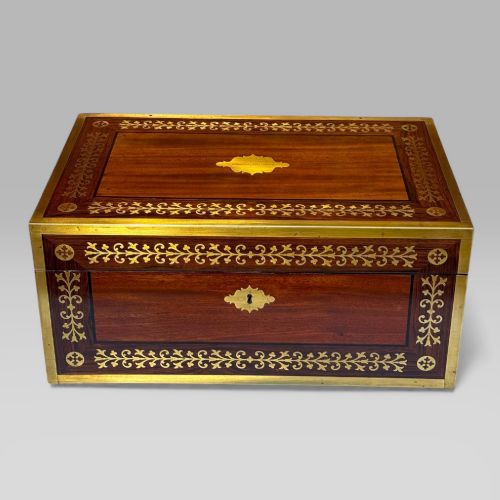
Brass corners, straps and flush carrying handles reinforced the box joints against impact during military campaigns and long voyages. Interiors often incorporated leather writing surfaces, velvet linings and intricate ivory or brass inlay.
Joinery relied on tight-fitting box construction, sometimes enhanced by secret compartments concealed behind dummy drawer partitions. Locks by makers such as Bramah secured the contents against unauthorized reading.
What varies in quality
The choice of timber and veneer dictates much of the visual hierarchy, shifting from plain utilitarian oak to highly figured burr walnut, coromandel or intricately carved Anglo-Indian ebony and antler work. Finer boxes display symmetrical grain matching across the entire exterior lid and fall front.
Hardware integration separates standard utility pieces from high-status items. Flush-fitting brass corner plates, substantial brass binding and signed locks indicate superior workshop output intended for officers and wealthy travellers.
Mappin and Webb
The Portable Writing Box Glossary
- Writing slope
- A box with an angled writing surface that opens to reveal storage compartments underneath. The slant provides an ergonomic angle for handwriting with quill or pen.
- Campaign box
- A piece of furniture reinforced with brass corners and handles for military transport. These boxes often feature recessed hardware to prevent snagging.
- Secret drawer
- A hidden compartment concealed behind removable partitions or false bottoms. These were used to store valuables and confidential letters.
- Bramah lock
- A high-security cylindrical lock patented in the late eighteenth century. These mechanisms offered superior protection against picking.
- Tunbridgeware
- Woodwork decorated with mosaic patterns created from thousands of tiny tinted wood prisms. This technique originated in Kent during the nineteenth century.
Portable Writing Box: Frequently Asked Questions
What is a portable writing box?
A portable writing box is a hinged wooden case designed to carry paper, ink and writing instruments. When opened, it provides a firm sloped surface for writing letters away from a stationary desk.
Most examples date from the Georgian and Victorian eras, built to travel with officers, merchants and travellers. They fold completely shut and lock to secure correspondence.
How do you use a writing slope?
To use a writing slope, you release the brass hook or lock and fold the hinged lid downward to create an inclined writing plane. The stepped interior holds inkwells, pens and paper securely while in transit.
Many boxes feature a leather or velvet insert on the sloping surface to provide grip for paper. Lifting the slope reveals deeper storage wells for ledgers and extra stationery.
Where were campaign boxes used?
Campaign boxes travelled with British military officers and colonial administrators across the British Empire. Their robust brass bindings and recessed handles protected the contents during arduous overland and sea journeys.
These pieces were built to serve as portable offices in tents, ships and remote outposts. Their compact design allowed officers to maintain official records while on active service.
How do I tell Victorian from Georgian boxes?
Georgian writing boxes generally display simpler exterior lines with straightforward mahogany or oak construction, often relying on fine wood grain rather than heavy ornamentation. Their brass work tends to be neat and restrained.
Victorian boxes frequently incorporate more elaborate veneers such as burr walnut, coromandel or coromandel with extensive brass inlay. They also show a greater variety of patented locks and complex secret drawer arrangements.