

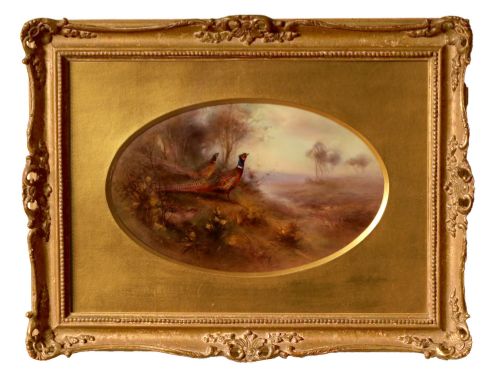


Porcelain Pheasant Painting
Porcelain pheasant painting captures the vibrant plumage of game birds on fine ceramics, offering a sophisticated piece of rural heritage for your home.
Porcelain Pheasant Painting
When you search for porcelain pheasant painting, you encounter a specialised selection of hand-painted ceramics and plaques depicting game birds in natural settings. These pieces primarily date from the nineteenth and twentieth centuries, reflecting a strong British and continental interest in avian artistry.
The most common formats on this page include Royal Worcester vases, plaques, and cabinet plates, frequently signed by renowned painters such as James Stinton. Alongside these English works appear Chinese Famille Rose pieces and Japanese Satsuma dishes from the Meiji and Taisho periods.
Forms vary from decorative bowls and jugs to framed wall art and pot pourri urns. Each object demonstrates a careful study of avian subjects, rendered onto glazed ceramic surfaces using traditional enamel and mineral colours.
How they were made
These pieces rely upon porcelain and earthenware bodies, shaped into vessels, plates, or flat plaques before firing. The ceramic base receives a smooth glaze to prepare the surface for detailed enamel work.
Artists apply enamel colours by hand, building up the complex plumage of the birds through repeated brushwork and subsequent kiln firings to set the pigments. Many examples incorporate gold leaf or delicate gilding around the rims and borders to frame the central painted scene.
Gold leaf and gilt wood frequently accompany these painted ceramics, adding metallic warmth to the framed wall art and decorative vessels.
What varies in quality
The distinction between standard items and the finest examples rests upon the precision and naturalism of the brushwork. Master painters capture the iridescent sheen and individual feather textures with a fidelity that elevates a decorative vessel into a true portrait of wildlife.
Maker attribution also dictates standing, as pieces bearing signatures from established ceramic artists command greater recognition among collectors. Furthermore, the crispness of the gilding and the preservation of the enamel colours over time define the overall condition and desirability of the piece.
James Stinton·Koshida·Royal Worcester·Chamberlain Worcester·Samson
The Porcelain Pheasant Painting Glossary
- Cabinet plate
- A decorative ceramic plate intended for display in a cabinet or mounted on a wall rather than for table use. These often feature elaborate hand-painted scenes across the central well.
- Enamel
- A glass-like substance fused to the surface of porcelain through high-temperature firing. It provides the vibrant, durable colours used in detailed bird painting.
- Gilding
- The application of gold leaf or gold dust suspended in a medium to ceramic surfaces. It accentuates borders, handles, and scenic edges.
- Pot pourri urn
- A decorative vessel pierced with holes in the lid to diffuse scented dried plant materials. They often feature painted panels depicting birds or botanical motifs.
- Famille Rose
- A palette of Chinese ceramic enamels dominated by opaque pink or rose colours, introduced during the Qing Dynasty. This style frequently incorporates detailed avian and floral compositions.
Porcelain Pheasant Painting: Frequently Asked Questions
Who painted these porcelain birds?
Many British pieces feature artwork by specialist ceramic painters, most notably James Stinton, who worked extensively for Royal Worcester capturing game birds in watercolour styles upon pottery.
Other items originate from international kilns, including Satsuma wares by makers such as Koshida and traditional Chinese Famille Rose workshops.
How should I display a painted plaque?
Framed porcelain plaques work well mounted on walls away from direct, harsh sunlight to protect the enamel pigments over time. Secure fixings are essential due to the weight of the ceramic body.
Tabletop items like vases and cabinet plates benefit from stable surfaces and designated display stands that support their base safely.
Are these items suitable for daily use?
Most pieces function primarily as decorative art rather than utilitarian tableware. Hand-painted enamels and delicate gilding require gentle care to avoid wear from washing.
Dusting with a soft, dry cloth is generally sufficient to maintain the glazed surface and preserve the painted pheasant details.
How do I identify the period?
Makers' marks stamped or painted on the underside of the ceramic provide the primary clue for dating, often corresponding to specific manufacturing decades.
Stylistic elements, such as the Regency shape of early Worcester jugs or the distinct aesthetic of Edwardian game bird plates, also help establish the era of creation.