

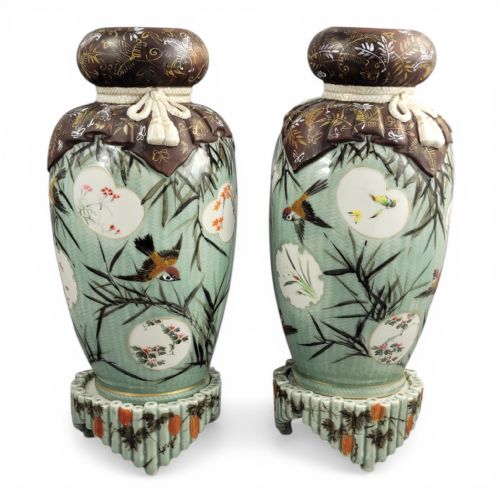


Porcelain Floor Vases
Porcelain floor vases stand as commanding decorative statements, bringing scale and historical artistry into large rooms.
Porcelain Floor Vases
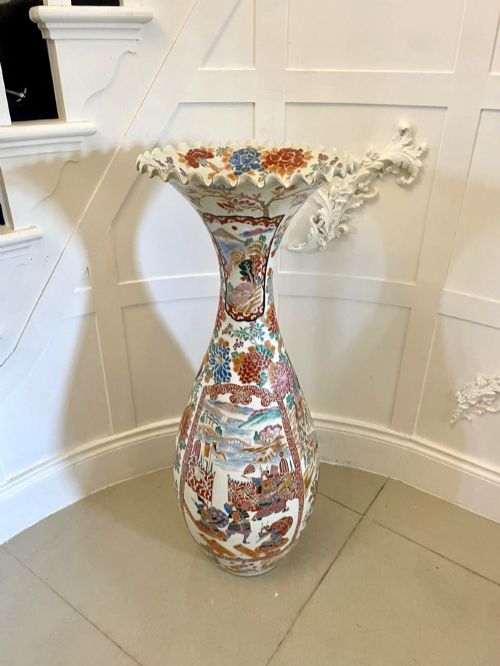
Porcelain floor vases comprise large-scale ceramic vessels designed to stand directly on the ground rather than upon tables or mantelpieces. These tall works often measure over three feet in height, requiring substantial kiln space and skilled potting to maintain structural integrity during firing.
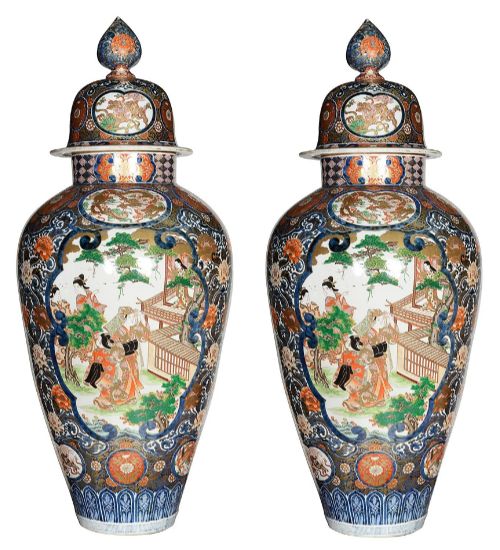
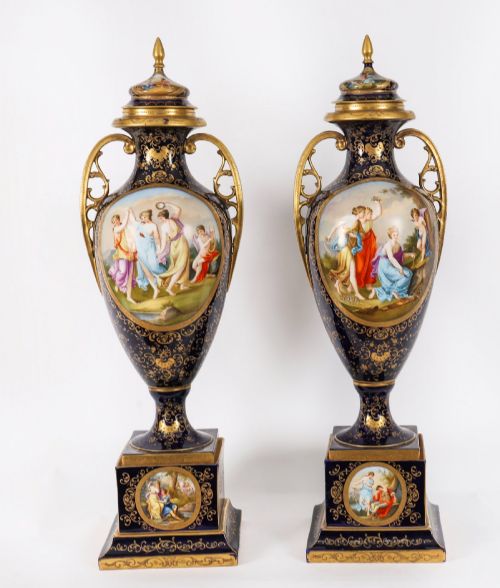
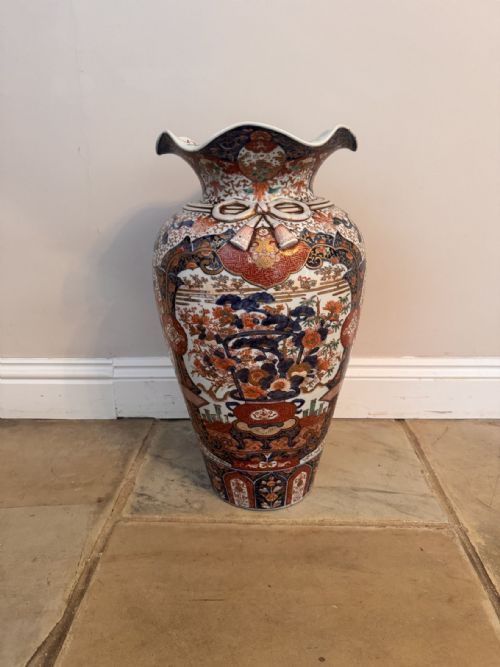
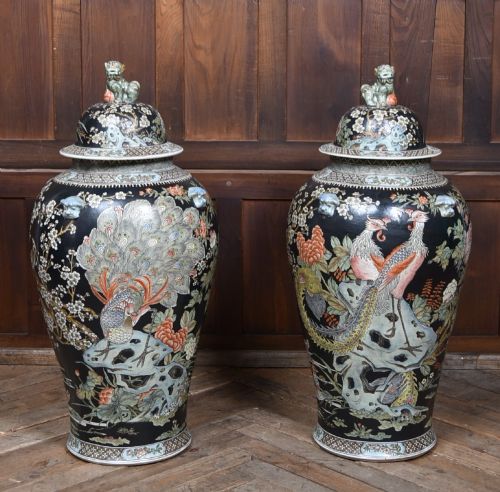
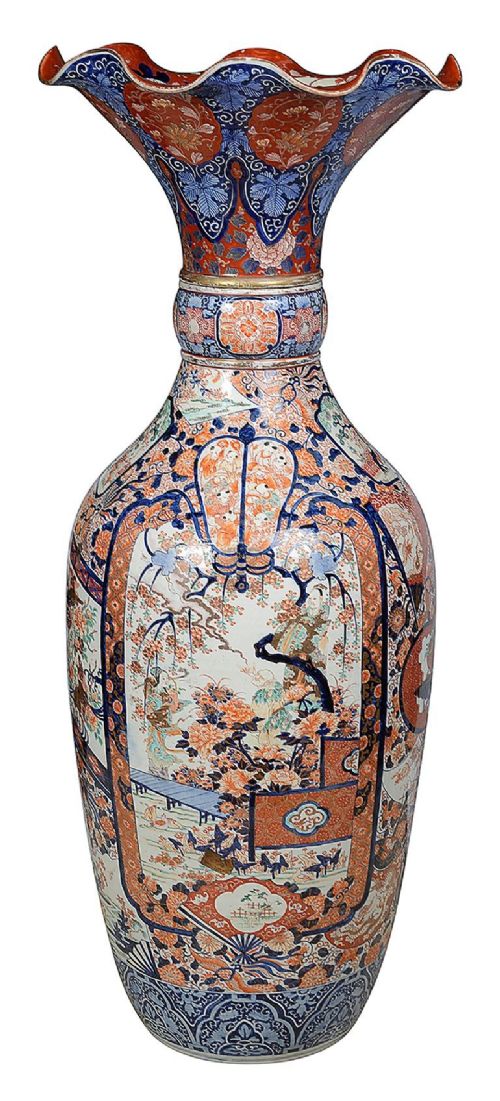
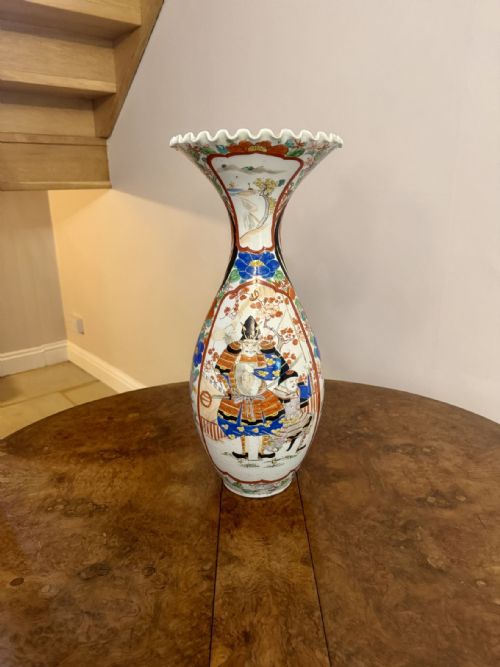
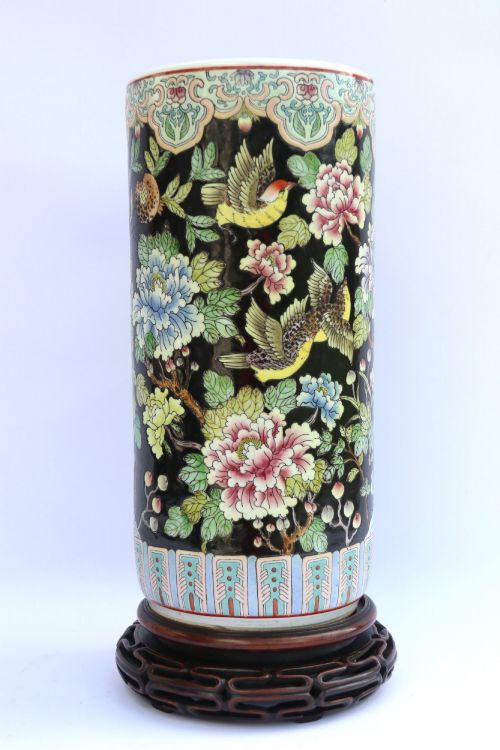
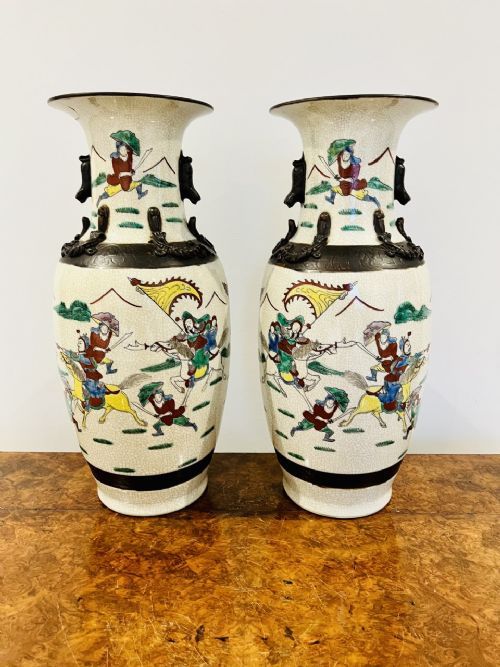
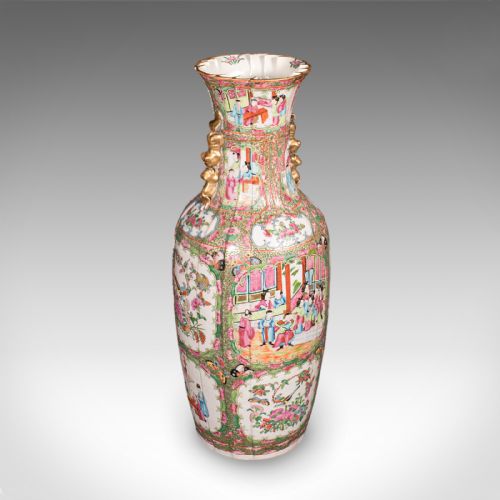
The selections on this page are dominated by nineteenth-century examples, spanning Japanese Imari, Satsuma, and Chinese Qing dynasty productions such as Famille Rose and Canton wares. Pairs frequently appear alongside single monumental pieces, many retaining their original stands made from porcelain or hardwood.
Materials and Techniques
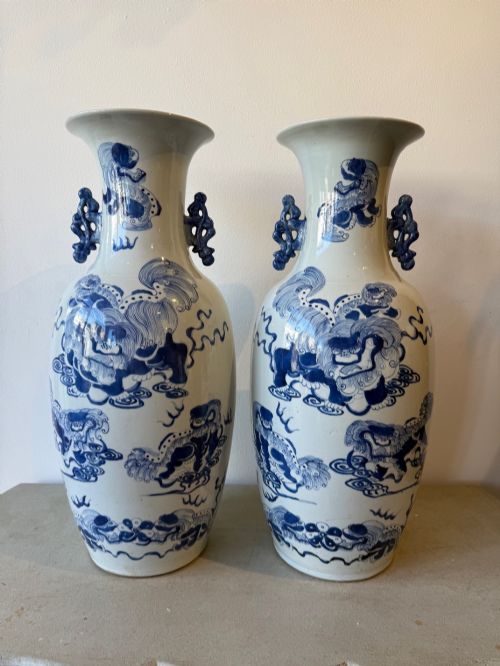
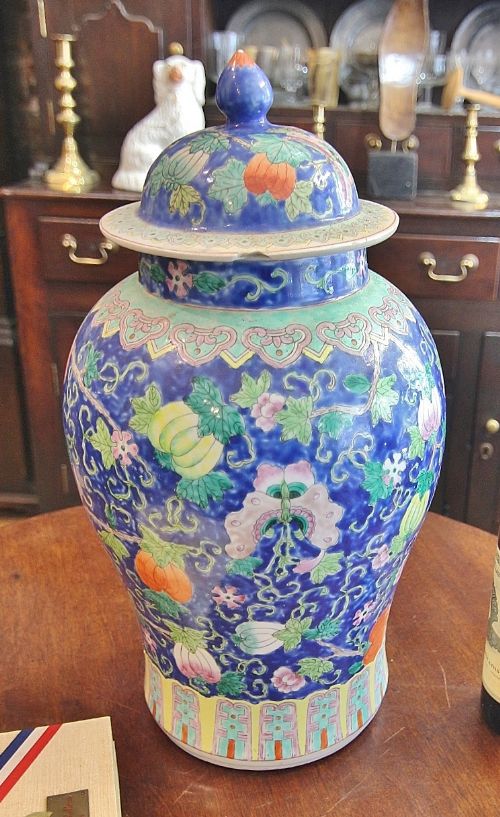
Production relies upon high-fired white clay glazed and decorated with mineral pigments, frequently incorporating underglaze blue, enamel colours, and detailed gilding. Artisans applied complex hand-painted motifs ranging from floral panels to figurative scenes, often utilising multiple kiln firings to set different colour palettes.
Structural support for these heavy vessels occasionally involved custom additions like wooden or porcelain stands, while certain Japanese pieces integrate lacquer panels or geometric insets over black paint to add textural contrast.
Listings feature nineteenth-century Japanese Imari, Satsuma wares, and Chinese Qing dynasty porcelain.
Distinctions in Quality
Distinctions in quality rest upon the crispness of the hand-painted brushwork, the richness and application of the gilding, and the symmetry achieved across monumental forms. Superior examples display precise control in fine enamel details and balanced compositions that command attention without feeling crowded.
The physical condition of the glaze, the presence of matching original stands, and the stability of large potting proportions further separate standard decorative items from exceptional workshop output.
Kato Sanhei·Royal Vienna
The Porcelain Floor Vases Glossary
- Imari
- A traditional Japanese style of porcelain characterised by a palette of underglaze blue, iron red, and gold. These pieces originated in Arita and were widely exported to Europe.
- Famille Rose
- A major palette of Chinese ceramic glazes introduced in the Qing dynasty, distinguished by opaque pink or rose enamel colours. The style permits subtle tonal gradations in painted florals and figures.
- Satsuma
- Earthenware and porcelain pottery from Japan featuring a crackled ivory glaze decorated with intricate polychrome enamels and raised gold. Satsuma items often depict historical or domestic scenes.
- Baluster
- A vase shape with a rounded body that tapers toward the base and swells outward below a narrow neck. This classical silhouette provides stability for tall floor vessels.
- Qing
- The final imperial dynasty of China, lasting from the seventeenth to the early twentieth century. This era produced significant ceramic advancements and large-scale export wares.
Porcelain Floor Vases: Frequently Asked Questions
Where should porcelain floor vases be placed?
These tall vessels suit entryways, hallways, and corners of spacious rooms where their height creates a distinct visual anchor. Placing them away from heavy foot traffic protects the fragile glaze and body.
Pair arrangements work effectively flanking doorways or fireplaces, while single monumental pieces operate well as standalone focal points in larger interior layouts.
How do I care for antique floor vases?
Dust the surface regularly with a soft, dry cloth to prevent particulate accumulation within crevices and painted details. Avoid harsh chemical cleaners or abrasive materials that might damage historical gilding and enamel.
Keep the vessels away from direct sunlight to preserve pigment vibrancy and shield them from sudden temperature shifts that could stress the ceramic body.
How can I tell Japanese Imari from Chinese export porcelain?
Japanese Imari typically displays a denser, slightly greyish-white body with a palette dominated by iron red, cobalt blue, and abundant gold leaf. The decorative motifs often feature complex brocade patterns.
Chinese export porcelain of comparable periods frequently utilises brighter white clays and distinct enamel styles like Famille Rose, focusing on naturalistic floral arrangements and narrative figure scenes.
What is the purpose of original stands?
Original wooden or porcelain stands provide a stable base for heavy vessels, distributing weight evenly across uneven floor surfaces. They also elevate the ceramic to protect the unglazed foot rim from moisture.
Matching stands preserved alongside the vase enhance the historical integrity and completeness of the piece, confirming that the base was specifically made for that vessel.