


Porcelain Cherub Bowl
A porcelain cherub bowl brings sculptural romance and nineteenth-century display grandeur directly to a dining table or console.
Porcelain Cherub Bowl
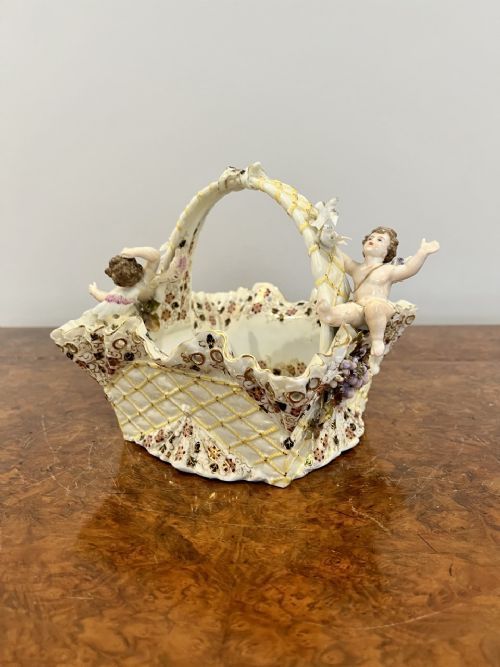
A porcelain cherub bowl unites modelled figural work with functional vessel forms, spanning centuries from the Victorian era onwards. These pieces predominantly take the shape of centrepieces, sweetmeat dishes, comports, and large decorative baskets.
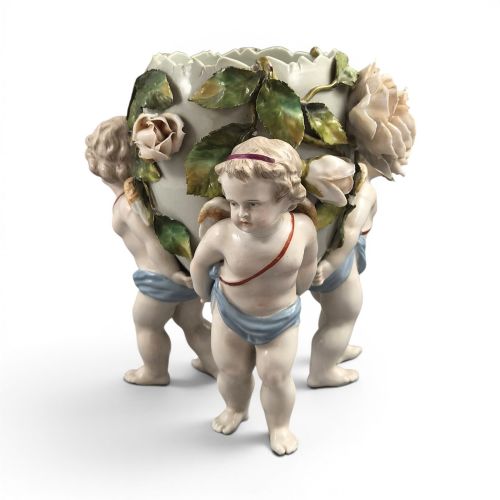
Makers shaped hard-paste porcelain into shells, baskets, and elaborate vases, populated or supported by cherubs, putti, and musical figures. Continental European factories generated the vast majority of these elaborate table ornaments.
Victorian and Edwardian examples dominate the current selection, reflecting a strong taste for Rococo Revival forms and floral encrustations. Buyers encounter everything from compact sweetmeat dishes to substantial German centrepiece vessels.
Materials and methods
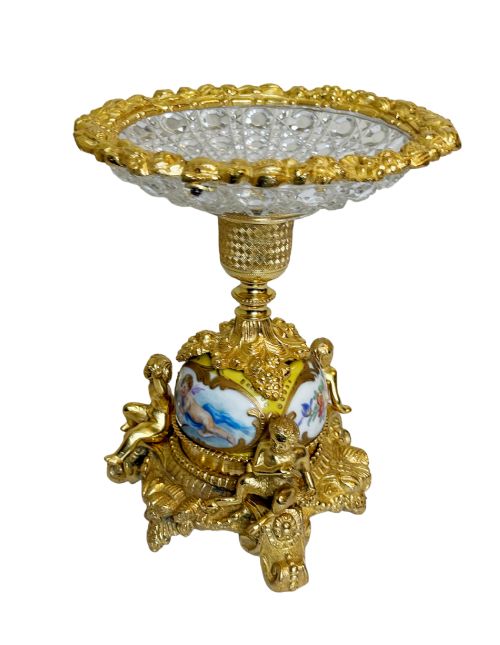
Makers utilised hard-paste porcelain, ceramic, and cut crystal, often combining them with gilt bronze mounts and gold leaf accents. Applied elements such as hand-formed roses and intricate foliage required delicate modelling before firing.
Painters applied enamel and gilded highlights by hand, setting off the crisp white bodies of the porcelain figures. Gilded enamel and meticulous hand-painting distinguished high-tier factory output from standard commercial production.
Listings feature hard-paste porcelain, cut crystal, and gilt bronze across Victorian, Edwardian, and earlier nineteenth-century periods.
Distinguishing quality across the range
The refinement of the modelling dictates the success of each piece, particularly in the anatomy and facial expressions of the cherubs. Crisp detail in applied floral elements and cleanly cast bronze mounts separate finer examples from routine factory output.
The sophistication of the palette and the application of gold leaf reveal the hand of skilled decorators. Pieces boasting comprehensive factory marks and complex multi-figure compositions hold greater visual and historical weight.
Sitzendorf·Schierholz·Volkstedt·Minton·Dresden·Amphora
The Porcelain Cherub Bowl Glossary
- Putti
- Plural of putto, representing plump, naked male toddlers often depicted with wings. They appear frequently supporting bowls or clambering over the edges of baskets.
- Sweetmeat dish
- A small vessel designed for serving confectionery, nuts, or dried fruits during formal dining. These items frequently feature figural supports.
- Comport
- A raised dish or bowl on a stem, utilised for serving fruit or sweetmeats on a grand table. They often form part of large matching sets.
- Hard-paste porcelain
- A durable ceramic composition fired at very high temperatures, prized for its bright white body and smooth glaze. European factories adopted this material to produce intricate sculptural details.
- Rococo Revival
- A nineteenth-century design movement favouring asymmetrical scrollwork, C-scrolls, and naturalistic motifs. This style heavily influenced the curved forms and organic bases of these vessels.
Porcelain Cherub Bowl: Frequently Asked Questions
How were these bowls originally used?
These vessels served primarily as ornamental centrepieces for dining tables, laden with fruit or sweetmeats during formal Victorian meals.
They functioned as conversation pieces that displayed the host's wealth and refined taste through elaborate sculptural porcelain.
Where were most of these pieces made?
Continental Europe, particularly Germany and France, produced the vast majority of these figural porcelain centrepieces and baskets.
Factories in regions such as Saxony and Thuringia led the output, alongside notable English makers like Minton.
How can I tell the period of a piece?
Examine the factory marks on the base, the style of the hand-painted enamels, and the complexity of the moulding.
Victorian and Edwardian pieces frequently lean into Rococo Revival curves, while applied flowers and gilt bronze mounts offer further chronological clues.
How do I care for antique porcelain bowls?
Keep these items out of direct sunlight and away from areas subject to rapid temperature fluctuations to protect the enamel and gilding.
Dust them gently with a soft, dry brush and avoid submerging pieces that combine porcelain with gilt bronze or cut crystal.