

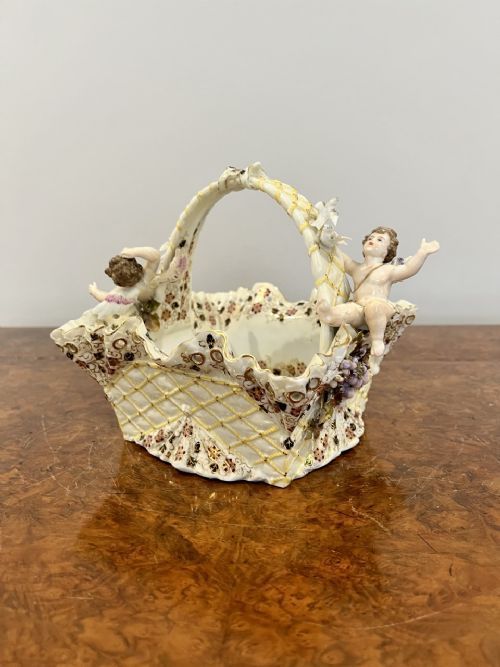


Reticulated Porcelain Compote
A reticulated porcelain compote is a pierced, openwork vessel made to sit in the middle of a formal table.
Reticulated Porcelain Compote
A reticulated porcelain compote stands as an ornate centrepiece, basket or bowl designed to hold fruit or decorative arrangements on the dining table. These pieces emerge chiefly from Victorian and Edwardian workshops, spanning the nineteenth century up to the early twentieth century.
The form relies on openwork lattice patterns, pierced borders and applied details such as flowers and putti. Buyers encounter German factories, French ateliers and English makers within this selection.
Forms range from simple lattice bowls to elaborate centrepieces featuring cherubs and gilded enamel. The overall aesthetic draws heavily on Rococo Revival and French Empire influences.
How they were made
Potters shaped these vessels from ceramic and porcelain, often piercing the wet clay by hand to create the characteristic reticulated lattice walls. Artisans then applied delicate elements such as moulded roses and figural putti before the initial firing.
Decoration involved hand-painted enamels combined with gold leaf or rich gilding applied over the glaze. A final high-temperature firing fixed the colours and set the metallic lustre permanently against the white porcelain body.
Reticulated Porcelain Compote Retail Price Guide 2026
Typical asking prices for reticulated porcelain compote among the pieces listed under this phrase on Sellingantiques today, from the lower quarter to the upper quarter. They describe what is for sale here now, not the wider market.
Materials across the selection combine fine white ceramic and porcelain with hand-painted enamel, gold leaf, and glossy glaze.
What varies in quality
Quality rests heavily on the crispness of the piercing and the delicacy of the applied porcelain details. Sharp, cleanly cut lattice borders distinguish finer centrepieces from heavier, less refined castings.
The finesse of the hand painting and the application of gold leaf dictate the upper tier of the range. Finer examples show careful brushwork on floral motifs and figural expressions without clumsy glaze pooling.
John Ridgway·Schierholz Plaue·C.G. Schierholz and Sohn
The Reticulated Porcelain Compote Glossary
- Reticulated
- Pierced or netted work resembling a network or lattice. This decorative openwork is characteristic of fine porcelain baskets and compotes.
- Putti
- Plump, naked infant angels frequently used as decorative figures in Rococo and Victorian design. They often climb among applied roses on centrepieces.
- Gilding
- A thin layer of gold applied to the porcelain surface or highlights. It accentuates the rims, handles and applied scrollwork.
- Compote
- A raised bowl used for serving fruit or sweets, typically standing on a central foot or pedestal. In porcelain, it doubles as a table centrepiece.
Reticulated Porcelain Compote: Frequently Asked Questions
What is a reticulated porcelain compote used for?
These vessels were historically placed in the middle of the dining table to hold fruit, flowers or sweetmeats during formal meals. Today they function primarily as decorative centrepieces for display on sideboards or tables.
The pierced lattice design was intended to lighten the visual weight of large porcelain centrepieces while showcasing the confectionary or fruit held inside.
How do I date a Victorian or Edwardian compote?
Dating relies on stylistic clues, factory marks on the base and the complexity of the moulding. Victorian examples often lean towards heavy Rococo Revival scrolls, while Edwardian pieces sometimes show lighter, crisper forms.
Examining the application of the gold leaf and the style of the hand-painted enamels also helps place the piece within the nineteenth or early twentieth century.
Are German and French compotes different?
German factories frequently produced elaborate centrepieces featuring applied putti and three-dimensional flowers, particularly in regions like Saxony and Thuringia. French makers often focused on refined basket bowls with delicate painted reserves and restrained gilding.
Both traditions utilised high-fired porcelain and rich enamel palettes, but the sculptural ambition tends to be louder in German works.
How do I clean an antique porcelain compote?
Dusting gently with a soft, dry brush is the safest method to keep applied flowers and pierced lattice clean. Avoid soaking pieces with delicate gold leaf or hand-painted enamel in water.
Harsh cleaning agents will strip the gilding and damage the glaze, so modern detergents should be strictly avoided on nineteenth-century surfaces.