

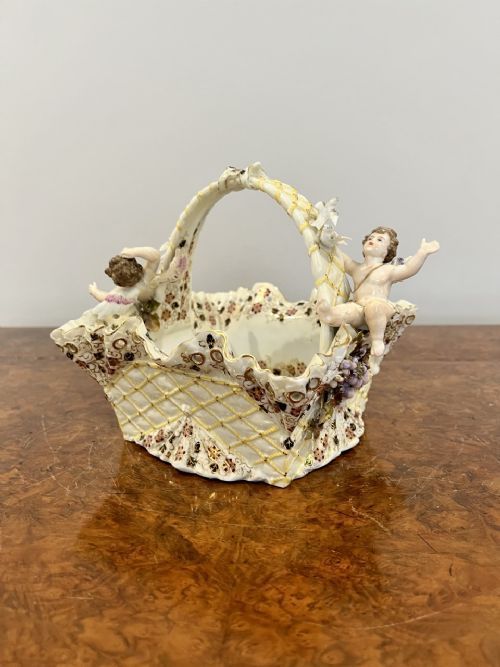


Dresden Style Porcelain Compote
These dresden style porcelain compote pieces are elaborate ceramic display vessels originating from German factories that elevate any dining table or sideboard with sculpted figurative charm.
Dresden Style Porcelain Compote
A dresden style porcelain compote brings together ornate openwork baskets, decorative bowls, and grand centrepieces shaped by European manufacturers during the Victorian and Edwardian eras. Buyers searching for a dresden style porcelain compote encounter sculptural forms featuring cherubs, musical putti, and meticulously modelled applied roses. These pieces primarily date from the late nineteenth century through to the early decades of the twentieth century, reflecting the prevailing taste for revivalist decoration.
The objects on this page predominantly take the form of large German centrepieces and ornamental baskets supported by figurative bases. Many examples utilise shell motifs and classical groupings to create high-impact decorative focal points. The aesthetic draws heavily on Rococo Revival design principles, favouring sweeping curves, asymmetry, and rich surface embellishment.
Materials and Manufacture
The manufacture of a dresden style porcelain compote relies on high-grade ceramic bodies shaped into complex structural forms, often combining moulded sections with individually hand-modelled elements. Craftsmen applied delicate details such as petals and leaves separately before firing, creating three-dimensional floral encrustations that stand proud of the main vessel. Figurative components like cherubs and putti demonstrate advanced mastery of porcelain casting and hand-finishing techniques.
Surface decoration integrates polychrome enamel paint with extensive gold leaf and gilding to accentuate the relief work. Artisans highlighted borders, Rococo scrolls, and structural ribs with metallic leaf, contrasting the bright white glazed ceramic ground. This combination of hand-painting and gilding required multiple firings in the kiln to fix the colours and metallic layers securely.
Dresden Style Porcelain Compote Retail Price Guide 2026
Typical asking prices for dresden style porcelain compote among the pieces listed under this phrase on Sellingantiques today, from the lower quarter to the upper quarter. They describe what is for sale here now, not the wider market.
Assessing Quality and Execution
The quality of a dresden style porcelain compote rests upon the crispness of the modelling in the figurative elements and the finesse of the hand-applied flora. Superior examples display sharply defined facial expressions on the putti and individually thin petals on the roses, whereas lesser pieces exhibit thick, uniform floral masses lacking botanical realism. The precision of the gilt work and the subtlety of the enamel shading further separate standard production items from masterworks.
Structural complexity also dictates the tier of the piece, particularly in the construction of openwork baskets and multi-tiered centrepieces. Heavier, more stable mounting and balanced proportions indicate superior workshop standards. The depth and richness of the enamel palette contribute significantly to the visual weight and overall success of the finished compote.
Schierholz Plaue·C.G. Schierholz Sohn
The Dresden Style Porcelain Compote Glossary
- Compote
- A raised bowl or basket used historically for serving fruit or sweetmeats, or simply as an ornamental centrepiece. In this context, it refers to large decorative pedestal vessels.
- Putti
- Representations of small winged infants, frequently depicted as cherubs or mythological figures in European art. They are a defining sculptural feature of these German centrepieces.
- Rococo Revival
- A nineteenth-century design movement that revived the ornate, asymmetrical curves, shellwork, and scrolling foliage of the eighteenth-century Rococo style. It dominates the aesthetic of these Victorian and Edwardian ceramics.
- Gilding
- The application of gold leaf or powdered gold paint to the surface of porcelain. It highlights raised mouldings, rims, and structural details to create a luxurious finish.
- Applied Roses
- Three-dimensional floral ornaments modelled by hand and attached individually to the ceramic surface before firing. They form dense, tactile thickets across the baskets and bases.
Dresden Style Porcelain Compote: Frequently Asked Questions
What is a porcelain compote used for?
These large vessels served primarily as grand decorative centrepieces for dining tables during the Victorian and Edwardian periods. They functioned as ornamental displays for fruit or confectioneries during formal meals.
Over time, their role shifted entirely into decorative display objects for sideboards and mantels. Their sculptural presence made them statement pieces in fashionable nineteenth-century drawing rooms.
How do I identify a German centrepiece?
German production from this era is typically characterised by marks on the base, highly naturalistic applied porcelain flowers, and classical figurative groups like putti. The porcelain body often has a bright white glaze combined with heavy gilding.
Stylistically, these pieces lean heavily into the Rococo Revival tradition, distinguishing them from the simpler forms of other European manufacturing regions.
Are these pieces fragile?
Yes, due to the intricate hand-modelled floral encrustations and delicate figurative appendages, these items require careful handling. The thin porcelain petals and protruding limbs are susceptible to impact.
Placement should be in a secure location away from heavy traffic areas to protect the complex raised decorations from accidental damage.
What period do these compotes come from?
The available listings demonstrate that these pieces originate predominantly from the late nineteenth century and the early twentieth century. This spans the Victorian, Edwardian, and 1920s eras.
The height of production for these elaborate German centrepieces occurred during the peak of historical revivalism between eighteen-eighty and nineteen-ten.