
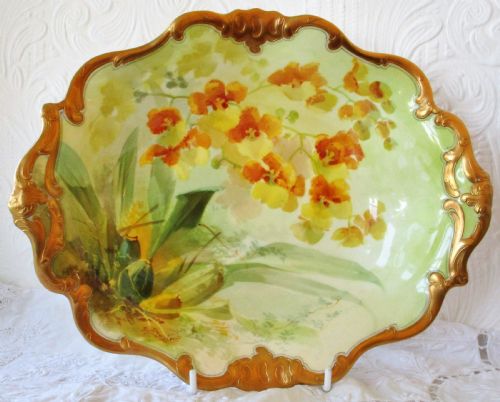


Victorian Porcelain Fruit Bowl
When you handle a victorian porcelain fruit bowl, you touch the heavy decorative ambitions of nineteenth-century dining rooms.
Victorian Porcelain Fruit Bowl
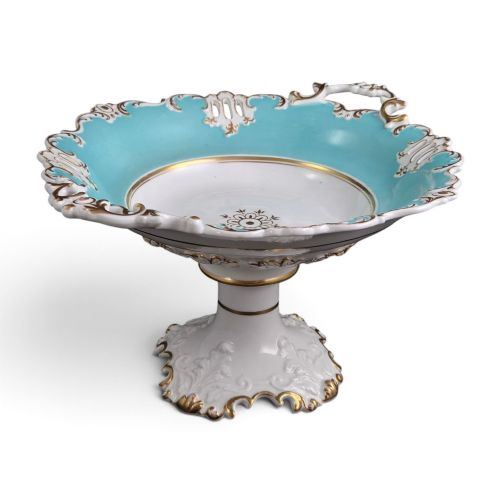
A victorian porcelain fruit bowl serves as the ornamental centrepiece for a nineteenth-century table, emerging in various footed and elevated forms. The selection encompasses elaborate comports, tazzas, and cabinet dishes alongside standard fruit bowls.
Makers across England, France, and Germany produced these pieces, often adopting styles from Rococo Revival and French Rococo Revival to Aesthetic Movement and Art Nouveau. English factories like Coalport, Doulton, and Mason's sit alongside continental works such as Sevres and Plaue Schierholz.
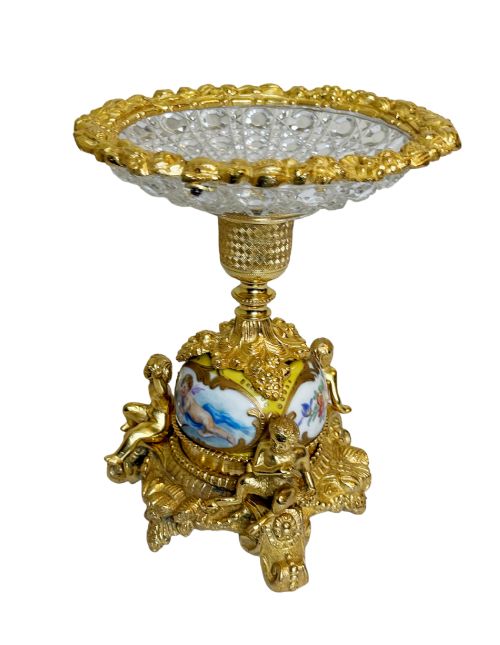
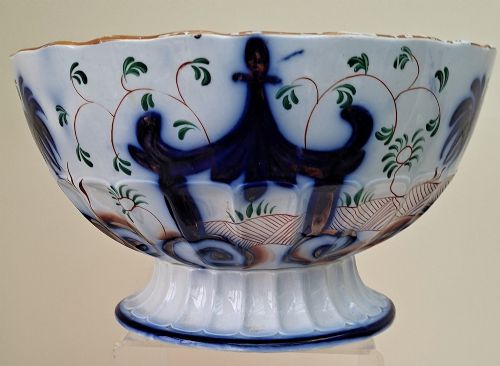
The evidence shows diverse ornamentation, from hand-painted orchids and Pagoda patterns to sculptural cherubs and gilt bronze mounts. Buyers frequently encounter pieces bearing rich cobalt blues, turquoise grounds, and intricate enamel work.
Materials and production methods
Potters shaped these pieces using porcelain, bone china, and ironstone, sometimes combining ceramic bodies with gilt bronze, ormolu, and cut crystal mounts. Skilled hands applied enamel colours and gold leaf gilding to accentuate moulded details and figurative elements.
Many items incorporate transfer-printed motifs enhanced by hand painting, while others rely entirely on freehand botanical or architectural subjects. Moulded cherubs, shell supports, and lattice cutouts demonstrate the high degree of sculptural work involved in shaping a fruit bowl or centrepiece.
Musical putti figures cheerfully prop up porcelain centrepieces, ensuring your dining table comes with its own silent brass band.
Judging quality in nineteenth-century bowls
Quality rests upon the crispness of the porcelain moulding and the precision of the hand-painted details. Finer examples display delicately rendered subjects, such as botanical studies or figural cherubs, executed without blurring or misaligned enamel transfers.
The application of gold leaf and gilding marks the division between standard production and superior craftsmanship. Heavy, well-chased ormolu mounts and intact gilt bronze elements elevate the status of a comport or centrepiece significantly.
Coalport·Royal Doulton·Doulton Burslem·Plaue Schierholz·Royal Worcester·Royal Crown Derby·Minton·Wedgewood·Copeland Spode·Haviland
The Victorian Porcelain Fruit Bowl Glossary
- Comport
- An elevated dish or bowl used for serving fruit or dessert at the table. These pieces often stand on a central foot or pedestal.
- Tazza
- A shallow bowl mounted on a stem and foot, originating from Renaissance forms and revived during the nineteenth century. They function primarily as decorative centrepieces.
- Gilding
- The application of gold leaf or gold dust to the surface of porcelain or ceramic. It highlights rims, handles, and raised decorative motifs.
- Ormolu
- Gilded bronze used for mounts, feet, and structural supports on decorative porcelain bowls. It provides a heavy, metallic contrast to the ceramic body.
- Famille Rose
- A palette of Chinese porcelain enamels dominated by opaque pink. Nineteenth-century European makers often borrowed these decorative colour schemes.
Victorian Porcelain Fruit Bowl: Frequently Asked Questions
What was a victorian porcelain fruit bowl used for?
These vessels held fresh fruit for formal dessert courses at the end of grand nineteenth-century dinners. They sat in the middle of the table as decorative centrepieces.
Hosts used them to display seasonal produce while demonstrating their taste and wealth through elaborate ceramic art. Many pieces also functioned as permanent decorative objects on sideboards and cabinets when not dining.
How do I date a nineteenth-century fruit bowl?
Dating relies on maker marks, factory ciphers, and stylistic indicators recorded across the ceramic body. Victorian pieces often combine revived Rococo or Gothic elements with distinct registry marks.
Period characteristics like aesthetic movement asymmetry or art nouveau flowing lines help narrow the decade of production. Comparing paste thickness, glaze texture, and gilding style against known factory timelines confirms the era.
What is the difference between a comport and a tazza?
A comport generally refers to a deep, footed vessel designed specifically for holding fruit or sweetmeats on the dining table. They frequently appear in matched sets for large dessert services.
A tazza is typically shallower and broader, designed more for display than heavy service. Both share the elevated pedestal form that defines nineteenth-century dining room ceramics.