


Porcelain Bird Figurines
Porcelain bird figurines bring ornithological form into the interior, offering detailed avian models crafted from hard-paste porcelain.
Porcelain Bird Figurines
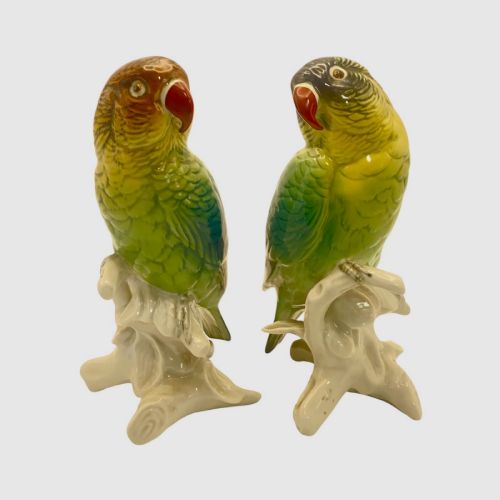
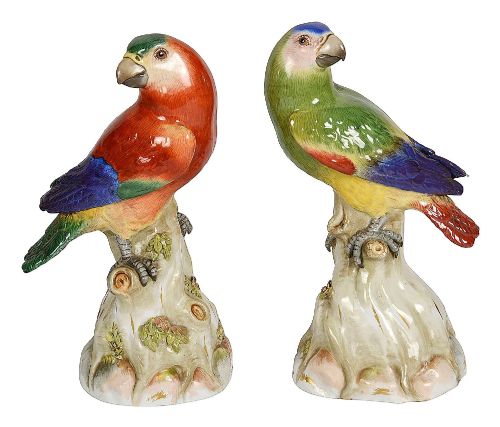
Porcelain bird figurines capture avian subjects across various historical periods, including the Georgian era and the nineteenth century. These decorative figures range from single birds perched on tree trunks to matched pairs of parrots, cockerels, and ducks.
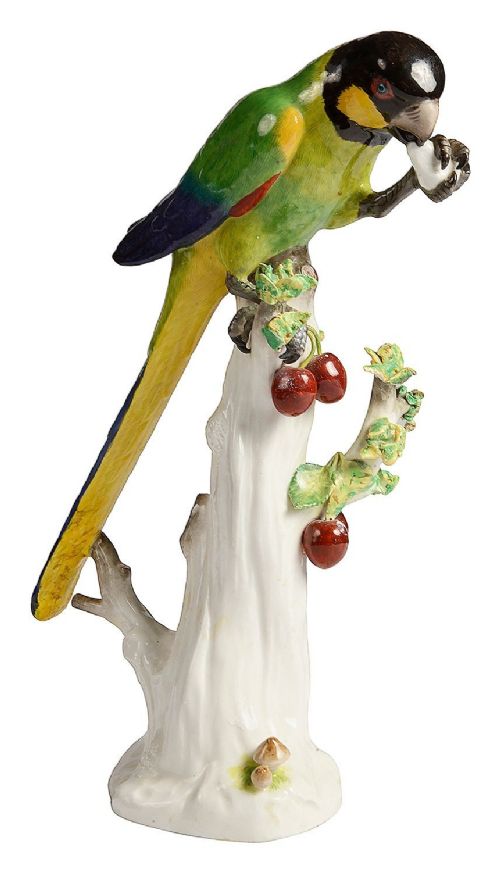
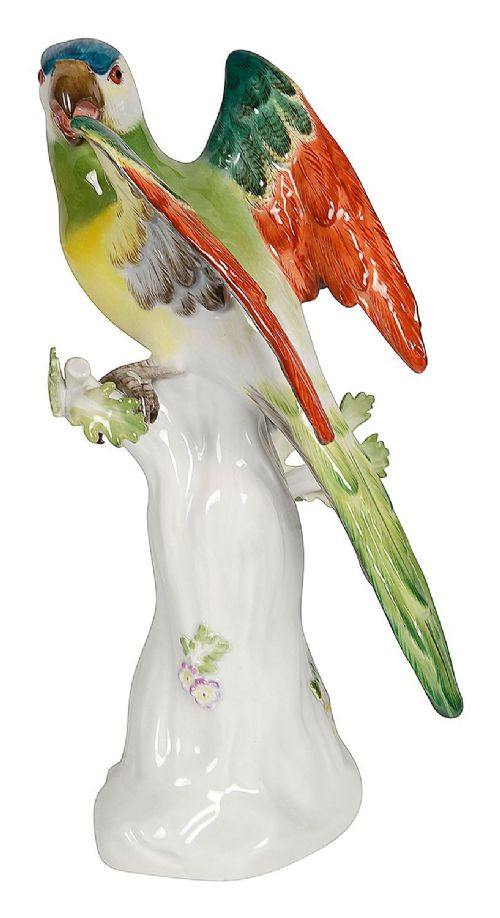
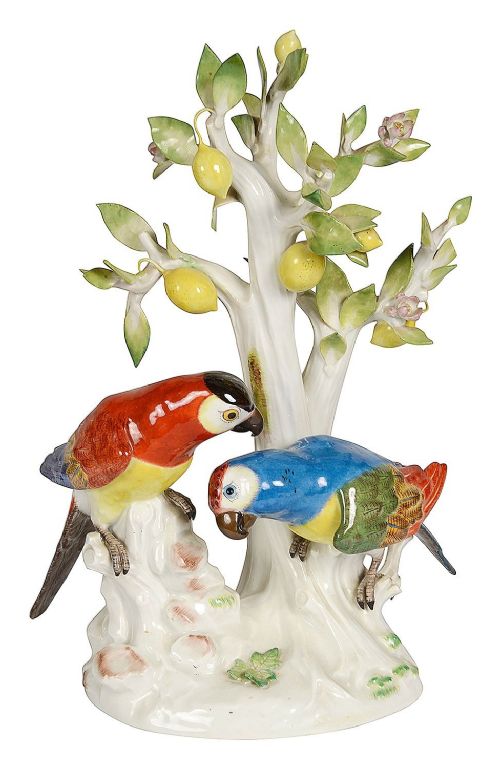
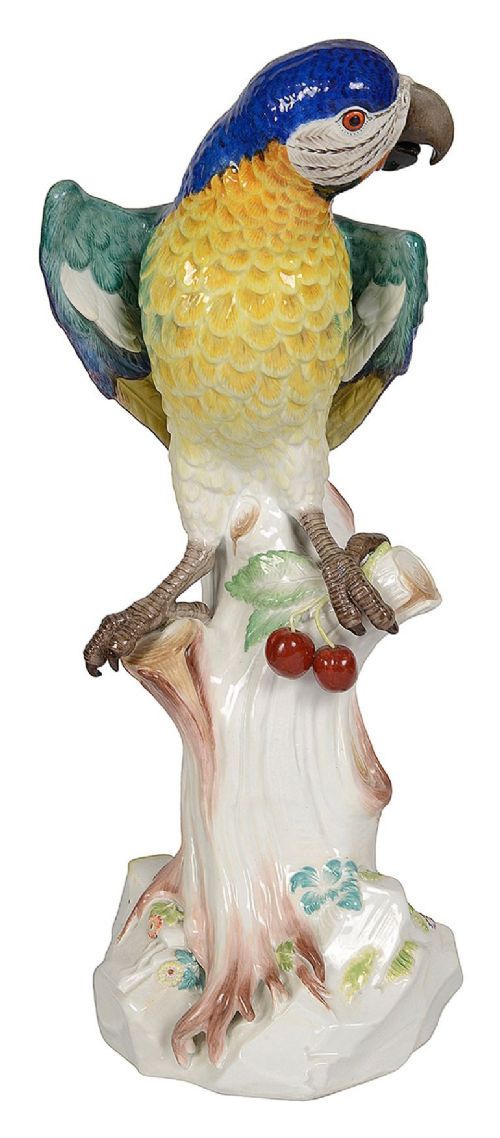
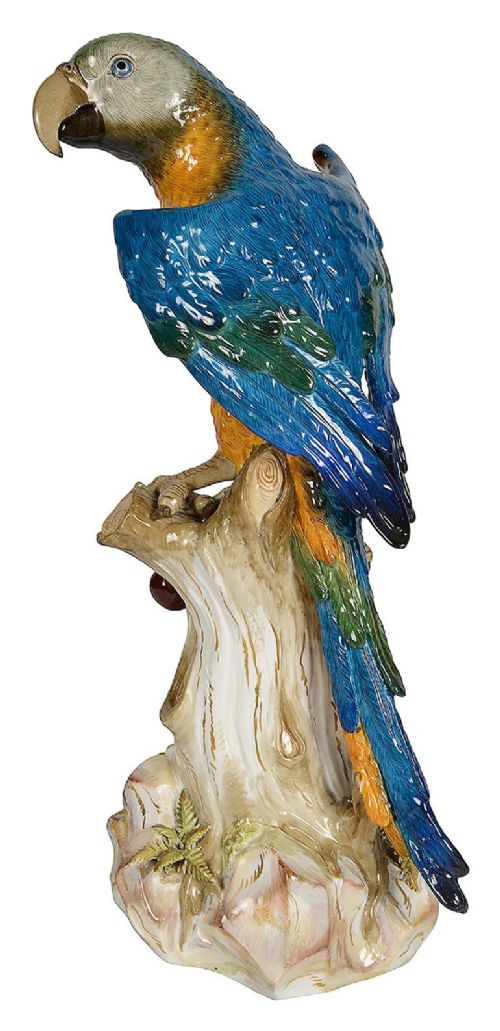
Meissen models appear frequently among the listings, often depicted as parrots, hoopoes, and cockatoos in nineteenth-century interpretations. Alongside these European examples sit Qing Dynasty Chinese glazed figures and Japanese okimono.
Materials and construction
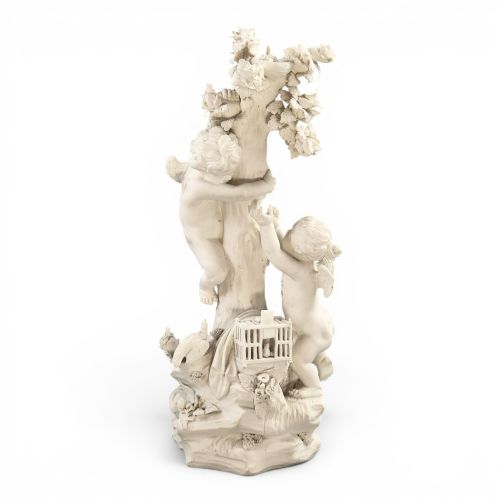
Certain models incorporate gold leaf accents or specialised sancai glazes to highlight specific areas of the design. Biscuit porcelain also appears in specific eighteenth-century English figures, leaving the ceramic surface unglazed and matte.
Materials represented across the inventory include hard-paste porcelain, ceramic, enamel glaze, and gold leaf.
Distinctions in craftsmanship
Quality in these sculptures rests upon the precision of the modelling and the subtlety of the hand-painting on the feathers. Superior examples display naturalistic postures and complex polychrome application rather than flat, uniform colour.
The crispness of the porcelain moulding around delicate elements like beaks, crests, and tree supports defines the upper tier of production. Finer factories achieve realistic textural detail in the plumage without losing structural integrity.
Karl Ens·Meissen·Makuzu Kozan II·Royal Worcester·Volkstedt Triebner, Ens & Eckert·T.J Jones
The Porcelain Bird Figurines Glossary
- Hard-paste porcelain
- A dense, vitrified ceramic material composed of kaolin and petuntse fired at high temperatures. It forms the durable body of many European and Asian animal figures.
- Biscuit porcelain
- Unglazed ceramic fired once to create a fine, matte surface texture that resembles marble. This finish highlights sculptural contours without the interference of glossy glazes.
- Sancai glaze
- A three-colour ceramic glaze technique traditionally utilising amber, green, and cream or white tones. It appears frequently on Chinese pottery figures.
- Famille verte
- A Chinese porcelain palette dominated by green enamel hues, developed during the Qing Dynasty. It is used to render detailed plumage and natural scenes.
- Okimono
- A small Japanese carved decorative object designed for display on a shelf or in a tokonoma alcove. These pieces depict subjects such as birds and animals with high craftsmanship.
Porcelain Bird Figurines: Frequently Asked Questions
How do I identify Meissen bird figures?
Meissen pieces from the nineteenth century often show notable scale, complex coloration, and subjects such as parrots or hoopoes perched on tree stumps. Look for the distinct factory modelling typical of German porcelain works from this period.
Examine the quality of the enamel painting and the naturalistic posture of the avian subject. Archival records and factory marks further confirm the origin of these specific animal sculptures.
What is the difference between Chinese and European birds?
Chinese porcelain birds, such as Qing Dynasty cockerels or Ming style ducks, employ glazes like sancai or famille verte. Their aesthetic follows traditional Asian ceramic conventions rather than Western naturalism.
European factories like Meissen or Derby focus on anatomical realism and detailed European styles of the Victorian and Georgian periods. The modelling techniques and glaze palettes reflect their distinct geographic origins.
Where were porcelain birds displayed?
These decorative figures were traditionally placed on mantelpieces, dining tables as centrepieces, or within specialised display cabinets. Their primary purpose was interior ornamentation.
Collectors arranged them in pairs or matched groupings to balance mantel displays or furniture surfaces. Their varied heights allowed them to integrate into diverse domestic interior schemes.
How do I care for antique ceramic figures?
Dust these delicate porcelain objects gently with a soft, dry brush to prevent the accumulation of particles on textured feathers and glazed surfaces. Avoid using wet cleaning methods on pieces with enamel or gold leaf details.
Display them away from areas of high foot traffic or direct sunlight to protect the fragile extremities, beaks, and applied decorative elements from accidental damage.