

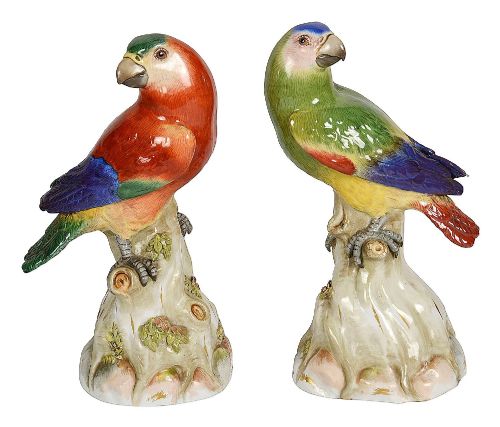


German Porcelain Bird Figures
German porcelain bird figures bring the vibrant plumage of parrots, hoopoes and cockatoos into the home through modelled hard-paste porcelain.
German Porcelain Bird Figures
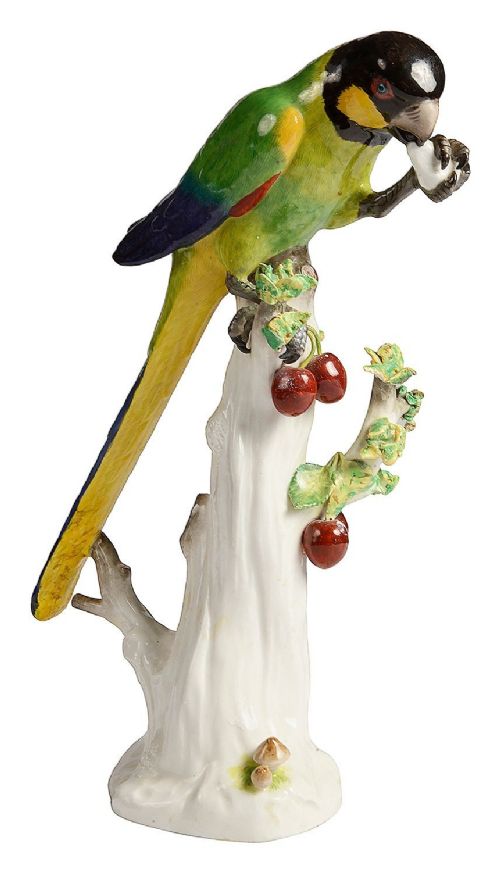
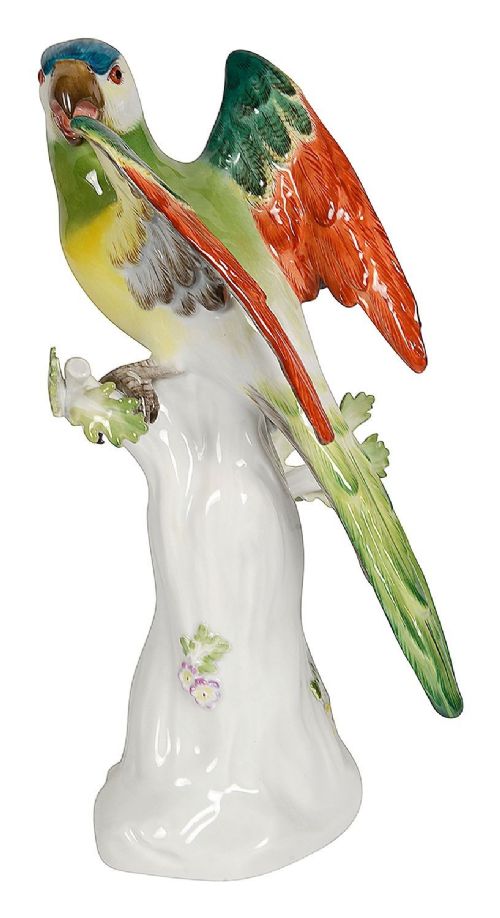
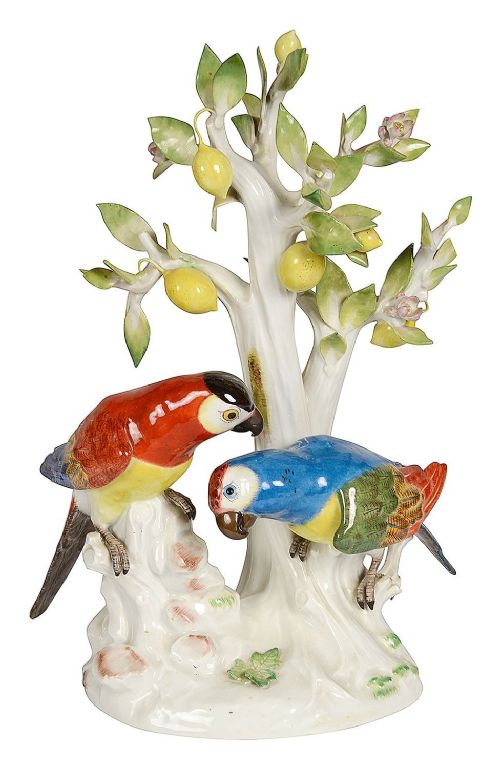
German porcelain bird figures are decorative sculptural forms depicting exotic birds perched on naturalistic supports like tree trunks and lemon trees. When searching for german porcelain bird figures, collectors generally encounter finely modelled pieces produced by major European factories during the nineteenth and early twentieth centuries.
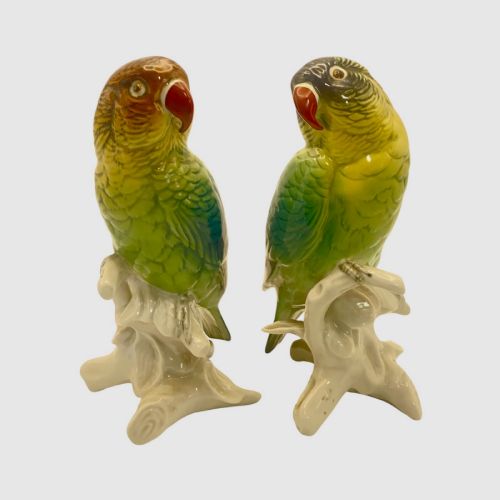
The selections available range from single large specimens standing over forty centimetres tall to matched pairs of parrots and cockatoos. These objects reflect a long-standing European fascination with ornithological subjects rendered in durable ceramic materials.
Materials and construction
Makers utilised hard-paste porcelain, a dense and vitrified ceramic body capable of holding sharp sculptural detail through high-temperature firing. This stable ceramic base allowed modellers to create complex, cantilevered compositions such as birds perched delicately on branches.
Surface decoration relies upon enamel glaze and overglaze enamel colours applied to render the distinctive multi-coloured feathers of parrots and hoopoes. Firing the pigments into the glossy glaze surface ensured permanent brilliance and protection against fading.
German Porcelain Bird Figures Retail Price Guide 2026
Typical asking prices for german porcelain bird figures among the pieces listed under this phrase on Sellingantiques today, from the lower quarter to the upper quarter. They describe what is for sale here now, not the wider market.
Listings span the nineteenth century and the year nineteen thirty, featuring hard-paste porcelain decorated with enamel and glaze.
Judging quality and execution
The standard of modelling distinguishes exceptional pieces from ordinary production, particularly in the naturalism of the bird's posture and the crispness of feather carving. Superior examples demonstrate attentive observation of avian anatomy, whereas lesser works appear stiff or formulaic.
Painted decoration also dictates overall quality, with top-tier specimens exhibiting subtle tonal blending across multi-coloured plumage rather than flat washes of colour. The complexity of the composition, such as pairs interacting around foliage, generally signals higher artistic ambition.
Karl Ens·Meissen·Volkstedt Triebner Ens And Eckert
The German Porcelain Bird Figures Glossary
- Hard-paste porcelain
- A durable ceramic composition fired at very high temperatures, composed of kaolin and petuntse. It provides a bright white, impermeable body ideal for detailed sculptural work.
- Overglaze enamel
- Coloured glass powders mixed with an oily medium and painted onto already-fired glaze, then fused in a muffle kiln. This technique permits a wide palette of bright hues for bird plumage.
- Figurine
- A small modelled statue representing a human, animal or mythical subject. In this context, it describes the standalone ceramic bird sculptures.
- Glaze
- A glassy coating fused to the ceramic body by heat, providing a smooth and protective finish. It enhances the visual depth of the underlying colours.
German Porcelain Bird Figures: Frequently Asked Questions
What birds are depicted?
The available figures predominantly represent exotic species such as parrots, cockatoos and hoopoes perched upon natural supports. These subjects offered modellers opportunities to use bright, multi-coloured enamel palettes.
Pairs of birds arranged together under fruit trees also appear frequently among the larger nineteenth-century examples.
How were they displayed?
These decorative figures were designed for prominent placement on mantelpieces, sideboards and large tables within wealthy nineteenth-century domestic interiors. Their substantial height ensured they functioned as striking centrepieces.
Collectors today continue to display them on sturdy surfaces where their detailed modelling and bright plumage can be appreciated closely.
How do I identify Meissen pieces?
Meissen pieces from the nineteenth century are typically characterised by careful botanical integration, such as lemon trees or detailed tree trunks, supporting large parrots or cockatoos. The painting on these figures shows sophisticated layering of enamel colours.
Scale is also a notable indicator, with several prominent examples reaching heights between twenty-four and forty-three centimetres.
What is hard-paste porcelain?
Hard-paste porcelain is a true ceramic formula invented in Europe during the early eighteenth century, utilising kaolin clay and ground alabaster or quartz. It fires at extremely high temperatures to produce a completely vitrified, non-porous body.
This material allows for extremely sharp moulding lines and supports complex sculptural compositions without sagging during firing.